Italy reinstates Schengen border checks with Spain over Ceuta influx
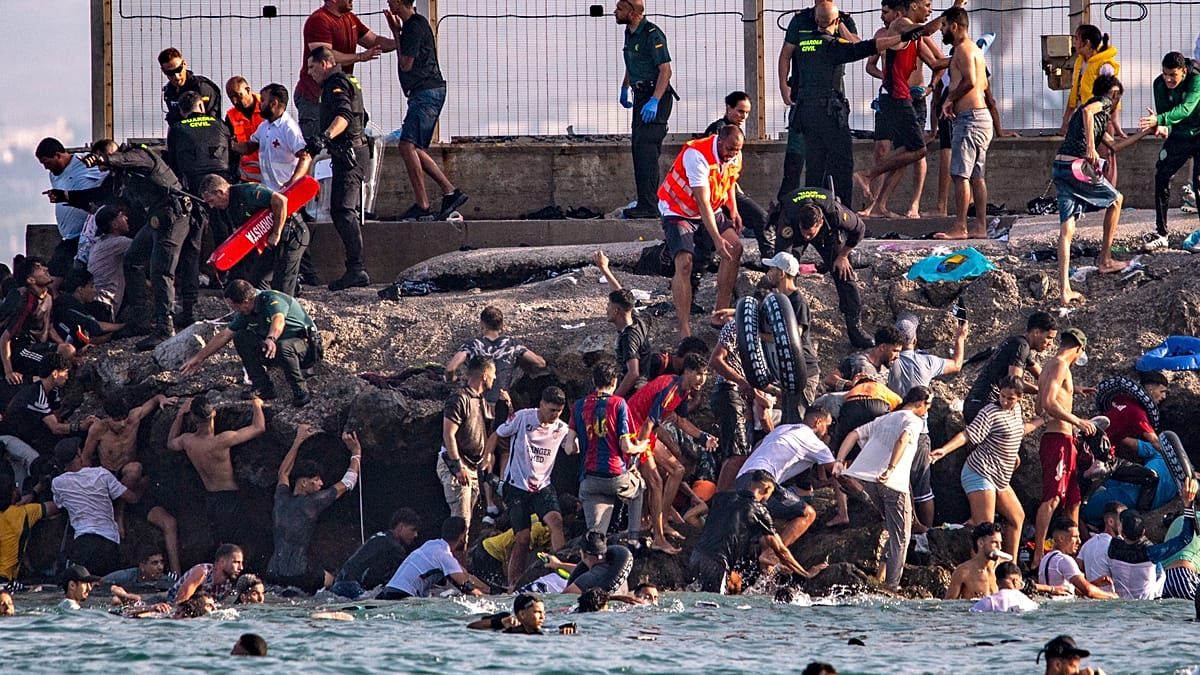
Italy has reintroduced air and maritime border controls with Spain following a record 60,000-strong migrant surge into Ceuta, exposing deep political fractures within Europe's free-movement zone.
Italy reinstated air and maritime border controls with Spain for an initial one-month period on Friday. The move, ordered by Interior Minister Matteo Piantedosi following a meeting chaired by Prime Minister Giorgia Meloni, responded to the irregular entry of approximately 60,000 migrants into the Spanish enclave of Ceuta. This single-day surge represents the largest ever recorded on EU territory.
The sudden influx prompted immediate political fractures across the continent. Finnish Interior Minister Mari Rantanen backed Italy's request and called on other European nations to follow suit. Danish Prime Minister Mette Frederiksen went further, suggesting the temporary suspension of Spain from the Schengen area altogether. Leading right-of-centre figures across Europe echoed these calls, framing the crisis as a failure of external border management.
Under the Schengen Borders Code, suspending a member state is a last-resort measure applicable only in cases of "persistent serious deficiencies relating to external border control." The European Commission must propose the suspension, which then requires approval from other member states. However, there is no indication this procedure will be initiated. “There are regular evaluations and in case there are serious deficiencies detected at the border crossing point, we issue a report which is then discussed with the member state [concerned] first,” an EU official said.
The legal basis for a suspension is further complicated by the geography of the crisis. Ceuta is located on the African continent and offers migrants no direct route to mainland Europe. The Commission highlighted that special rules apply to the Spanish enclaves of Ceuta and Melilla, treating them as de facto external territories. “There is already border control between Ceuta and Melilla and the rest of the Schengen area,” an EU official said.
Despite the unlikelihood of a full Spanish expulsion, the political fallout is already disrupting free movement. Any EU country can reintroduce internal border checks for renewable six-month periods. France already has land border controls in place based on jihadist threats, antisemitic attacks, and migrant violence, with Interior Minister Laurent Nuñez recently increasing these checks. Portugal has not imposed new measures, but noted that "integrity of the Schengen system depends on tight external border controls."