EU summons emergency summit as Ceuta migrant crisis fractures Schengen
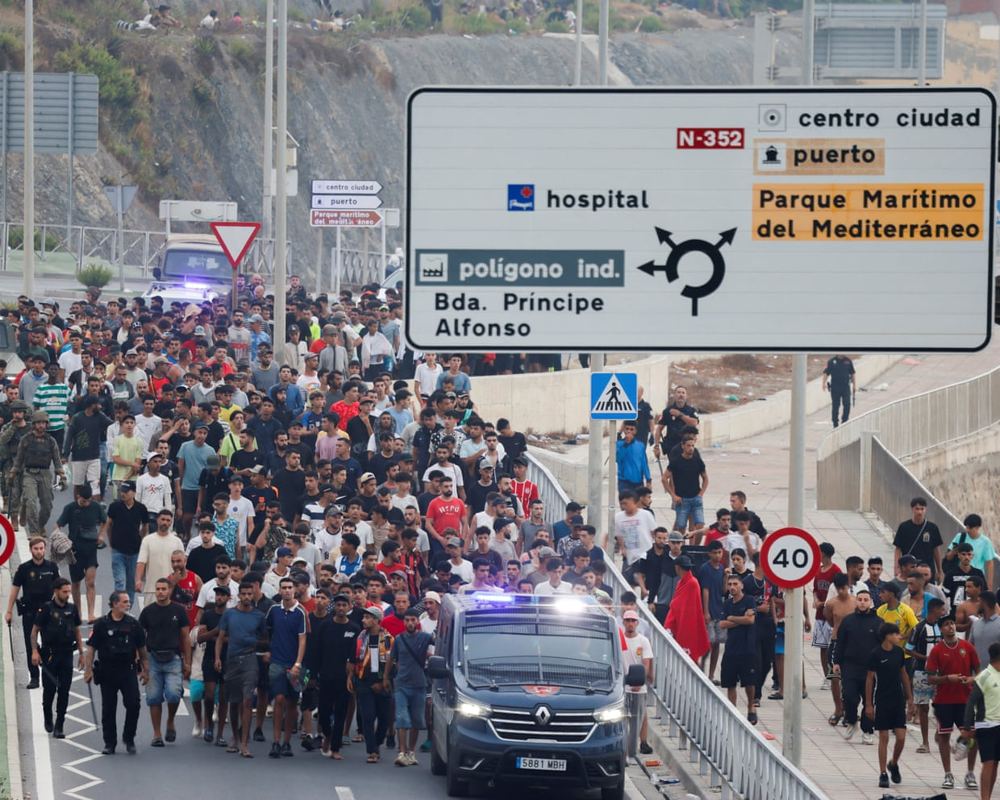
The European Union will convene an emergency meeting of interior ministers after a massive influx of migrants into the Spanish enclave of Ceuta triggered internal recriminations and threatened the integrity of the Schengen free-movement zone.
The European Union is convening an emergency meeting of interior ministers on Tuesday following the arrival of more than 50,000 migrants in the Spanish North African territory of Ceuta. The crisis has already claimed at least 67 lives and exposed deep fractures in the bloc’s approach to external border management.
The political fallout has put the Schengen free-movement zone under immediate strain. Italy announced it would suspend its Schengen arrangements with Spain for a month, with Foreign Minister Antonio Tajani blaming Madrid’s regularisation policies for undocumented migrants and claiming they incentivised human trafficking.
Spanish Prime Minister Pedro Sánchez fiercely rejected the criticism in a letter to EU leadership, condemning the attacks as prejudiced and contrary to European solidarity. He noted that Frontex data shows Spain’s external border is significantly less porous than Italy’s, recording half the irregular entries between 2021 and 2026.
Madrid is particularly frustrated by the lack of unified support compared to previous border crises. When migrants were pushed across the borders of Poland and Finland by Belarus and Russia, the EU swiftly labelled the events as hybrid attacks and offered full solidarity.
On the ground in Ceuta, the immediate influx has slowed following the deployment of the military and the installation of a 500-metre floating barrier. However, the president of Ceuta, Juan Jesús Vivas, warned that several thousand migrants still require processing and the territory remains on high alert.
The Spanish government attributes the surge to trafficking mafias exploiting a recent supreme court ruling that restricted summary returns at sea. Migration experts dispute this direct link, noting that arrivals had been steadily rising and that crossing the Ceuta breakwater is physically easier than the dangerous Atlantic route to the Canary Islands.
Ireland, currently holding the EU presidency, is coordinating the political response to heal the divisions. Prime Minister Micheál Martin confirmed the Justice and Home Affairs Council will meet to restore a unified strategy, a move echoed by European Commission President Ursula von der Leyen.
Despite the Italian backlash, other major member states have moved to contain the diplomatic damage. French Interior Minister Laurent Nuñez explicitly ruled out suspending Spain from Schengen, while British Prime Minister Andy Burnham offered direct assistance to Madrid.