US attacks Madrid over Ceuta migrant surge, raising trade risks
The Trump administration has blamed Spain’s left-wing government for a mass border crossing in Ceuta, prompting the US State Department to threaten unspecified actions and reviving fears of trade retaliation.
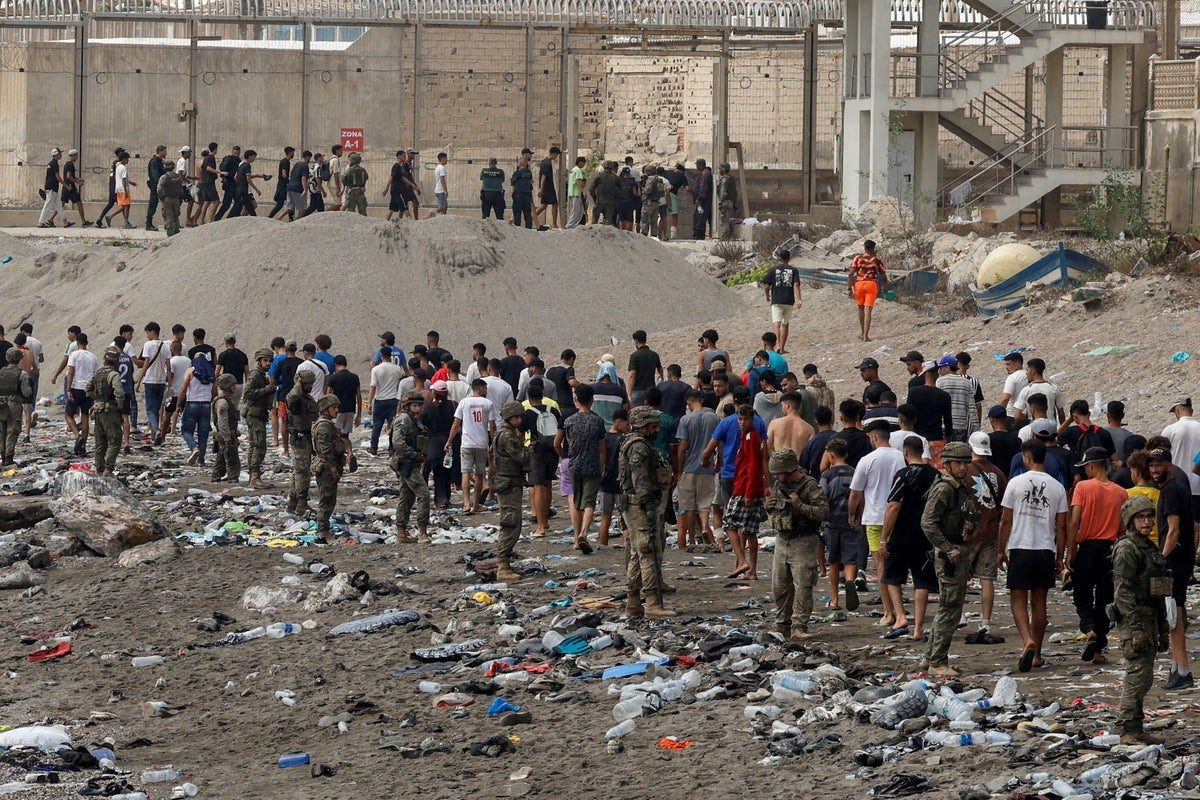
The United States has launched a coordinated diplomatic and political attack on Spain following a mass migrant crossing into the North African enclave of Ceuta. An estimated 60,000 migrants recently crossed the border from Morocco in a chaotic incident that resulted in at least 67 deaths.
President Donald Trump described the event as a "catastrophe" that looked like an "invasion of a country." He used the incident to attack his domestic political rivals, warning that similar scenarios would unfold in the US if Democrats regain power.
Vice President JD Vance blamed the surge on "radical left-wing globalist policies," echoing his previous attacks on European democracies. House Speaker Mike Johnson joined the fray, claiming the influx was "Marxism in practice" and that socialists were ruining Spain.
The rhetoric escalated beyond domestic US politics when the State Department formally condemned the border breach. A spokesperson called the incident a direct result of Madrid’s deliberate efforts to facilitate illegal migration into Europe.
More alarmingly for European markets, the department stated it is considering actions to defend Americans and stands ready to assist European allies considering similar options. This aggressive posture introduces fresh geopolitical risk for Spanish assets, foreign direct investment, and cross-border trade.
Relations between Washington and Madrid have steadily deteriorated over defence spending and the conflict with Iran. During the Nato summit in Ankara this July, Trump explicitly instructed his advisers to "cut off all trade with Spain, including visits" before later softening his stance.
Despite the political storm, the immediate security threat to the wider Schengen area remains contained. Ceuta holds a specific carve-out from the usual Schengen free travel requirements, meaning migrants face strict additional border checks before reaching mainland Europe.
Spanish Prime Minister Pedro Sánchez condemned the inflow as "an attack on Spain’s territorial integrity." He promised to "use all the resources of the state to guarantee security and coexistence", while Foreign Minister Jose Manuel Albares noted that "practically the entirety of those who entered Ceuta have already returned to Morocco".