Record Danube drought halts shipping and forces nuclear power cuts in Central Europe
Record-low water levels on the Danube are disrupting commercial shipping and forcing Hungary and Romania to slash nuclear power output, straining regional energy grids during a severe heatwave.
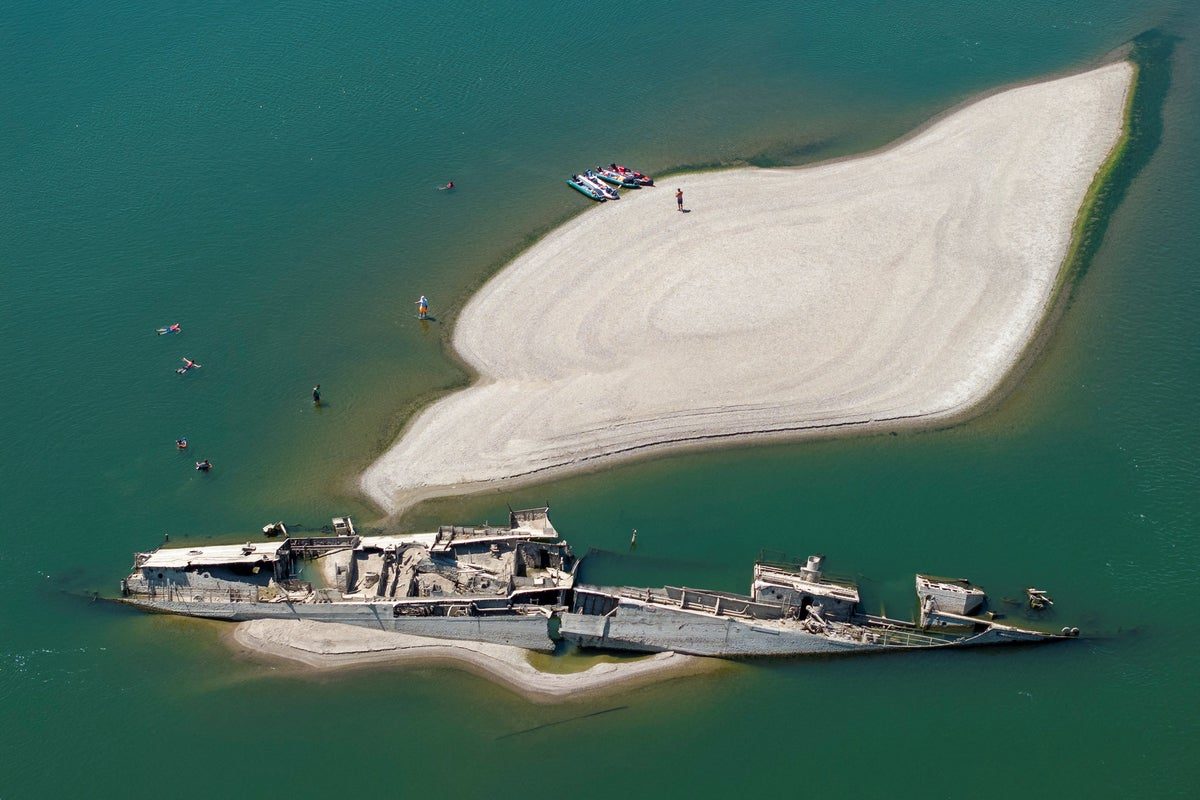
The Danube River has receded to unprecedented lows along much of its course, exposing sandbars and Second World War shipwrecks while severely disrupting transport and energy production across Central Europe. A prolonged drought and a renewed heatwave have pushed water levels in Budapest to 23cm on Wednesday, breaking the previous record low of 33cm set in 2018.
The extreme shallows have forced cargo ships to halt operations almost entirely and pushed tourist cruise vessels to dock far upriver from the Hungarian capital. The European Investment Bank estimates that roughly 200 sunken vessels are now visible on the exposed riverbed, including a German warship near Prahovo, Serbia, and the 1937 Hungarian cargo ship Fulton near Opatovac, Croatia.
The energy sector faces severe operational challenges because the river is essential for cooling major power facilities. Hungary’s Paks nuclear plant, which supplies nearly half the country's electricity, is currently operating at less than 50 per cent of its combined 2 gigawatt capacity. Prime minister Peter Magyar warned the four Russian-made reactors could shut down completely by Tuesday or Wednesday for the first time in 44 years.
Neighboring Romania has declared a national state of alert for August as low river volumes similarly slash its electricity generation. State-owned producer Nuclearelectrica has already shut down one of its reactors, prompting prime minister Ilie Bolojan to seek emergency power imports from Ukraine, Greece and Bulgaria.
“Both (Romania and Hungary) have cut our nuclear power production in half,” Bolojan said. The supply shortfall arrives just as peak evening electricity demand in Hungary is forecast to rise by 20 per cent, forcing the government to ask major industrial consumers to curb their usage.
Magyar, speaking at energy company MOL’s Danube refinery in Szazhalombatta, stated that Hungary could meet its energy needs through imports. He acknowledged, however, that the combination of reduced domestic generation and soaring summer demand risks creating a critical situation for the power system. The Paks reactors can only restart when water levels recover sufficiently for safe cooling, an improvement that is not expected in the coming weeks.