Ceuta migrant surge pushes EU toward Schengen suspensions
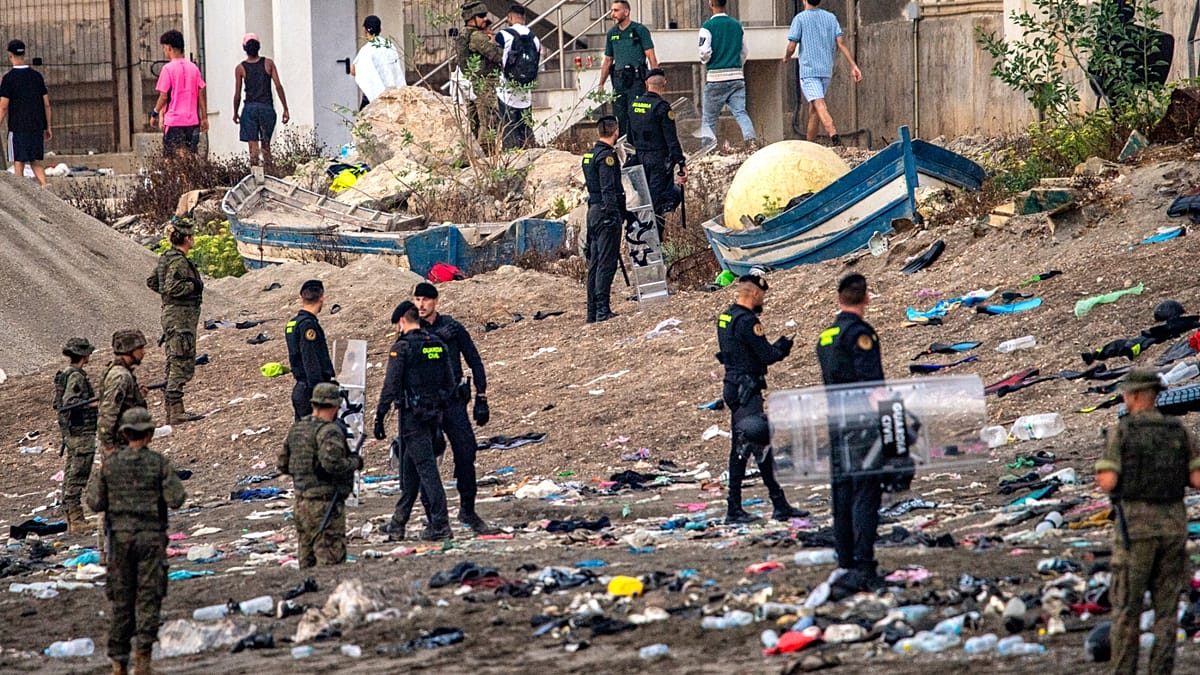
An influx of 50,000 migrants into Spain's Ceuta enclave has triggered emergency EU talks and threats of internal border controls, exposing deep divisions over the bloc's free-travel zone.
Twenty-two EU member states have demanded an emergency videoconference of interior ministers after roughly 50,000 migrants crossed into the Spanish territory of Ceuta from Morocco on Thursday. The meeting, scheduled for Tuesday by current EU president Ireland, will focus on forging a coordinated response to the sudden influx.
The push for talks, initiated by Italy and Denmark, carries direct economic and political weight for the continent. Signatories warned they are prepared to use "any necessary measures" to secure the bloc, explicitly including the "reinforcing or reintroducing temporary internal border controls" within the passport-free Schengen Area.
Tensions are running particularly high between Madrid and other capitals. The 22 leaders accused the Spanish government of creating a "pull factor" by granting legal status to some unauthorised migrants, a claim Madrid strongly disputes.
Spanish Prime Minister Pedro Sánchez fired back at critics in a letter to European Commission President Ursula von der Leyen. He described the reaction from some states as "rather asymmetric," noting that while most offered solidarity, others "have chosen to attack Spain and to call for its temporary exclusion from the Schengen Area."
Sánchez's remark was a clear reference to Italian Prime Minister Giorgia Meloni's administration, which has pushed to suspend visa-free travel with Spain. Such a move would be unprecedented and highly disruptive to European supply chains, labour mobility and cross-border commerce.
Von der Leyen welcomed the upcoming talks, stressing the need for "a lessons learned process to improve our European resilience." She noted that "not a single person reached mainland Spain or the rest of the EU" during the crisis.
The diplomatic rift also exposed a clear geographic fault line within the bloc. French President Emmanuel Macron, Portuguese Prime Minister Luís Montenegro, and Luxembourg Prime Minister Luc Frieden declined to sign the document, which was addressed to von der Leyen, European Council President António Costa, and Irish Prime Minister Micheál Martin.
The signatories argued that allowing the "perception that illegal entry into the European Union is possible" would undermine confidence in the common migration policy. For markets and travellers, the dispute serves as a stark reminder that the EU's internal borders remain vulnerable to sudden political fractures during migration spikes.