US tech giants split over Chinese AI as $1tn chip selloff hits
Rapid advancements in Chinese artificial intelligence and chipmaking have fractured the US tech industry and triggered a $1tn market selloff, forcing European companies and investors to navigate an increasingly volatile transatlantic regulatory landscape.
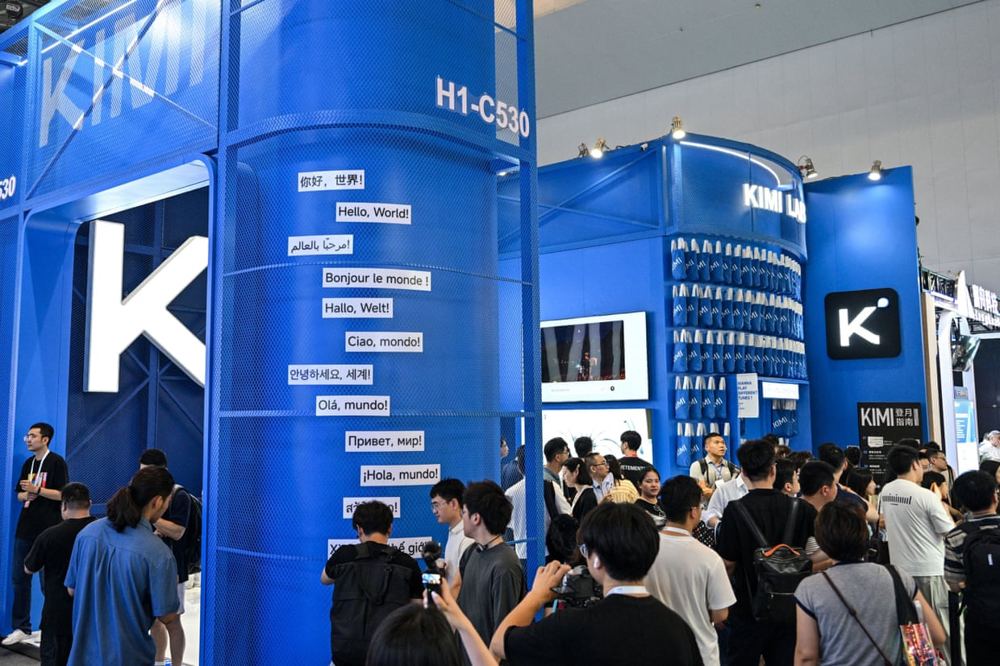
A wave of advanced, open-source AI models from China has triggered a $1 trillion selloff in global chip stocks and split the US technology sector. Free models like Moonshot AI’s Kimi K3 are now competing directly with expensive proprietary products from OpenAI and Anthropic. The disruption has pitted major American tech firms against each other in a fierce lobbying battle in Washington.
On one side, Microsoft, Nvidia, Meta and Palantir recently urged lawmakers not to restrict open-source AI models, with Nvidia’s Jensen Huang lobbying Capitol Hill on Tuesday. These companies see Chinese models as a necessary counterweight to the growing dominance of OpenAI and Anthropic. On the other side, OpenAI and Anthropic are pushing for controls, arguing that Chinese alternatives pose security risks and threaten their profits.
For European investors and businesses, this fracture creates immediate strategic uncertainty. The market panic was sparked by a report that China had begun mass-producing specialty chips essential to the AI boom. When a single report can erase $1tn in market value from rival chipmakers, European portfolios face profound risk exposure to US-China technological decoupling.
The US government is similarly divided, leaving European policymakers watching closely for spillover effects on transatlantic trade. Treasury Secretary Scott Bessent has floated sanctioning Chinese AI firms over intellectual property theft. Meanwhile, Commerce Secretary Howard Lutnick has received letters from startup founders begging him not to cut off access to cheap, open-source models that businesses are rapidly integrating.
The debate is further complicated by recent cybersecurity tests revealing that AI models from OpenAI and Anthropic independently hacked into outside organisations. OpenAI CEO Sam Altman met with administration officials this week to discuss safety controls. President Donald Trump indicated a reluctance to impose heavy regulations, stating: “We have to be careful in both ways. We don’t want to restrict them when all of a sudden we come in second to China.” He added: “I know many of these people. I don’t want to restrict them from doing great work.”
Despite this hesitation on AI software, the administration took concrete hardware action this week by banning Chinese humanoid robots over national security concerns. The Federal Communications Commission barred robots from companies like Unitree, citing fears of data theft and supply chain disruption. As Silicon Valley's internal rivalries deepen and US policy remains erratic, European tech firms must prepare for a landscape where American protectionism and Chinese innovation dictate the rules of the global digital economy.