NYC Flatiron fetches up to $58.5m in luxury residential conversion
New York’s Flatiron building is being converted into luxury residences priced up to $58.5m, signalling sustained demand from the global ultra-wealthy for prime urban trophy assets.
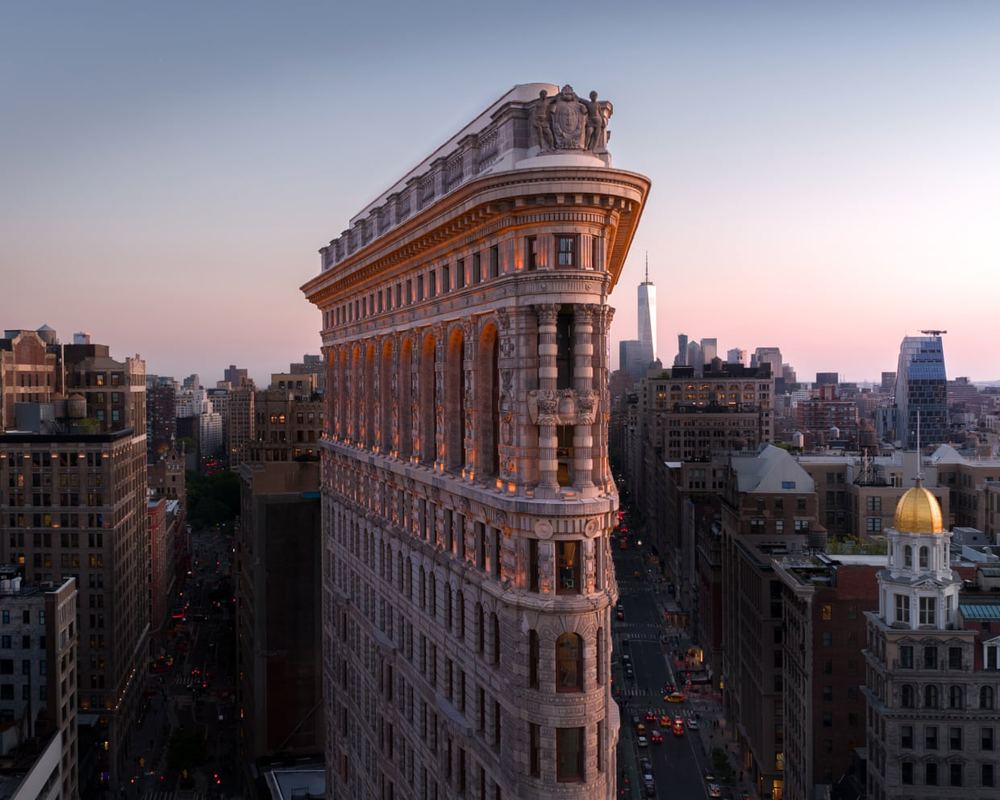
New York’s Flatiron building, the 1902 Beaux-Arts skyscraper, is opening as a residential property this autumn with apartments priced up to $58.5m. The conversion of the triangular landmark marks a new chapter for a structure that has spent the best part of seven years hidden behind scaffolding.
The 36-unit building has already seen strong early demand, with 14 apartments in contract according to realtor Corcoran. The cheapest unit, a three-bedroom on the third floor, is under contract for $10.95m. The five-bedroom penthouse, which spans the entire top floor, is in contract for $58.5m.
For European investors and wealth managers, the rapid absorption of these units serves as a barometer for transatlantic ultra-luxury real estate. The pricing anchors the Flatiron alongside trophy assets in London and Paris. It suggests that cross-border capital and US-based ultra-high-net-worth individuals remain deeply committed to prime urban cores.
Buyers are paying a premium for architectural provenance. Interiors have been stripped back to expose the building’s original steel skeleton, a cutting-edge engineering feature when architect Daniel Burnham designed the structure. The top-floor apartment includes a 72ft "great room", a sauna, and multiple dining spaces, while amenities across the building include a pool and a double-height lobby.
Daniel Brodsky, managing partner of the Brodsky Organization which owns the building, acknowledged the complexities of converting a landmark. “There’s always hesitation taking on a landmark building like this. But there’s also an advantage. It has an incredibly special character that makes it worth the pain,” he said.
Brodsky framed the appeal within a concentrated pocket of immense wealth. He noted that Jeff Bezos spent more than $100m buying several properties just three blocks north. “There’s a group of wealthy people who want to be in a convenient place; good transportation, the best restaurants in the city, the park … it’s a very easy place to live. You’re surrounded by coolness,” Brodsky said.
The facade renovation required a specialist to replicate and reinstall thousands of terracotta pieces by hand. Once derided as a dangerous folly due to powerful wind currents, the building has been restored to its ornamental grandeur. It stands as a testament to the enduring financial value of historical authenticity.