Hungary shuts Paks nuclear plant as Danube hits record lows
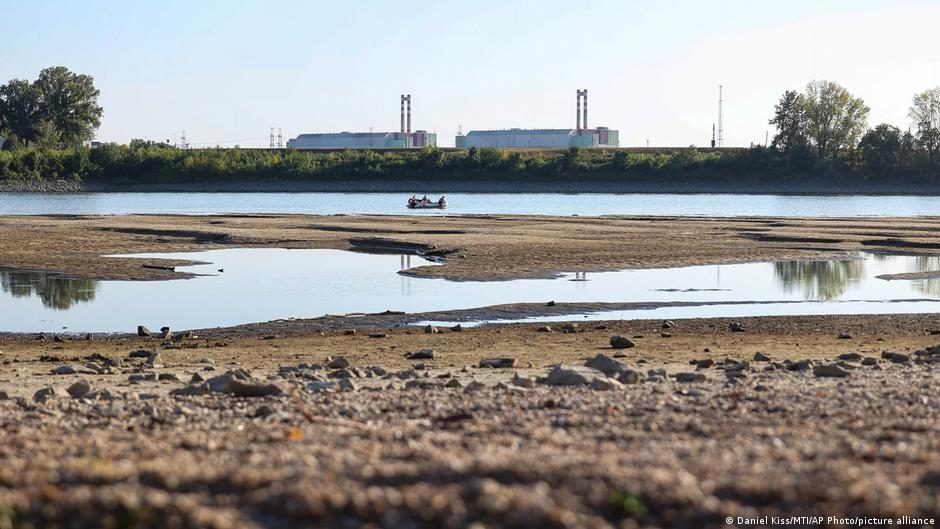
Hungary is losing over 40% of its electricity generation as a record drought forces the Paks nuclear plant offline, threatening heavy costs for industry and regional energy supplies.
Hungary will shut down its Paks nuclear power plant on Sunday, marking the first complete halt in the facility’s 44-year history. Prime Minister Peter Magyar announced the closure late Saturday, warning that the loss of generation coincides with an impending heatwave.
The shutdown stems from critically low water levels in the Danube river, which the plant relies on to cool its reactors. Located 120 kilometers south of Budapest, Paks typically supplies more than 40% of Hungary's electricity.
Months of below-average rainfall and successive heatwaves since May have caused the Danube to fall to record lows. It measured just 23 centimeters in Budapest on Wednesday, shattering the previous record of 33 centimeters set in 2018. Output at Paks had already been curtailed before the final unit was scheduled to go offline at 1:30 a.m. (2330 GMT).
"The power grid, our public services and ourselves will all come under enormous strain," Magyar said. The sudden loss of domestic baseload power will force Hungary to rely heavily on expensive imported electricity. Tisza Party Vice Chairman Mark Radnai estimated the resulting price surge could cost the country between 120 billion and 240 billion forints ($315 million to $630 million).
To mitigate the economic damage, the government is targeting large industrial consumers first. Companies have been asked to volunteer power cuts, adding to 240 megawatts of already pledged reductions, with financial penalties for noncompliance. A new decree also authorizes grid operator MAVIR to mandate cuts and temporarily disconnect heavy users.
"Households will be the last to face restrictions," Magyar said. He urged businesses, public institutions, and residents to shift their electricity use away from peak evening hours between 5 p.m. and 10 p.m. A decision on mandatory restrictions for large companies will be made on Monday.
The drought is simultaneously disrupting power generation across the region. In neighboring Serbia, the Danube's historic lows have forced severe reductions at the Djerdap I and Djerdap II hydroelectric plants, which normally supply 18% of the country's power. Those facilities are currently operating at just 20% and 30% of their capacities.