ECB ditches neutral euro banknote designs to build European identity
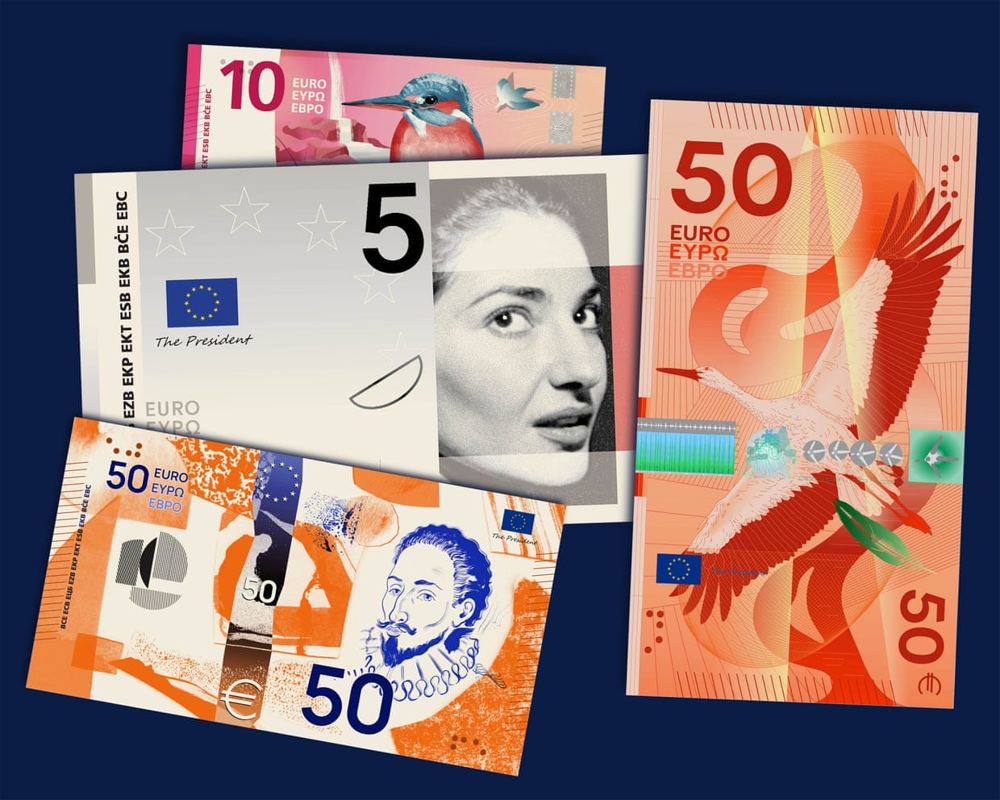
The European Central Bank has unveiled 10 proposals for the first euro banknote redesign since 2002, signalling a deliberate shift from faceless neutrality to tangible European identity for the single currency.
The European Central Bank has unveiled 10 proposals for the first full redesign of euro banknotes since the currency launched in 2002, drawing more than 6 million public votes in just one week. The designs, presented by ECB President Christine Lagarde, offer a stark choice between depictions of historical cultural figures and European birds.
For decades, the euro has deliberately avoided specific national references, opting instead for imaginary bridges and windows. Philippe Geoffroy, the ECB’s head of section for new banknotes, said the institution now wants to move away from that neutrality.
“The main reason behind the re-design is to stay well ahead of counterfeiting,” Geoffroy said. “But along the way we want to increase identification with the single currency and make it more graphically meaningful.”
This identity push presents the public with two distinct paths. The cultural theme features figures like Marie Curie, Ludwig van Beethoven, Miguel de Cervantes, Leonardo da Vinci, Maria Callas and Bertha von Suttner.
The alternative wildlife theme depicts birds like the white stork, kingfisher and bee-eater over typical landscapes. Their reverse side would show buildings housing EU political and financial institutions in Brussels, Frankfurt, Luxembourg and Strasbourg.
The survey on the ECB’s website remains open until 21 September. A second quantitative survey and a design jury will also influence the final choice at the end of 2026, and a combination of the two themes is not expected.
The selected figures highlight a deliberate strategy to represent shared heritage rather than individual nation-states. Callas was born in New York but thrived in Greece and Italy, while Curie’s career spanned Warsaw and Paris.
“The feedback from the public has been very clear,” Geoffroy noted. “They want money that feels European.”
Chosen from 1,241 applications in a 2025 open call, the 10 shortlisted designs break away from traditional currency aesthetics. Dutch designer Joost Grootens cropped cultural figures tightly around their eyes, while German illustrator Jan Robert Dünnwelle used a graphic novel style.
French artist Isabelle Daëron depicted birds flying across a vertical layout. Finnish designer Ville Tietäväinen also used a vertical format, progressively mapping the birds’ journeys from mountains to the sea.
The winning design will not enter circulation until 2030 or 2031, and the banknotes will remain printed on paper rather than polymer. The decision to pursue recognizable figures or wildlife contrasts with the recent experience of the Bank of England, which faced criticism for replacing historical figures with animals. For the ECB, however, the redesign is a calculated step to cement the euro’s place not just in European wallets, but in European public life.