Tusk vows crackdown on anti-Ukrainian violence as hate crimes rise a third
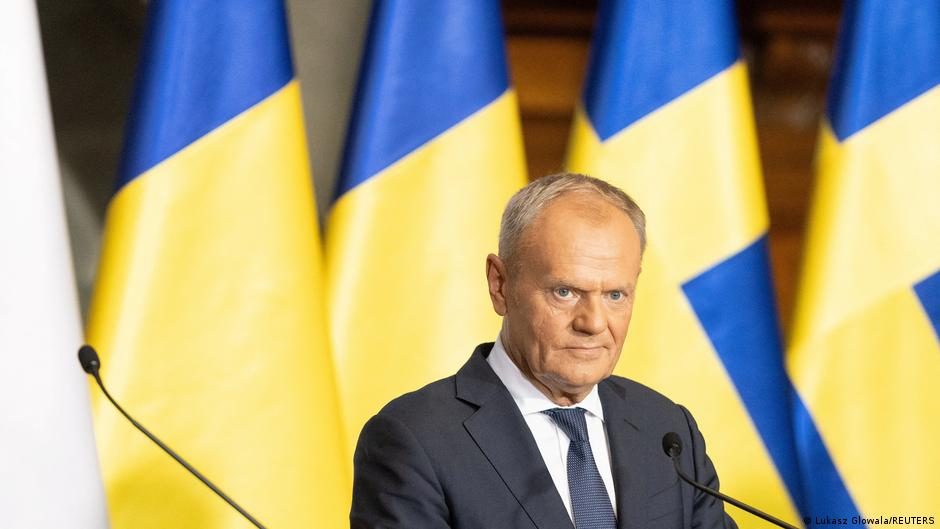
Poland's prime minister pledged a "resolute fight" against attacks on Ukrainians after a brutal street beating in Wroclaw, as rising hostility threatens the bilateral cooperation underpinning Europe's eastern security.
Speaking before his cabinet in Warsaw on Tuesday, Donald Tusk condemned a wave of anti-Ukrainian violence sweeping Poland and vowed to confront it head-on. "We must wage a resolute fight against this violence, because thugs, hooligans, and this culture of violence are becoming increasingly brazen and insolent, and also because they have received political support," the prime minister said, adding that he deplored the growing frequency of such incidents across the country.
His remarks followed a street attack in Wroclaw two days earlier, in which three Polish men beat a young Ukrainian man and his girlfriend after taking offence at their accents during a shop dispute. Mobile phone footage showed the assailants kicking the man while he lay on the ground; the woman suffered injuries to her neck and ear. Police moved quickly: two of the attackers, both with prior convictions, are in custody, and a third is being sought.
The Wroclaw assault is not an isolated case. In the first half of 2026, Polish police recorded 180 hate crimes targeting Ukrainians, a third more than in the same period of 2025. Recent weeks have brought a construction-site manager near Krakow filmed berating Ukrainian workers, drunken abuse on a train outside Warsaw, threats directed at two teenage girls on a bus in Bielsko-Biala, and attacks on schoolchildren. The daily Gazeta Wyborcza warned last week that social media is awash with fabricated stories of Ukrainian criminality.
A political fault line
The climate hardened sharply in May after President Volodymyr Zelenskyy bestowed the honorary title "Heroes of the UPA" on a Ukrainian army unit. Poland holds the Ukrainian Insurgent Army responsible for the mass killing of tens of thousands of Polish civilians in Volhynia between 1943 and 1945, and the gesture provoked fury across the political spectrum. President Karol Nawrocki revoked a Polish state honour previously granted to Zelenskyy, who returned it by courier. Przemyslaw Czarnek, prime-ministerial candidate of the opposition Law and Justice party, went further, demanding a halt to all military aid until Kyiv concedes the historical dispute.
Public sentiment has shifted with the politics. A CBOS survey found that 54 percent of Poles now oppose accepting more Ukrainian refugees, compared with 94 percent who favoured sheltering them when Russia launched its full-scale invasion in February 2022. A separate Opinia24 poll for Polityka put opposition to further aid at 44 percent, while 54 percent opposed Ukrainian EU membership. Around 1.5 million Ukrainians currently live and work in Poland.
Security stakes beyond the street
Tusk has urged Nawrocki to "break his silence" and condemn the violence; the president, a former boxer who once described organised football hooliganism as "noble, masculine combat," has not commented. The prime minister, meanwhile, insists the bilateral relationship is too important to be derailed. On Wednesday he held his first private meeting with Zelenskyy since the UPA row, after which the Ukrainian president thanked him and stressed the need for Ukrainians in Poland to "feel safe."
The urgency of that cooperation was underscored on the night of 30 July, when a Russian rocket crossed into Polish airspace during a massive bombardment of Ukraine and struck a field roughly 90 kilometres inside the border, leaving a ten-metre crater. Visiting the site, Tusk acknowledged the political headwind: "I know it's not very popular these days to speak well of Ukraine." Nevertheless, he declared that "Poland's security directly depends on the effective actions of Ukrainian forces, including in the air," and reaffirmed his commitment to supplying weapons to Kyiv despite opposition protests.
The couple attacked in Wroclaw, speaking to the NEXTA Polska news service, offered a bleaker assessment. They urged fellow Ukrainians in Poland to avoid confrontation and, as a precaution, to "speak less Ukrainian" in public.