Silk Road trade routes left a lasting culinary footprint across Europe
The historical mapping of the "Dumpling Belt" from China to Spain demonstrates how ancient merchant caravans did not just trade goods, but fundamentally engineered the culinary public life and regional identities of modern Europe.
Culinary historians and chefs are tracing the "Dumpling Belt," a vast network of ancient trade routes that carried pastry parcels from China through Central Asia and the Caucasus to Europe. This mapping highlights how merchants and nomads did not merely transport goods, but actively adapted food technologies to local environments along the way.
For modern Europe, this historical exchange illustrates the deep economic and cultural integration of the Eurasian continent. The evolution of these dishes shows how ancient supply chains and local agricultural realities dictated the ingredients and techniques that still define regional public life today.
The journey began nearly two millennia ago in China, where physician Zhang Zhongjing reportedly folded dough around mutton and herbs to treat frostbite. Archaeological finds in Xinjiang and third-century writings confirm these early bundles were vital sustenance for travellers crossing the harsh Eurasian landmass.
As caravans moved west, the recipes adapted to the nomadic economies of Central Asia. In Uzbekistan, the Manti emerged as a large, steamed dumpling relying on a precise ratio of lamb, beef, and onion to create a rich internal broth during the cooking process.
Local resident Yulduz Rakhmonova notes that the filling requires an equal amount of onion to meat to achieve its distinctive flavour. Ezoza Irmatova adds that the dough must be rolled thin from premium wheat to ensure the parcels remain strong enough to hold the juices.
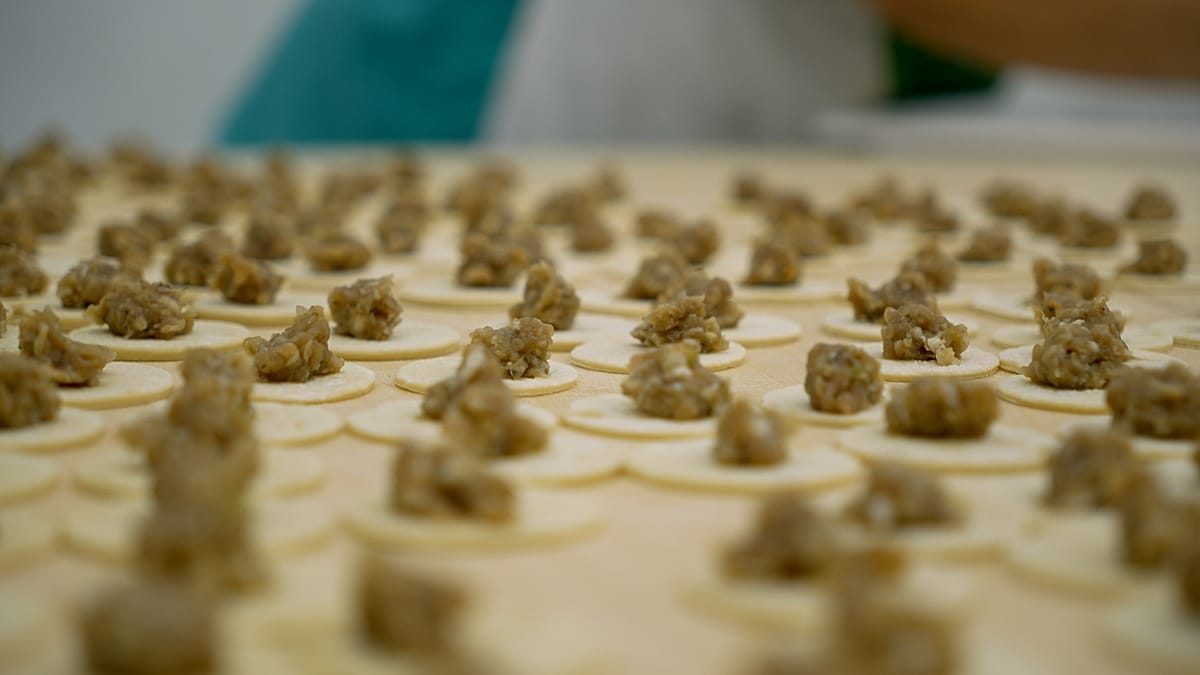
Crossing into Kazakhstan, Manti became a staple of both festive gatherings and everyday meals, taking roughly two hours to prepare. The dough is typically rolled to two or three millimetres thick, while the filling often incorporates Kurdyuk, a rich sheep fat that enhances the texture.
Preparing the dish remains a communal economic and social activity, with families gathering to process fresh weekend meat. Kamilya Anasheva explains that the whole household engages in cutting the meat and sculpting the dumplings into envelope or braided shapes.
Reaching the South Caucasus, the dumpling transformed again into highly specialized regional variants in Azerbaijan. Chef Ilkin Akbarzadeh, president of the Baku Culinary Association, notes that these dishes are intrinsic to the national heritage and are primarily consumed in winter for energy and warmth.
The Azerbaijani Düşbərə are tiny lamb parcels served in broth, with tradition dictating that 13 to 15 pieces must fit on a single spoon. By contrast, the Gürzə is slightly larger and features a braided fold resembling a viper, typically served with sumac or a yogurt and garlic sauce.
From the stacked steamers of Central Asia to the final destinations in Spain, this culinary evolution underscores a profound historical reality. The modern European palate remains deeply connected to the ancient commercial and cultural exchanges that first traversed the Silk Road.