Intel warnings preceded historic 75,000-strong Ceuta migrant crossing
The Spanish government ignored multiple intelligence warnings ahead of the largest migrant influx in Ceuta’s history, exposing severe flaws in Europe's southern border security.
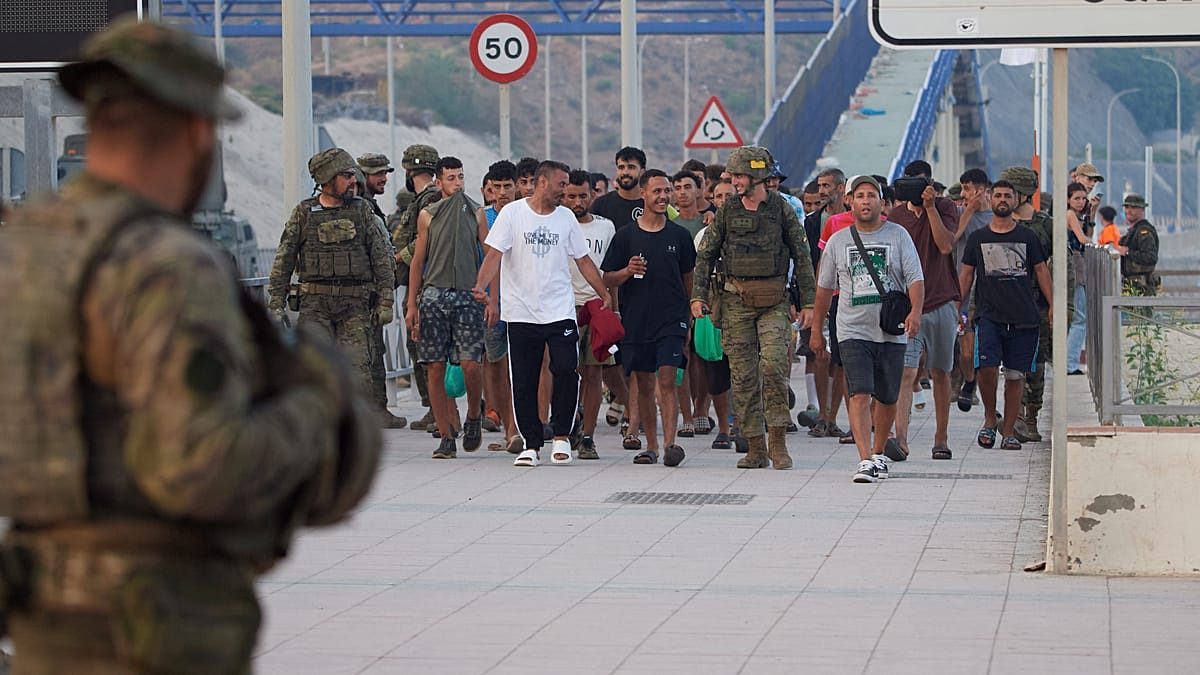
Between 60,000 and 75,000 migrants crossed into the Spanish exclave of Ceuta this week in the largest migration crisis the autonomous city has ever recorded. Internal intelligence sources have revealed that Madrid received multiple warnings over several days before the mass crossing, yet failed to mobilize a timely response.
Intelligence agencies had alerted the government that King Mohammed VI was likely to make a "gesture of magnanimity" to coincide with Morocco's Throne Day. In the ten days prior, nearly 1,000 people entered Ceuta by swimming. Intelligence officials interpreted this activity as a test conducted by Moroccan authorities and forwarded their assessment to the government.
Those preliminary warnings escalated into concrete alerts in the hours immediately before the surge, as buses transported people from across Morocco towards the border. Despite this advanced notice, the Interior Ministry did not order reinforcements until late Thursday.
The delayed reaction left the Civil Guard and National Police at the Tarajal crossing completely overwhelmed. Officers abandoned attempts to secure the perimeter and instead focused on treating the injured. Witnesses reported that the Moroccan gendarmerie stood "with their arms folded" as people crossed via breakwaters and scaled fences.
Military units stationed in both Ceuta and Melilla remained on standby throughout the crisis. "They could have been mobilized without prior meetings, simply following a political decision and an order from the operations command,” security sources said. The eventual border reinforcement consisted of roughly thirty additional officers and a boat that later broke down.
Prime Minister Pedro Sánchez labelled the influx a "violation of Spain's territorial integrity". He attributed the crisis to people-smuggling networks exploiting a recent Spanish Supreme Court ruling that prohibits the immediate return of migrants who swim to Spanish territory.
The Interior Ministry maintained that cooperation with Morocco remained "exemplary, loyal and permanent," with Sánchez claiming Moroccan authorities acted "swiftly and consistently." About 53,000 people have since returned to Morocco.
This official narrative directly contradicts the documented intelligence failures. Popular Party leader Alberto Núñez Feijoo stated publicly that Madrid had been aware of the escalating risk since Monday. Unlike the 2021 border crisis, which was an explicit diplomatic retaliation over the Polisario Front, this event represents a longer-term erosion of border control. For Spain's European partners, the crisis underscores the fragility of relying on North African cooperation to secure the continent's external borders.