Italian camp gives Ukrainian teenagers ten days free of air-raid sirens
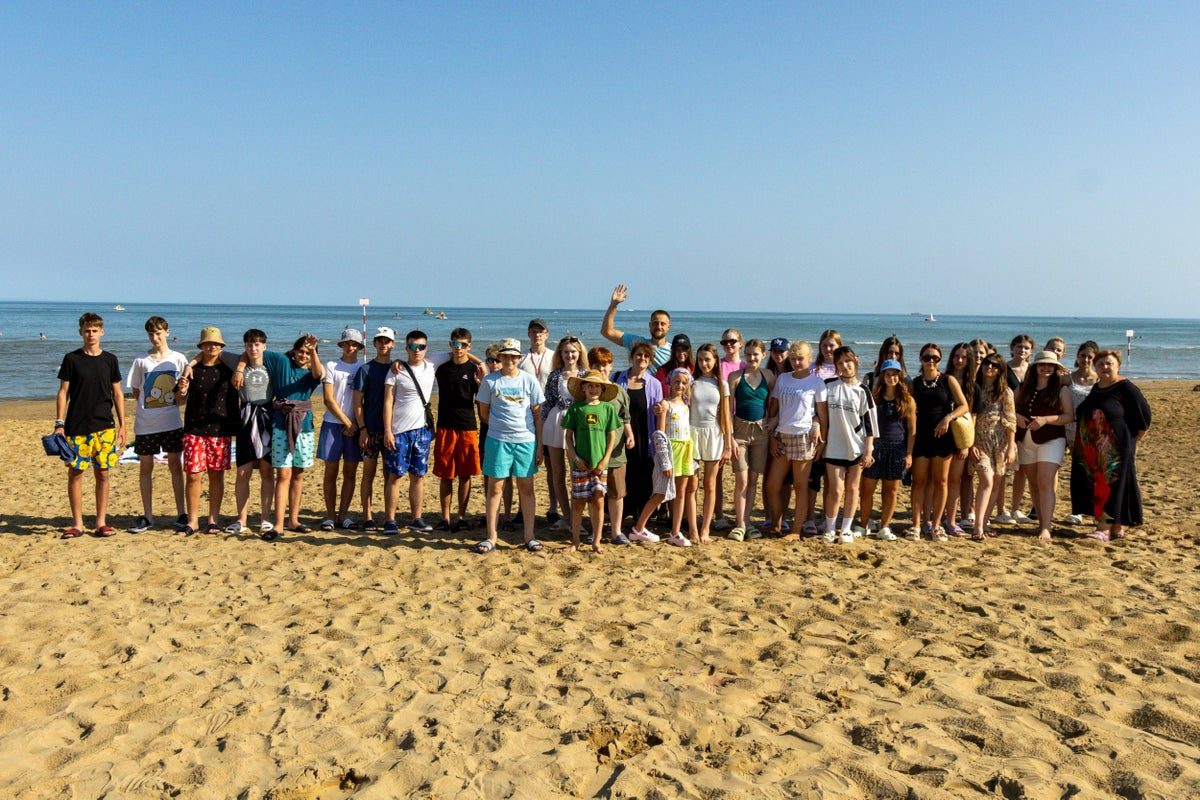
The charity Hope for Ukraine is bringing war-traumatised adolescents to the Adriatic coast for psychological respite, a small but telling piece of Europe's long-term response to the conflict.
Thirty-two Ukrainian teenagers are spending ten days on the Adriatic coast at Lignano Pineta, sleeping through the night without air-raid warnings for the first time since Russia's full-scale invasion in 2022. The retreat, called "No Sirens," is organised by the charity Hope for Ukraine and is designed to ease the psychological damage inflicted on children who have grown up under bombardment.
The programme sends groups to Italy for beach outings, trips to Venice, and unstructured time with peers. Organisers say the goal is straightforward: to hand back a fragment of childhood to adolescents who have spent four years associating every loud noise with mortal danger.
A generation shaped by sound
Vlad, 17, fled Orikhiv in the Zaporizhzhia region with his family and has watched from a distance as Russian guided aerial bombs, artillery, and drones reduced the town to rubble. "Recently, a three-ton bomb was dropped on the town. My home was destroyed, and there is almost nothing left of it," he says.
His companion Yevhen, also 17, comes from Henichesk in the Kherson region. He recalls waking to gunfire at a Russian-manned checkpoint during his family's escape from occupied territory. The next morning, he saw a civilian minibus riddled with bullets and covered in blood. "Seeing that was one of the most terrifying moments of my life," he says. His uncle Hennadii, a Ukrainian journalist, was captured in occupied Henichesk in 2022; the family knows he has been beaten and tortured and can only hope he will surface in a future prisoner exchange.
Organisers see change within days
Programme coordinator Ruslana notes that the children arrive highly sensitised to noise. "Even something as natural as thunder during a storm can trigger fear and anxiety," she says, recalling one night when a nearby storm "brought back memories of explosions and air raid sirens."
Anastasiia, an organiser originally from Russian-occupied Melitopol who now works with children in Kyiv, says the transformation is visible quickly. "They start smiling, talking to one another, taking part in creative activities, and behaving like children again," she says. Selection for the camp prioritises those who have lost homes, whose parents are serving at the front or have been killed, and those in serious financial hardship.
Safety with an expiry date
The teenagers are under no illusion about what awaits them. "Returning home is difficult to think about. I know that when I go back, the reality of the war will still be there," Yevhen says. Vlad puts the stakes plainly: "It has given me a chance to experience what it feels like to live without fear, even if only for a little while."
For Europe, camps like "No Sirens" represent a quiet strand of the continent's response to the war: not weapons or sanctions, but the slow, unglamorous work of keeping a generation psychologically intact. The fighting continues, but in Lignano Pineta, for ten days, the sirens are silent.