Alarming reports that Putin aims to escalate war, despite CIA warning (Ukraine Battlefield update, Day 1,645)
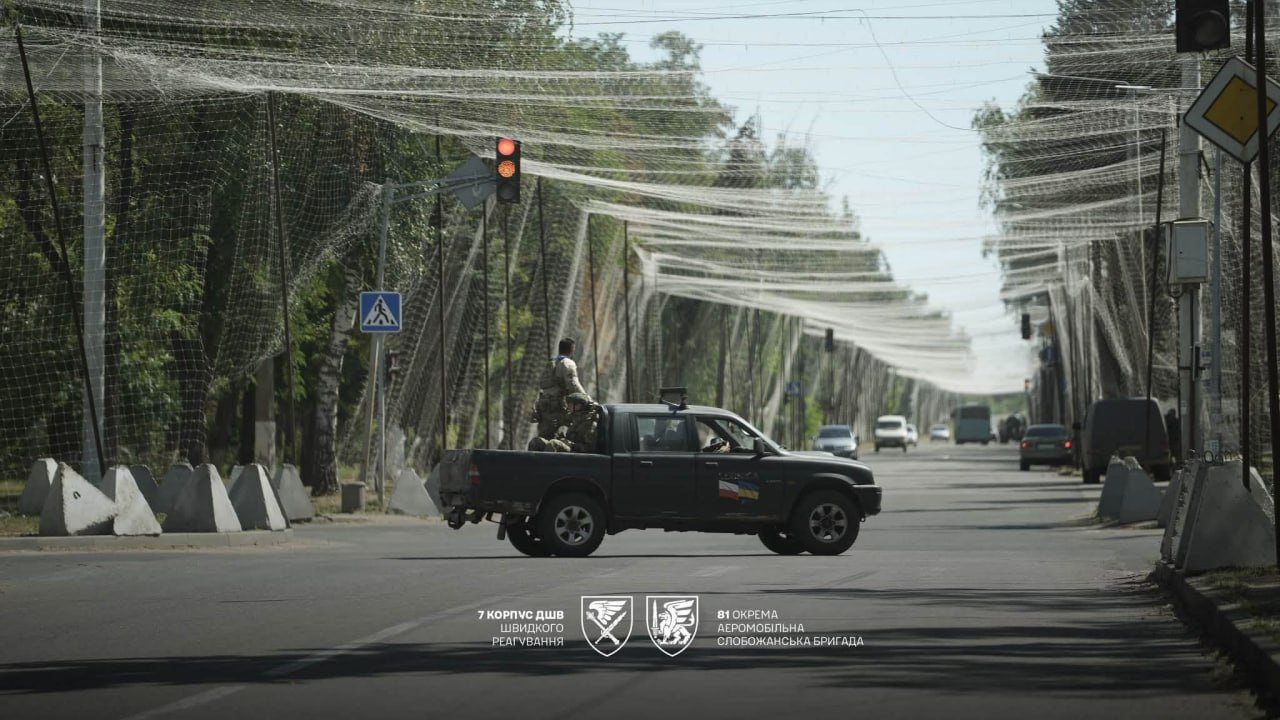
Ukrainians pound Russian refineries, with ordinary Russians queuing 11 hours for a few litres of fuel, in a country once dubbed as being a giant petrol station.
The Kremlin is preparing for a serious escalation of the war. This could involve nuclear brinkmanship with tactical weapons as well as an attack on Nato Member States.
If three Kremlin-linked sources cited by the global news agency Bloomberg are correct, we, and Ukraine in particular, should prepare for a new escalation of the war by Moscow.
Russian president Vladimir Putin is reportedly preparing to intensify ballistic attacks on Kyiv and other Ukrainian cities. According to unnamed sources, even the use of tactical nuclear weapons against Ukraine cannot be ruled out.
Such a possibility is reportedly being discussed increasingly often within the hawkish camp.
It is important to add, however, that nothing currently points to this scenario. Alexander Gabuev, a respected Russian expert at the Carnegie Centre, also believes that as long as Putin can escalate using conventional weapons, including by increasing the number of missile strikes, he has little incentive to cross the nuclear threshold.
Tactical nuclear weapons, Bloomberg wrote, are fitted with lower-yield warheads and have a shorter range than strategic missiles.
Their aim is not to destroy an entire city, but they still have enormous destructive power and pose a risk of nuclear contamination across a wide area.
Several analysts, including military expert Gustav Gressel, consider this option highly unlikely, unlike mobilisation, which he believes will certainly take place in some form.
“I estimate that it will be a partial version, but they are considering all options, and a full mobilisation is one of them. But if you declare it, you need a reason to do so,” Gressel told Denník N.
According to him, radical factions within the security services, the military and the intelligence services see such a reason. “They argue that the West is too cowardly to do anything anyway, and that they can tell the public that we are at war, one being waged against Russia by the West. I am sceptical that it will happen, but never underestimate the Russians’ capacity to do something stupid,” the Austrian expert added.
Sanctions and massive Ukrainian attacks on large storage facilities and refineries, which have triggered a new wave of fuel shortages across Russia, as we write below, have so far not motivated the Kremlin to enter peace talks. Those talks have collapsed entirely.
According to Bloomberg, the Kremlin sees Ukrainian strikes as attacks by Nato member states, “because alliance members provide Kyiv with weapons and intelligence”.
Ratcliffe came to Moscow with a warning, but will Putin make the same mistake? The global news agency’s findings are all the more serious because they emerged at a time when there is renewed speculation about a Russian escalation against Nato countries.
This was reportedly, according to the US daily The Wall Street Journal (WSJ) , the main subject of the US CIA director’s surprise visit to Moscow.
Citing people familiar with the circumstances, it said that John Ratcliffe flew there aboard a Boeing C-17 military transport aircraft to warn Russia against attacking Nato countries.
US intelligence services had previously said that Putin might seek to test the unity of the North Atlantic Alliance through “a limited attack on one of the allied countries”.
According to the WSJ, US officials fear that Putin, due to the unfavourable situation on the Ukrainian front and domestic pressure, could launch an attack ranging from a cyberattack to a small-scale ground invasion, probably against one of the Baltic countries.
According to the newspaper, he may also be motivated by a shortage of US ammunition for Trump’s war with Iran.
This version of the CIA director’s unexpected trip was also supported by the influential Brussels-based website Politico . It wrote that the risk of a potential Russian attack particularly concerns the three Baltic countries: Lithuania, Latvia and Estonia.
It also recalled that, at the end of 2021, the then intelligence chief Bill Burns warned Putin against invading Ukraine, something Moscow repeatedly denied, only to launch a full-scale war three months later, disguised as a “special military operation”, and so far failing to achieve a single one of its objectives.
Thirdly, RFE/RL obtained a letter to European Commission president Ursula von der Leyen, in which commissioners from the Baltic countries, Finland and Poland, along with the EU’s foreign policy chief, reported growing concerns in the Baltics over Russian aggression and a “deteriorating security environment”, against the backdrop of an “increased number of airspace violations and drone incursions”.
Russians are once again complaining that they cannot fill up anywhere. At the end of the summer, Russia was hit by a second wave of the petrol crisis caused by Ukrainian attacks on refineries and energy infrastructure.
Roman Pataj is Head of the Opinion section at Denník N and, since 2022, the author of the Ukrainian Battlefield update. He graduated in political science and has worked as a journalist since 2002.