Russian-American businessman to lead US-funded Caucasus trade corridor
A Russian-American investor with ties to Donald Trump has been appointed to head a $200 million US fund developing a strategic trade route bypassing Russia and Iran, raising both geopolitical hopes and regional concerns in the South Caucasus.
Konstantin Sokolov, a 52-year-old Russian-American businessman, has been appointed to lead the Trans-Caspian Enterprise Fund, a new US State Department investment vehicle. The fund, also known as TRIPP+, launched with over $200 million in capital to finance infrastructure across the South Caucasus and Central Asia.
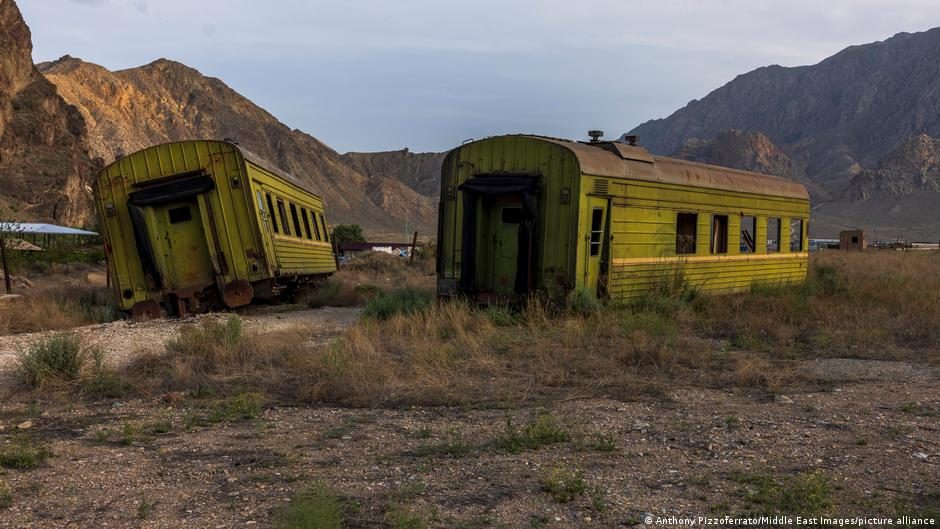
This capital will underwrite the "Trump Route for International Peace and Prosperity," a transit corridor connecting Azerbaijan to its Nakhchivan exclave through Armenian territory. The project stems from an August 2025 US-mediated peace deal and a June 2026 cooperation framework between Washington and Yerevan.
For European markets, the corridor represents a strategic alternative to existing supply chains that currently traverse Russia or Iran. Establishing a reliable westward trade artery through the Caucasus is a stated priority for Washington to reshape regional economic integration and reduce dependency on adversarial states.
Strategic acquisitions and political ties
Sokolov, who emigrated to the United States at age 21 and founded Chicago-based IJS Investments, brings a complex portfolio to the role. He is a major donor to the US Republican Party, having contributed approximately $11 million to Donald Trump’s MAGA movement over a single year.
Before his state department appointment, Sokolov aggressively expanded his footprint in Armenia. In 2024, he acquired Viva Armenia, the nation’s largest telecommunications provider, and later purchased the local subsidiary of Russian telecom giant Rostelecom.
He also facilitated the acquisition of the Teghut copper-molybdenum mine, which holds Armenia’s second-largest reserves of 450 million metric tons of ore. The asset was previously held by Russia’s state-owned VTB Bank, which is currently under Western sanctions, prompting Sokolov to use a third-party company to avoid a direct transaction.
Regional reactions and geopolitical calculus
The rapid consolidation of foreign capital in Armenia’s critical sectors has drawn sharp criticism from domestic opponents. Mesrop Manukyan, a lawmaker from the Armenia Alliance, warned that the TRIPP+ project threatens national security by creating a disguised extraterritorial corridor.
Analysts suggest Sokolov’s appointment serves a dual purpose for Washington. Benyamin Poghosyan of the APRI think tank noted it could be "a subtle gesture by Washington aimed at easing Moscow's fierce criticism of the project." Alternatively, it may be a pragmatic choice given Sokolov’s deep understanding of the post-Soviet business environment.
Allies of Armenian Prime Minister Nikol Pashinyan dismiss fears that Sokolov acts as a compromise figure for Moscow, pointing to his public criticism of Russia’s war in Ukraine. Aram Sargsyan, head of the Republican Party of Armenia, emphasized the practical value of this background. He noted that Sokolov "understands the Russian mentality perfectly, speaks the language and knows how to work with relevant Russian institutions."
During an early August meeting in Yerevan with Armenian leadership and US special envoy adviser Aryeh Lightstone, the long-term scope of the initiative was reaffirmed. Lightstone indicated that the initial $200 million allocation, which runs through 2036, is merely a starting point for broader future investments.