AfD Pushes to Replace German Citizenship Test With Cultural Essays
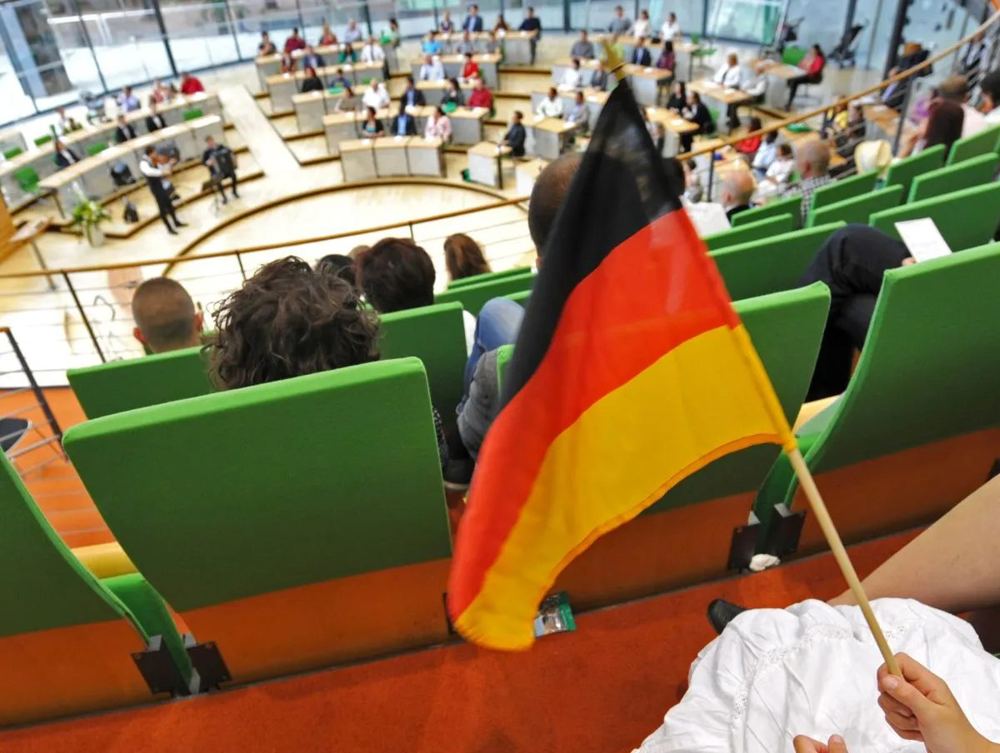
The far-right Alternative for Germany is campaigning to replace the standard naturalisation exam with a subjective cultural essay, a move that threatens to complicate integration for foreign workers and reshape the country’s demographic landscape.
The Alternative for Germany (AfD) is campaigning to replace the standard German naturalisation exam with a subjective written essay. The far-right party argues this change is necessary to assess an applicant's commitment to "German dominant culture and system of values".
Under current rules, foreign residents must live in Germany for five years, demonstrate B1 language skills, prove financial independence, and pass a 33-question multiple-choice test. The AfD’s Saxony-Anhalt deputy chairman, Hans-Thomas Tillschneider, recently stated the party would work towards "significantly increasing the level of difficulty" of these questions.
Tillschneider criticized the existing questions as "the simplest kind", suggesting the addition of more complex prompts. The party’s regional manifesto explicitly calls for naturalisation essays instead of tests to better evaluate political and historical knowledge alongside language proficiency.
Tillschneider himself acquired German citizenship without taking a knowledge test, as his family qualified for resettlement under Article 116 of German law. He recently walked out of a media interview when questioned about his loyalty to the constitution and alleged ties to right-wing extremist networks. Further reporting noted he kept a cup from the Russian army in his office, acquired more than a year after Russia began its war on Ukraine.
Criticism of the current multiple-choice format extends beyond the far-right. Conservative parties argue it fails to filter out anti-democratic views, while left-leaning parties contend it merely rewards memorisation through widely available practice applications.
For Germany’s economy, tightening naturalisation rules carries significant risks. The country relies heavily on foreign talent to offset an aging workforce and fill critical labor shortages across multiple industries.
Making the citizenship process more subjective and arduous could deter skilled migrants from choosing Germany over competing European destinations. Businesses and investors closely monitor these demographic policies, as labor availability directly impacts long-term economic growth and market stability.
The AfD has previously attempted to tighten citizenship requirements by promoting misleading statistics. Party co-leader Alice Weidel falsely claimed that 306,000 unemployed people were granted German citizenship. In reality, that figure represented the total number of unemployed individuals at the end of 2025 who had naturalised at some point, within a broader unemployed population of 2.9 million.
Existing laws already strictly require applicants to prove they can support themselves without relying on state benefits. Being approved for citizenship without a steady income or independent financial means remains exceptionally rare.