Joint reburial of WWII victims marks fragile step in Polish-Ukrainian reconciliation
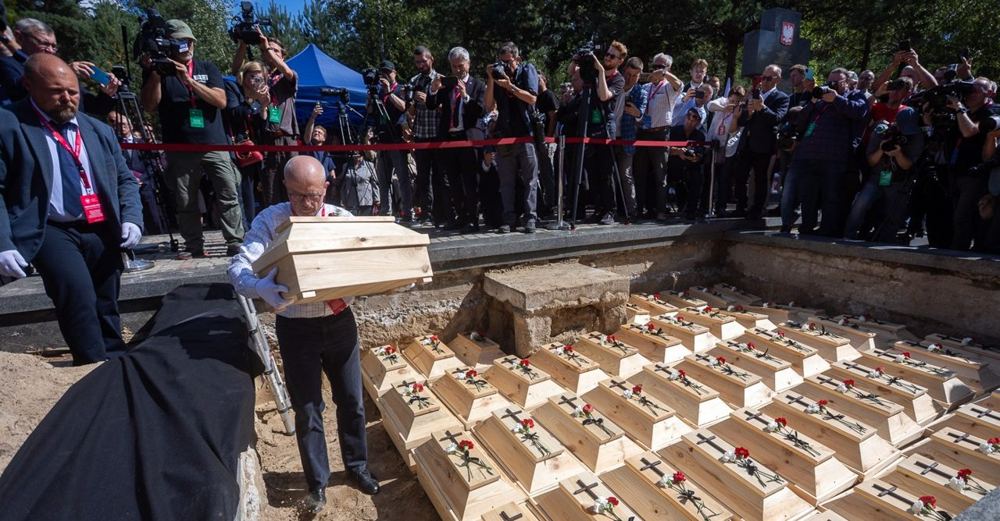
The reburial of 55 Polish victims of the Volhynia massacres in Ukraine signals a diplomatic thaw, though historical disputes continue to complicate Kyiv’s European Union accession path.
The remains of 55 Polish victims of Second World War massacres, including 26 children, have been reburied in western Ukraine during a joint ceremony attended by officials from both nations. The exhumations in Ostrówki followed Kyiv’s decision last year to lift a long-standing moratorium on searching for victims of the Volhynia massacres.
Polish Culture Minister Marta Cienkowska described the funeral as an important moment following decades of waiting for the victims' families and the Polish state. Karol Polejowski, deputy head of Poland’s Institute of National Remembrance, noted that the presence of Ukrainian representatives at the ceremony filled him with optimism for the future.
The Volhynia massacres, orchestrated by the Ukrainian Insurgent Army in 1943, resulted in the deaths of approximately 100,000 Poles. Recent exhumations revealed that most victims were buried without coffins, with skeletal remains showing brutal injuries consistent with historical accounts of killings using agricultural tools. Material from the bones has been secured for genetic testing to formally identify the deceased.
Reconciliation tested by historical memory
Despite this breakthrough, the process of historical reconciliation remains highly fragile and directly intersects with Ukraine’s European Union ambitions. Poland officially recognises the events as genocide, a label Kyiv rejects, and recent political decisions in Ukraine have reignited diplomatic tensions.
In May, Ukrainian President Volodymyr Zelensky named a military unit after heroes of the UPA, prompting Polish President Karol Nawrocki to strip him of Poland’s highest state honour. In a letter read at the reburial, Nawrocki warned that continuing the tradition of Banderite ideology places actors "outside the community of citizens of the free, civilised world".
Warsaw has explicitly warned that honouring figures associated with the massacres could jeopardise Ukraine’s integration into the European Union. This concern was amplified earlier this month when Zelensky signed a law establishing a new national pantheon of Ukrainian heroes, a move watched closely by European policymakers.
In response to the fallout, Zelensky recently proposed a five-point plan to alleviate the crisis, including expanded exhumations and the opening of historical archives. While Poland has welcomed the gesture, Warsaw maintains it will carefully monitor how these commitments are implemented in practice.
Public sentiment in Ukraine remains complex, with a recent survey by the Rating Group finding that nationalist leader Stepan Bandera was named as the country’s fourth greatest hero by 11 percent of respondents. This domestic reality ensures that historical memory will remain a central factor in bilateral relations and EU accession talks.