European gas prices top €70 amid Middle East supply fears and low storage
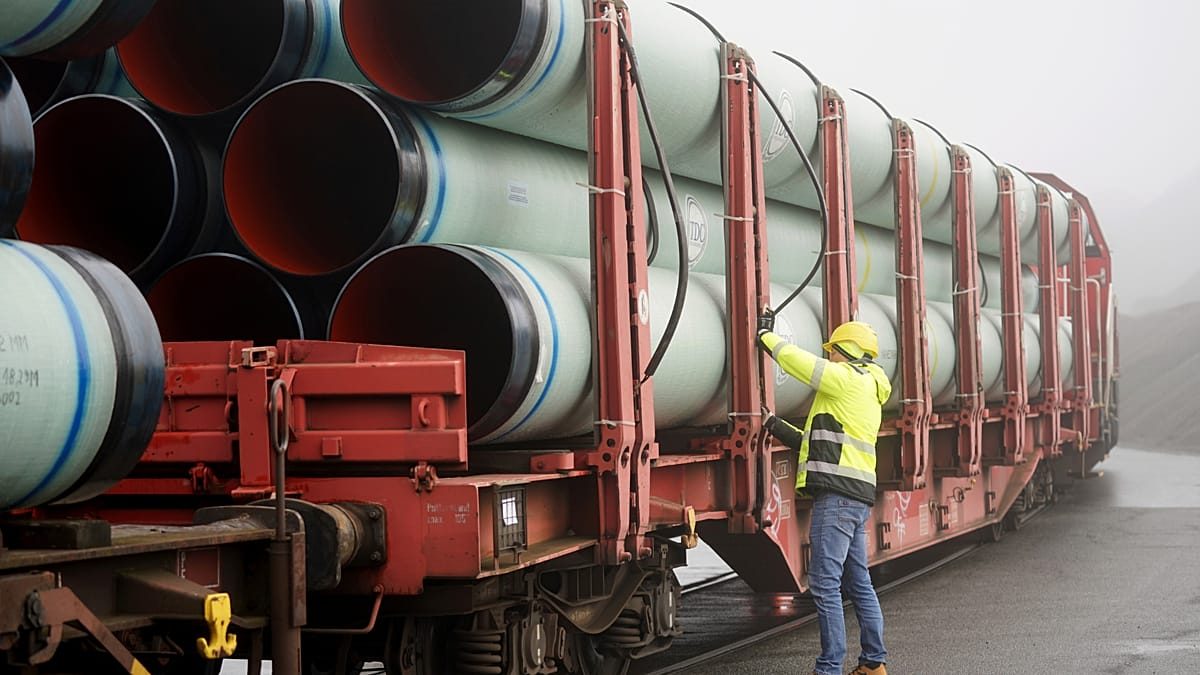
The benchmark Dutch TTF natural gas price has surged past €70 per megawatt-hour due to escalating US-Iran conflict, threatening Europe’s winter energy security and industrial production.
The benchmark Dutch TTF natural gas price for October 2026 delivery climbed to an intraday high of €70.85 per megawatt-hour on Monday. This marks the first time prices have exceeded €70 since January 2023. The surge follows renewed military escalation between the United States and Iran.
On Sunday, US forces targeted Iranian rocket launchers near the Strait of Hormuz, leading to Iranian missile retaliation against US positions in Jordan. The strait remains effectively closed, disrupting a critical chokepoint that normally handles one-fifth of global liquefied natural gas trade.
This supply uncertainty arrives as European nations urgently attempt to refill gas storage facilities ahead of winter. Data from Gas Infrastructure Europe shows bloc-wide storage is currently 64.7 per cent full, trailing historical averages for this time of year.
Elevated market prices have severely hampered this refilling effort across the continent. The price spread between current summer rates and winter contracts has frequently been too narrow or negative to justify the cost and risk of holding inventory.
Consequently, the Netherlands and Germany face a realistic risk of missing their respective 1 November storage targets of 80 per cent and 70 per cent. While low reserves do not guarantee a shortage, they leave the region highly exposed to market volatility.
The stakes are particularly high for Europe’s largest economy. Sebastian Heinermann, managing director of the German gas-storage association INES, warned that a cold winter combined with inadequate reserves could prevent Germany from fully covering normal gas demand.
He noted that if prices exceed what industrial consumers can afford, companies will be forced to cut production. Such a scenario would risk substantial economic damage across the manufacturing sector.
Supply chain pressures mount
Southern Europe is also navigating significant supply headwinds. Last Thursday, QatarEnergy informed Italian utility Edison that it was extending a force majeure suspension on liquefied natural gas deliveries until early November.
This long-term agreement typically provides the equivalent of 10 per cent of Italy’s annual gas consumption. Edison stated it is actively securing replacement volumes to honour its customer commitments.
Although the European Union imports relatively little gas directly from the Middle East, with Qatar accounting for just 3.7 per cent of total imports in 2025, regional disruptions still dictate pricing. A prolonged Gulf export halt would force European buyers into aggressive bidding wars with Asian competitors for remaining cargoes.
Goldman Sachs analysts Samantha Dart and Laura Cyr cautioned last week that wholesale prices could approach €100 per megawatt-hour under such conditions. They estimated that if Middle East energy exports only normalise gradually through 2027, December 2026 TTF prices would likely need to exceed that threshold.
The timeline for these wholesale spikes to impact consumers varies significantly across the bloc. Oxford Economics estimates that wholesale price changes take an average of six months to fully translate into consumer bills.
Prices can adjust within months in France, Italy, Spain, and the Netherlands, whereas Germany and Austria may see a lag of nearly a year. Despite its currently robust storage levels, Italy remains the most exposed major economy due to its heavy gas reliance and rapid price transmission mechanisms.