How the make up of the Danish population could change by 2100
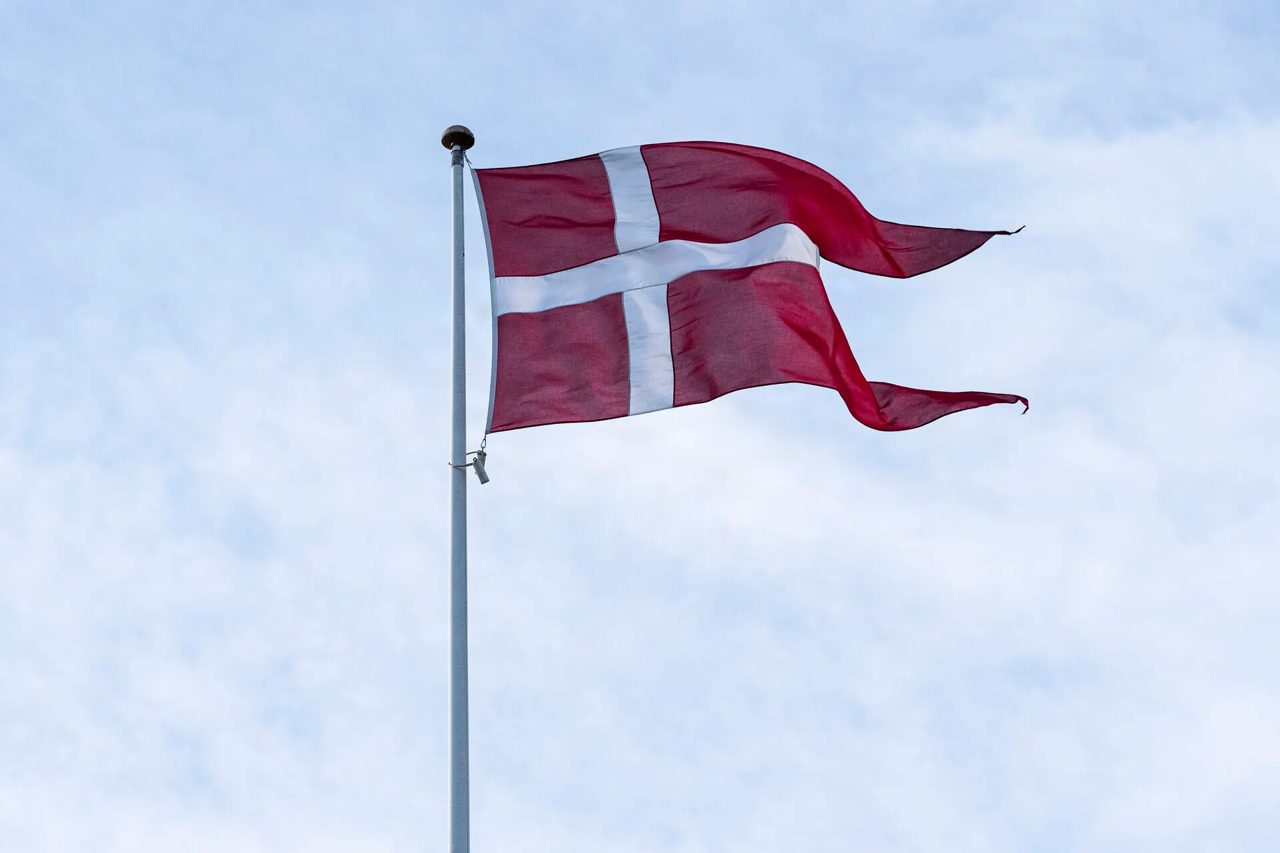
A projection by Denmark's Ministry of Finance has predicted the make-up of the Danish population in five-year increments from 2030 to 2100, based on net migration figures from the past six years. What are the results?
The projection, prepared at the request of Mikkel Bjørn, an MP from the far-right Danish People's Party, shows that "people of Danish descent" will still make up a clear majority of the population in 2100, if current trends continue.
The calculation is based on average net immigration from 2019 to 2025.
In Bjørn's original request, he asked the finance ministry to give results split into four different categories: people of Danish descent, of Western descent, of non-Western descent and of MENAPT descent (MENAPT stands for Middle East, North Africa, Pakistan and Turkey).
"Western" is an established category in Danish statistics and includes the EU, Andorra, Iceland, Liechtenstein, Monaco, Norway, San Marino, Sweden, the UK, the Vatican, the US, Canada, Australia and New Zealand.
The finance ministry's response to Bjørn includes figures for Western, non-Western and Danish descent, arguing that statistics agency Statistics Denmark does not collect data based on country of origin, which therefore makes it impossible to collect information on MENAPT countries.
The ministry also states that the figures are "a mechanic scenario calculation" and that they should not be considered a prognosis for how the situation is expected to develop.
The figure which has perhaps made the most headlines is that the number of "people of Danish descent" is predicted to fall to 68.9 percent of the population of the country by 2100, down from 83.2 percent today.
The number of "non-Western immigrants" is set to rise from 7.7 percent to 10.9 percent over the same 70-year period, while the number of "Western immigrants" is set to rise from 5.7 percent to 9 percent, if immigration occurs at the same rate as it has done in the last six years.
It also calculated the same figures for " efterkommere " or descendents of each immigrant group.
For descendants of non-Western immigrants, it predicted that they would make up 6.8 percent of the population, while descendants of Western immigrants would make up 4.5 percent of the population if net migration to Denmark continues at the same rate.
The numbers cited above are all significantly different if the figure for net migration in the first half of this year are used instead. In that scenario, the number of people of Danish descent will fall from 83.2 percent now to 74.3 percent in 2100, with the number of non-Western immigrants rising to 7.8 percent, and non-Western to to 6.2 percent.
A person of Danish descent is described as a person who has at least one parent who is born in Denmark and who is a Danish citizen. That person can be either born in Denmark or born abroad. This means, for example, that a child born to a foreign-born Dane is not considered to be "of Danish descent", even if the child was born in Denmark.
An immigrant, or indvandrere , is defined as someone born abroad where neither parents were born in Denmark with Danish citizenship, while an efterkommere is someone born in Denmark to parents who do not hold Danish citizenship and who were not born in Denmark.
Reported by The Local Denmark · presented in full by the Europes Room.