The total comprehensive list of all the Danish pastries you'll ever need to know about
Danes take pride in their cakes and pastries. It plays such a big part of their identity, that they can name most pastries they’re presented with at the drop of a (napoleons)hat - a joke that will make sense if you keep reading.
Danes take pride in their cakes and pastries. It plays such a big part of their identity, that they can name most pastries they’re presented with at the drop of a (napoleons)hat - a joke that will make sense if you keep reading.
You can’t consider yourself properly integrated until you can name most of the common ones. Whether you’re aiming to look informed, looking for a comprehensive list you can eat your way through, or are simply passionate about cake, this cheat sheet should check all your boxes.
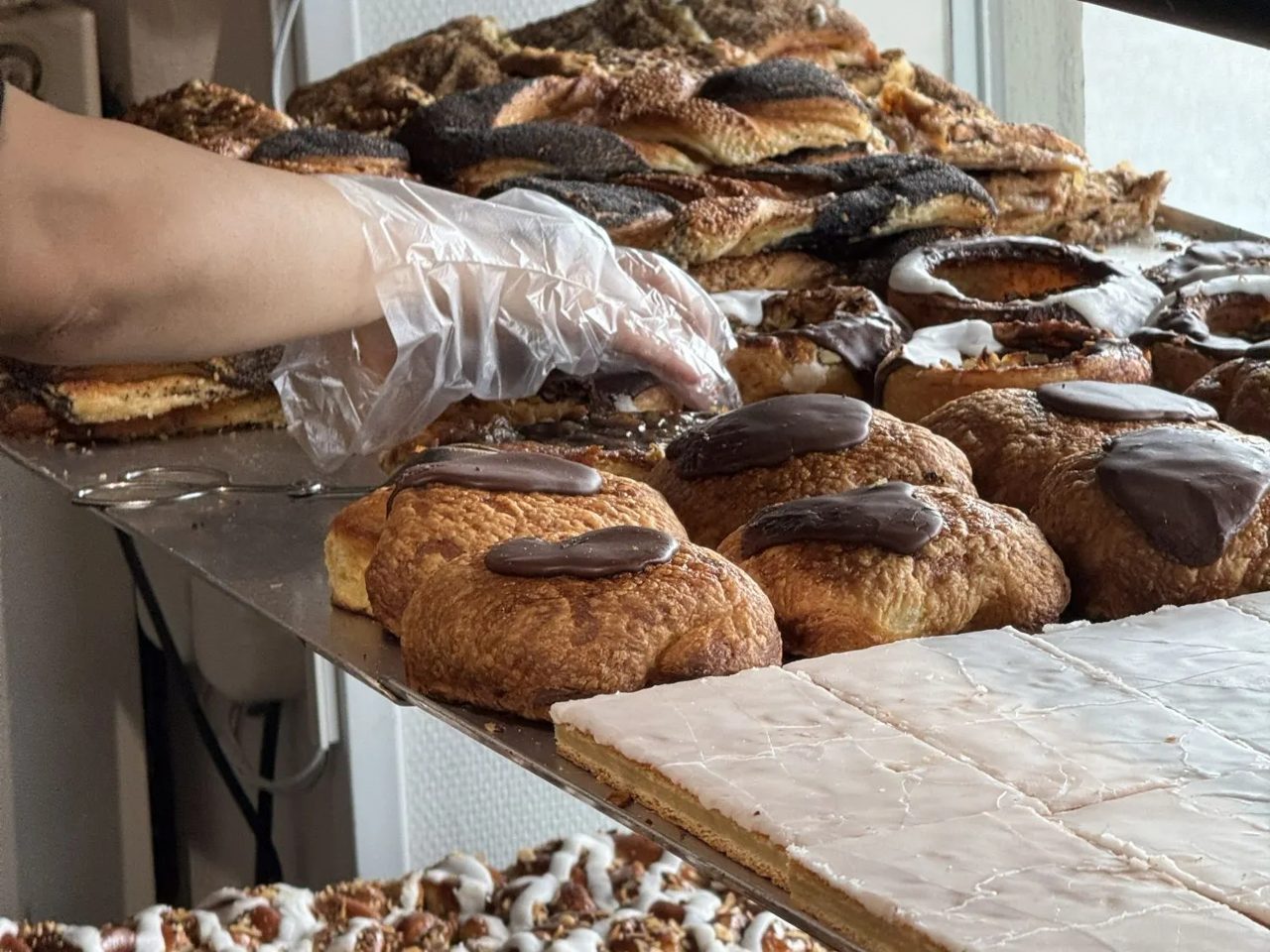
Contrary to its moist, doughy Swedish cousin, the kanelbulle , the kanelsnegl , or cinnamon snail, is a crispy, buttery, flaky pastry. The cinnamon should be almost welded to the surface with melted sugar, and it's normally topped off with a dollop of icing.
The Kanelsnegl has spawned countless luxurious variations, such as the Høj Snegl , or high snail, which is a taller version, which is filled with remonce , the creamy Danish cake filling made from creaming butter, sugar, and sometimes spices or marzipan together.
You will find several variants of the kanelsnegl . A favourite is a romsnegl which has rum essence mixed into the remonce , rather than cinnamon, and typically comes with hundreds and thousands sprinkled onto the icing.
This poppy-seed foldover is definitely a best-seller. It's traditionally stuffed with remonce and is somewhat less sweet than the kanelsnegl .
You can also find a grovbirkes , which is a savoury poppyseed roll which can be eaten with cheese.
According to St Peders Bageri, Copenhagen's oldest bakery, a tebirkes should be "crisp - and not dry - and at the same time have a centre that is moist and soggy".
A kringle is a true classic. A flaky pastry filled with remonce and typically topped with sugar and almond flakes which get beautifully toasted in the oven. What makes the kringle iconic is its shape: a sort of twisted loop, which many would associate with the shape of a pretzel.
This shape is dear to many Danes, as it is featured above many traditional bakeries – the traditional sign for a bakery is a golden pretzel-looking shape hanging above the entrance.
A Frøsnapper or "seed snapper" is a buttery puff pastry that's been smeared in a sticky remonce and seeds and then twisted around itself and baked to make a sort of crunchy, sweet wand. They are also sometimes made in savoury versions with cream cheese and sesame seeds.
Competing with the kanelsnegl for the top spot in the hierarchy of Danish wienerbrød is the spandauer , named after a famous Berlin prison which it supposedly resembles.
Flaky dough, laminated with butter like a croissant, is shaped to form a well into which jam or kagecreme , a thick custardy cream, is poured, with sliced and lightly broken-up nuts often sprinkled on top.
A kagemand isn’t a pastry which is readily available at a bakery. You will usually have to order ahead, and the cake, which is shaped like a man, is typically eaten for birthdays or other celebratory occasions.
If you’re thinking, “A cake man ? That’s not very inclusive,” fear not: just order a kagekone (cake woman) or kageperson (cake person), based on what suits you best.
The cake will typically be a traditional, flaky wienerbrød with remonce and decorated with icing sugar, sweets and a marzipan face. You can typically also request to have a name be drawn on with melted chocolate, if it’s to celebrate a birthday. The cake also often comes in brunsviger , studenterbrød , and hindbærsnitte variants (keep reading to find out what they are).
If you’ve been in Copenhagen in January and February in recent years, this word should be familiar to you. The fastelavnsbolle is a seasonal pastry eaten around carnival, just before fasting for lent. This pastry comes in many shapes and forms (especially in recent years), but one of the more traditional fastelavnsboller you will find in traditional bakeries (not the fancy Copenhagen ones), is a basic puff pastry, either filled with jam or kagecreme. In many ways this pastry is very similar to a spandauer.
A traditional fastelavnsbolle won’t set you back much more than 20 kroner, unlike the swanky ones introduced by hip bakeries, which can easily go for 60 kroner.
The brunsviger could be considered the focaccia of Denmark (though Italians will likely accuse us of blasphemy for that statement).
The cake is made from a soft, brioche-like yeast dough covered in a thick, gooey layer of caramelised brown sugar and butter. Before the sticky caramel layer is added, the baker presses their fingers deep into the risen dough, like you might with a focaccia.
Brunsviger is fiercely claimed by the Danish island of Funen. The locals consider it an unofficial national dish and are incredibly proud of it. So seriously, in fact, that they’ve dedicated a whole day to it. Brunsvigerens Dag can be celebrated every year on the Thursday of week 41.
On Wednesdays, most bakers will make an onsdagssnegl , a "Wednesday snail", which is a jumbo version of a kanelsnegl with a special twist, often with a softer dough and cream in the middle.
The traditional fastelavnsbolle comes in two variants. One is the flaky pastry variant, which we went through above. The other is a soft, yeasty dough filled with either kagecreme or jam, and topped with icing. Danes disagree on which variant is the better of the two, and having an opinion will bring you one small step closer to integration into Danish society.
A kanelgiffel , is another cinnamon pastry made with soft, brioche-like dough. It is often (but not always) bite sized.
While it shares the same flavour profile as a kanelsnegl , the dough is more similar to an onsdagssnegl . However the shape is distinctly different. Instead of being rolled into a long log and sliced into open spirals, the giffel is folded over the filling and baked pastry side down, trapping the gooey cinnamon remonce inside a soft pocket of dough.
These plaited buns or twists are made by weaving a soft dough around a delicious cardamom remonce before baking. They are closer to a Swedish cardamom bun ( kardemommebullar ), and are delicious, with a buttery, earthy aroma. You can also get a cinnamon version.
The Danish drømmekage is possibly Denmark’s most famous sponge cake. Directly translating to “dream cake” (an appropriate translation if you ask us), it consists of a light, fluffy vanilla sponge cake, topped with a thick, chewy layer of caramelised brown sugar, butter, and shredded coconut.
It became a national phenomenon in 1960 when a 13-year-old girl entered her grandmother’s recipe into a local baking competition in the town of Brovst. The cake was such a hit that the flour company hosting the competition, Amo, published the recipe under the name “Drømmekage fra Brovst”. You can still find it on their website today.
A lagkage is a quintessential Danish celebration cake. This isn’t typically one you will buy in bakeries, but rather bake yourself. A traditional lagkage will consist of layers of sponge cake, kagecreme , fruit, and topped with whipped cream.
If the prospect of baking your own lagkage is a bit overwhelming, you can get the fancier variant, which can be ordered at a bakery: the othellolagkage . Similar to an ordinary lagkage , the othellolagkage features layers of vanilla sponge cake, separated by vanilla pastry cream. However this version has a base layer consisting of a chewy, dense marzipan cake (known as mazarin ), and is entirely wrapped in a smooth band of marzipan (a fore-warning: marzipan features a lot in Danish cakes). It is then finished with a glossy layer of dark chocolate glaze and piped with decorative swirls of whipped cream.
A citronmåne (literally a “lemon moon”) is the most legendary, mass-produced commercial cake in Denmark. While you can find high-end versions in bakeries, the most famous ones come plastic-wrapped from the supermarket.
This cake, which is a dense, buttery lemon sponge cake, is baked in a round tin, but then cut exactly in half, creating two “moons”. It is then covered in bright yellow lemon icing.
This cake is also known as a “police cake”, a joke based on the stereotype that the staple diet of Danish police officers is the citronmåne.
A jorbærkage (strawberry cake), also commonly known as a jordbærtærte (strawberry tart) is considered the ultimate taste of Danish summer.
While many call it a cake, it more closely resembles a decadent, multi-layered tart.
What makes a jordbærkage so special is its combination of textures and flavours built into each layer. The base consists of a shortcrust pastry shell, inside which you will find a chewy layer of mazarin . Once baked and cooled, the mazarin is coated with a thin layer of melted dark chocolate, which adds a bitter contrast to the sweet cake and, if done well, adds a crispy texture. On top of the chocolate, a thick dollop of konditorcreme ( kagecreme folded together with whipped cream) is added. The tart is then decorated with a generous mountain of fresh, halved strawberries. Bakeries will often finish it by brushing the berries with a clear apricot glaze or gelatinous substance to make them shine and stay fresh.
A gåsebryst (“goose breast” in English) is a somewhat old-fashioned cream cake which was invented in western Zealand at the beginning of the 1900s.
It gets its name from the domed shape and texture of the white marzipan topping . When marzipan was still made and rolled-out by hand, it was difficult to get it completely smooth, with the texture ending up similar to the feathers on a goose's breast.
It consists of a base made of sponge cake or puff pastry, spread with some kind of fruit compote or jam (usually raspberry, more traditionally prune), and a dome of cream and kagecreme, formed into a long log. The log is then topped with uncoloured marzipan and drizzled with chocolate, then sliced into individual slices so the cross-section of the cake is visible.
From one classic to another, the kajkage is an essential Danish cake which you're unlikely to find in hip Copenhagen bakeries.
Reported by The Local Denmark · presented in full by the Europes Room.