Ukraine: Russia threatens 'devastating' Baltic response
Any escalation in the Baltic region will lead to a significant response, Moscow said. Follow DW for more.
Follow this blog for the latest news on Russia's war in Ukraine on September 1, 2026.
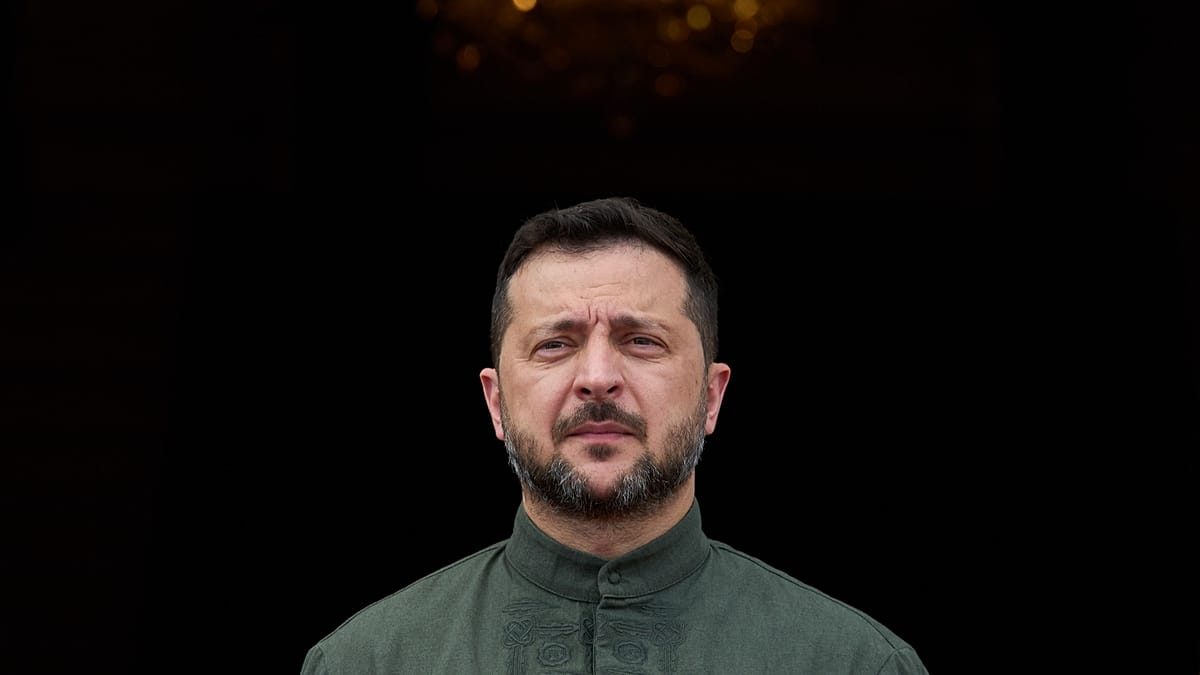
Ukraine's President Volodymyr Zelenskyy warned airlines flying across Russia, saying that Ukraine's drone operations would make the airspace unsafe.
"Russian airspace is becoming completely unsafe," Zelenskyy said in a statement on Tuesday evening. He said that Ukraine was not threatening civilian aviation or individual aircraft.
"There will simply be drones in Russia's skies on a scale that has to be taken into account," he said.
Just last week, Zelenskyy threatened the deployment of up to 1,000 long-range drones per day.
Russian President Vladimir Putin branded Zelenskyy's comments "a declaration of state terrorism."
"They are asking us to resume negotiations... but you don't negotiate with terrorists," Putin said in a televised news conference.
Ukraine has been defending itself against a full-scale Russian invasion since February 2022 and has repeatedly managed to strike targets deep inside Russia with drones as part of its defense efforts.
Russia's military struck two cargo ships carrying military goods, the country's Defense Ministry said.
The vessels were hit in the port of Pivdennyi, near the southern Ukrainian city of Odesa, and in the Black Sea.
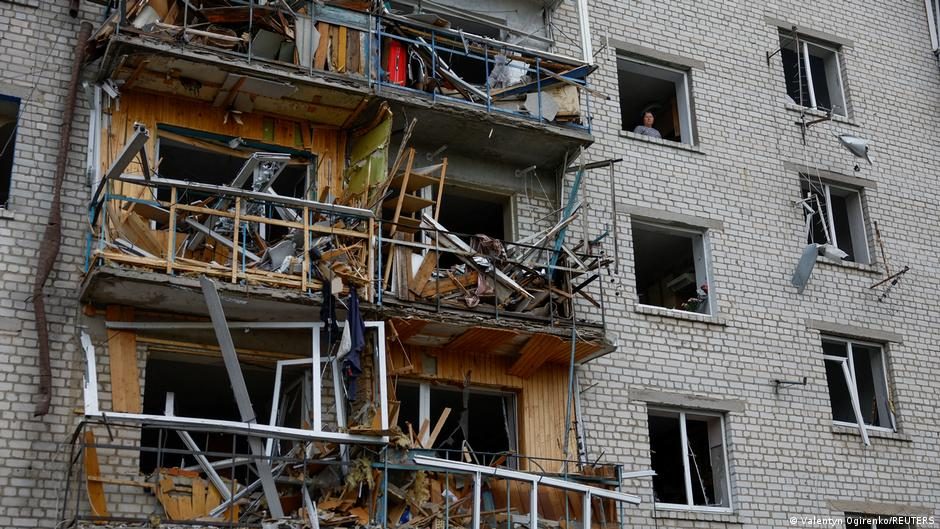
A Russian strike caused damage to a thermal power plant in the region of Odesa, southern Ukraine, state energy company Naftogaz said.
Elsewhere, Ukraine's military intelligence said that a strike by the Ukrainian army hit Russia's Novatek oil complex in the region of Leningrad.
Kyiv and Moscow have been exchanging blows in the past 24 hours, with energy infrastructure being targeted as part of the mutual strikes.
Russia says it will "deliver a devastating response" to any hostile action against it in the Baltic region.
"In the event of a further escalation of the military-political situation in the Baltic region, it must be emphasized once again: Russia's response to the instigators of reckless anti-Russian ventures will be decisive. And they need to know this - it will be devastating for them," Foreign Ministry spokeswoman Maria Zakharova said at her weekly briefing.
It's not exactly clear what she was referring to, but earlier in the day a fire broke out at Russia's Baltic port of Ust-Luga following a drone attack according to the regional governor.
Separately, NATO scrambled military aircraft due to a possible air threat in Latvia's airspace near the town of Ludza, close to the Russian border.
Russia does not believe a moratorium on attacks in the Black Sea , a key grain shipping route, would bring a peaceful resolution to the war closer, Interfax quoted Deputy Foreign Minister Alexander Grushko as saying Tuesday.
Both sides have stepped up attacks in the Black Sea in recent months, driving global grain prices higher .
In mid-August, Ukraine reportedly conveyed an offer to Russia through a third party proposing that both sides halt attacks on civilian targets in the Black Sea.
Monday, Turkish Foreign Minister Hakan Fidan said his country had prepared a plan to ensure the safe passage of grain through the Black Sea and was working on an agreement similar to the 2022 grain deal that would facilitate safe exports.
On Tuesday, European Union defense ministers discussed Ukraine's shortage of interceptor missiles needed to protect cities and civilians.
"July and August have been the deadliest months for civilians in Ukraine," the EU's top diplomat, Kaja Kallas, said on Tuesday about the deadly wave of strikes on Ukraine.
"Russia is really escalating, to hurt the people of Ukraine as much as possible, to break them," she said on the sidelines of a gathering of EU defense ministers in Wicklow in Ireland.
Against that backdrop, she said securing additional interceptors remains difficult because some countries face security pressures closer to home.
"We know that some of the countries have interceptors that will expire soon. So it would be very good if those would be given to Ukraine," Kallas said.
Beyond efforts to bolster air defenses, the EU is also working to unlock additional financial support for Ukraine's armed forces in the coming days.
Germany's foreign minister said Berlin would respond in a measured way to the discovery of an explosives-laden drone near a Ukrainian cargo plane at Leipzig/Halle Airport in August.
Johann Wadephul said the government was coordinating its approach with NATO and European Union partners.
The case sparked widespread speculation that Russia was responsible, though Berlin has not publicly assigned blame.
To view this video please enable JavaScript, and consider upgrading to a web browser that supports HTML5 video
Despite declining to publicly assign responsibility, Wadephul stressed Germany would not be deterred by the incident.
"Germany will not be intimidated in any way, and that will continue to be the fundamental stance of our policy," Wadephul said, adding that Berlin "stands side by side with our Ukrainian partner."
"Russia must know that Germany is a stabilizing force in Europe, one that is always prepared to negotiate, but which will not be intimidated in any way."
Ukraine's air force said Russia struck at least 28 locations in overnight attacks that continued into Tuesday, with debris falling at several additional sites.
The attack targeted Kyiv and the Odesa region and involved ballistic, cruise and anti-radar missiles, along with more than 200 drones and decoys.
In Odesa, Ukrainian President Volodymyr Zelenskyy said a Russian strike "deliberately damaged a border crossing point on the border with Romania, as well as export infrastructure."
Russia and Ukraine are not only battling for dominance in the air with drones, but are also increasingly taking the drone war to the seas.
The commander of Ukraine's Unmanned Systems Forces, Robert Brov, said Tuesday that his force struck 54 Russian "shadow fleet" vessels in August.
Separately, Russia's state news agency Tass reported that Russia attacked "more than 150 seagoing vessels involved in military cargo deliveries for the Ukrainian army, as well as accompanying patrol boats, during the summer."
Reported by Deutsche Welle: DW.com - Europe · presented in full by the Europes Room.