Why environmentalists are taking Italian regions to court over hunting calendars
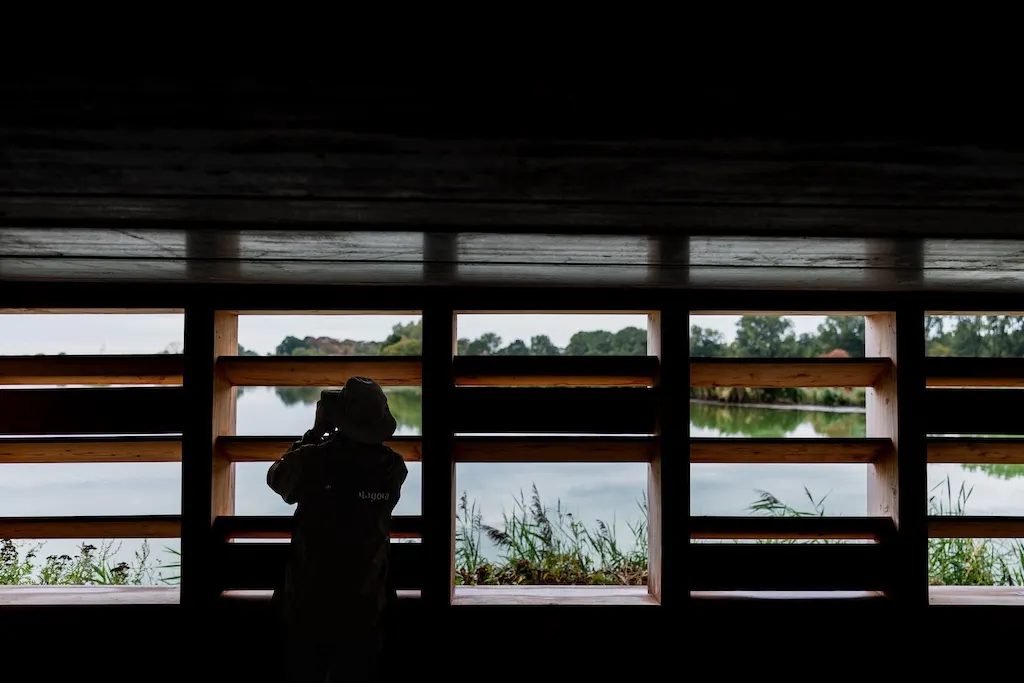
As Italy’s hunting season approaches, several regions are gearing up for an early opening – but a group of animal rights organisations is putting up fierce resistance.
As Italy’s hunting season approaches, several regions are gearing up for an early opening – but a group of animal rights organisations is putting up fierce resistance.
It’s a busy time of year for Gaia Angelini, president of the environmental protection and animal rights group Green Impact.
The Rome-based NGO is currently involved in three separate court appeals trying to put the brakes on Italy’s shooting season in a year when extreme heat and wildfires are putting intense pressure on wildlife.
Hunting season officially opens in Italy on the third Sunday of September, but regions can authorise a limited ‘pre-opening’ season at the start of the month for certain species of birds, meaning some get going as early as this week.
A coalition of environmental and animal rights organisations led by Green Impact and Germany’s Committee Against Bird Slaughter (CABS) are now taking legal action to stop them, arguing that Italy’s wild animals shouldn’t be hunted at all under current conditions – let alone earlier than planned.
“Opening the hunting season earlier means targeting species that are in a reproductive and migratory period”, meaning pre-opening seasons often violate EU environmental laws, Angelini tells The Local.
Added to this, the damage caused by the “incredible heat” and forest fires that have swept across Europe this summer have pushed a number of organisations to ask for “a moratorium on the hunting season as a whole”, she says.
“The status of species and habitats in Europe is already very very poor”, Angelini adds, noting that European Environmental Agency data show that less than 30 percent of populations are in good health.
In light of these issues, “hunting is an extraordinary pressure that is obviously completely unneeded”, she argues.
Alongside CABS and other local groups, Green Impact launched a successful appeal against an early opening in Sicily, and is now gearing up for a regional administrative court (TAR) hearing that could see the region’s 2026 hunting season cancelled altogether.
A hearing scheduled for Wednesday will determine whether the hunting season can go ahead in Lazio, and the group expects to hear back any day on the findings of the TAR in Tuscany, where the pre-opening season is scheduled to start this week.
Italy’s centre-left opposition Democratic Party (PD) has voiced strong opposition in Rome to what critics have nicknamed the government’s sparatutto (‘shoot everything’) bill that proposes expanding the numbers of species and territory where hunters can shoot and lengthening hunting calendars.
But in PD-controlled Tuscany, regional authorities have this year approved as many as 14 hunting orders for various species – a move Angelini describes as “extraordinary”.
Of those 14 ordinances, Green Impact is targeting two: one which approves the early hunting of starlings, pigeons and collared doves, and another that authorises the killing of pregnant and nursing deer and fawns.
Both go against official advice from Italy’s state-run environmental protection and research body ISPRA, whose recommendations are binding in the first instance. But regions have the power to override ISPRA’s guidance if they can argue that culling is necessary to prevent issues like agricultural damage.
That extends to killing lactating deer, despite the grim implications – as Green Impact puts it : “by killing the mothers, the fawns are also condemned to a slow and inexorable death by starvation”.
In their ordinance authorising the cull, regional officials argue the plan is necessary “to prevent and contain damage to agricultural production”.
But Green Impact counters that the total crop damage caused by wild animals amounts to just €70,000 spread across 50,000 farms, which it says could easily be offset by EU agricultural subsidies.
No impact assessments have been conducted to show that culling is actually effective, says Angelini, who argues that Italy’s wolf population – gradually restored in recent decades after being driven close to extinction by the 1970s – naturally keeps deer numbers down.
Besides the environmental cost, she says, national and regional authorities are guilty of " a general undermining of the economic consequences of exterminating key species".
"Sustainable ecological tourism, bird watching, and a lot of other economic activities surround nature", she says. "B ut obviously that they will no longer be there when nature disappears."
Reported by The Local Italy · presented in full by the Europes Room.