Army awards $192M to Palantir and Anduril to produce TITAN system
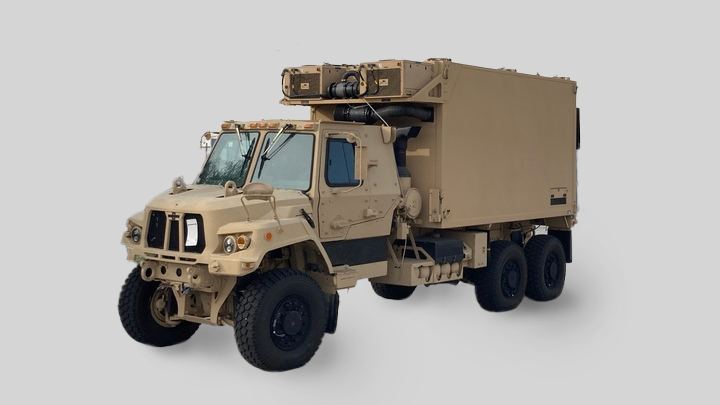
The effort awards $127 million to Palantir and $65 million to Anduril.
WASHINGTON, The Army awarded production contracts to Palantir and Anduril totaling $192 million to move their next-generation mobile intelligence node to production, according to an announcement from the service Tuesday.
The Tactical Intelligence Targeting Access Node (TITAN) program is the Army’s next-generation ground system that will collect and disseminate intelligence to the battlefield, synthesizing it from joint and national assets based on Earth and in space.
Palantir, which became the prime contractor in 2024 after participating in the prototyping effort, was awarded $127 million under the production deal. Anduril, which will develop much of the ruggedized hardware for the system, was given an award valued at $65 million.
The awards cover procurement and integration of eight systems scheduled to be delivered over the next 18 months and comprise four advanced and four basic variants of TITAN. The Army is planning the basic variant to be a division asset mounted on the Joint Light Tactical Vehicle and the Infantry Squad Vehicle-Utility for more mobility, while the advanced variant will be a corps-level, military intelligence brigade theater-level and multi-domain command asset mounted on the Family of MediumTactical Vehicles. Units will only be allocated two basic and one advanced, meaning they must be highly protected from being targeted on the battlefield.
The Army has been prototyping and experimenting with TITAN for several years, sending what it called “pre-prototypes” to the Pacific and Europe in 2022 for tests. The Army has relied on soldier feedback to tweak the system. Early assessments from a deployment in the Philippines reported that the humidity created unforeseen problems that the Army hadn’t experienced in the Middle East.
Col. Jonathan Lipscomb, the Army’s project manager for intelligence systems and analytics, told reporters during a demonstration at Aberdeen Proving Ground, in Maryland on Aug. 27 that service leaders believe they resolved the climate concerns through more rigorous environmental engineering.
“This effort is the result of Soldier feedback we have received over the past four years of prototyping from units utilizing TITAN prototypes in multiple configurations across diverse operating environments,” Lipscomb said in the Army’s release Tuesday. “TITAN is a key solution that enhances the speed of target recognition and geolocation from multiple sensors. It drastically reduces sensor-to-shooter timelines through automated target nominations while fusing the common intelligence picture.”
Lightning Surge exercises are turning soldier feedback on NGC2 into operational software changes in days, not years.
Palantir will lead the overall production for TITAN, the Army said. Additional, unspecified capabilities will be provided by L3Harris Technologies, Sierra Nevada, Strategic Technology Consulting and World Wide Technology. Anduril will provide ruggedized, vehicle-mounted systems and integrate the power, as well as operator subsystems for TITAN to function in the “demanding environments” the Army operates, the company said in a statement.
In addition to the production order, the Army will continue its prototyping and integration onto the JLTV and the ISV-U, according to Maj. Dell Barnes, assistant program manager for TITAN.
The Army is also planning what it calls a vehicle-agnostic version of the TITAN system, which can be housed in a case and loaded into the back of a vehicle or even taken out and plugged into a building if needed, Army officials said last week.
“If you’re in that [Denied, Degraded, Intermittent, and Limited] environment and you don’t have access to the cloud, you don’t have access to the pristine, I’ll call it ‘intelligence community data sources,’ then you can pull in local sensor data direct,” Lipscomb said. “So you can maneuver on the battlefield to place yourself in position to be within range of those sensors, to be able to receive that data, process it, and then continue to target, dominate, and then also enhance the situational understanding.”