Transcendental experience: Decades in, Making Time is still reshaping the classic club night
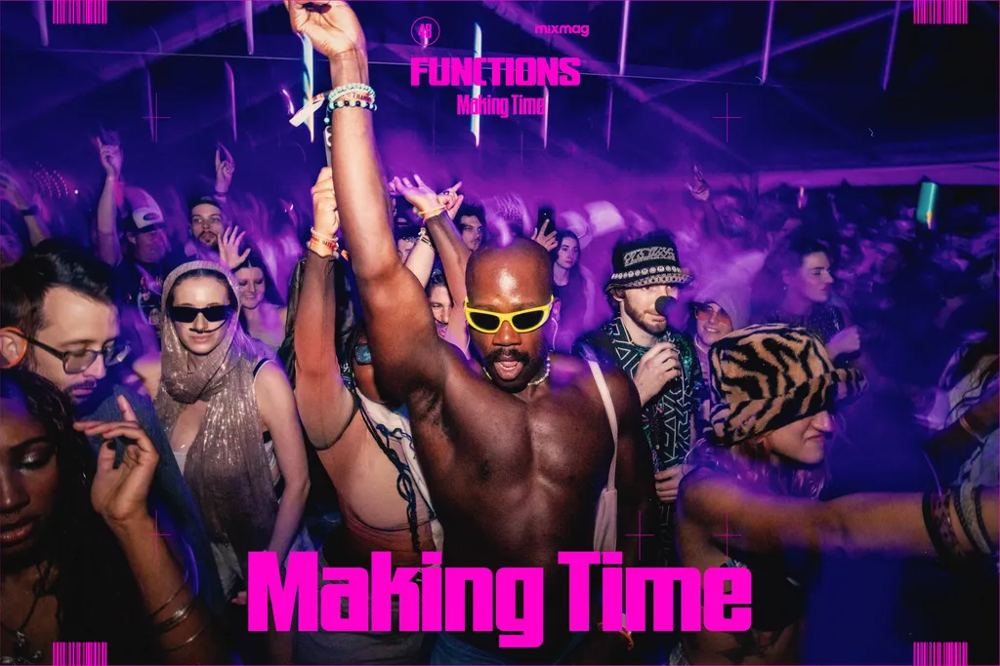
For the last 26 years, Philadelphia party Making Time has rewritten the traditional club night script. Fusing DJs with live acts, the beloved night has brought The Strokes, Interpol, Charli xcx and many more together with global DJs Continue reading...
DJ, promoter and all-out extrovert Dave P was overseeing his once-fledgling Philadelphia party Making Time in 2001 when he recognised the moment that things were about to change. Before they gained momentum generated by their debut album ‘Is This It’, The Strokes were performing at an early Making Time party, a sort of amalgamation of DJ performances and live shows from bands. "I remember standing in the DJ booth overlooking the main floor and saying: ‘This band's gonna be huge’," Dave recalls.
But it wasn’t just the garage rock revivalists that would soon see a wave of attention, Making Time was about to blow too. "That really was a big moment for Making Time, because that's when people started to look at it as a place for new bands to break in the US," Dave remembers. It became an incubator for new talent, soon drawing in nascent shows from the likes of Justice, The xx, Interpol, Charli xcx and LCD Soundsystem, many of whom Dave had vetted through test pressings sent to the coffee shop he worked at in the early ‘00s.
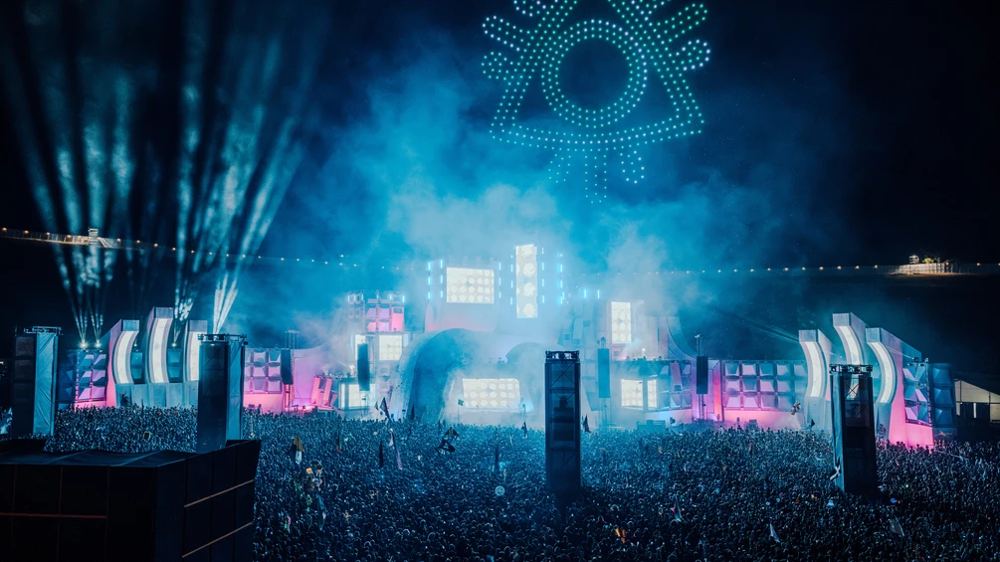
After its 20th anniversary in 2020, Making Time ∞ , a new festival concept behind the long-running party, was conceived. It made its debut in 2021 at Fort Mifflin, a historic Revolutionary War site in Philadelphia, since growing from its crowds of 800 to the 4,000 people it welcomes today. Like its adjacent party, the festival continues Making Time’s mission to pair live music with DJs across one weekend every year, bringing a unique experience to music lovers on the East Coast.
In its 26 years, Making Time has changed the musical landscape in Philadelphia and wider North America, though Dave says that the concept feels like less of a novelty today. "At the time, it was a new thing, a really unique experience," he remembers. It’s a long-running party that has changed what it means to throw a club night, in the traditional sense at least.
We sat down with Dave P to ask about the history of Making Time, turning the beloved party into a multi-day music festival, and what it means to have a "transcendental futuristic sound experience". Check it out below.
Let’s go right back to the beginning, how did Making Time start?
After college, I moved back to Philadelphia and my first job was working at this coffee shop called The Last Drop in the city centre, it was an arts and culture hub. It was open until midnight, and loads of arts students would hang out there. It was 1998 when I started, and I was buying indie rock records and meeting all these people in bands and were DJs.
There was a night called SORTED, a Britpop, indie dance party that was popular in Philly at the time, and there was another party called The Turnaround at Silk City where there was more soul, funk, and groove, and another called Rock and Roll Overdose which was a little more glam rock and punk. I was going to all of these parties every weekend and became friends with the people that were doing them, and I had this idea to start a night that was essentially all three parties in one. It would be over three floors, which didn't really exist at the time in that mixture of genres. I decided to do it as a one-off thing, just for fun, so I asked friends who were throwing parties if they wanted to join. They were up for it, and then I just started looking for venues in Philly.
At the time, I was going through the City Paper , which was like an entertainment weekly newspaper that had all the club nights and parties happening inside. I was calling all the clubs, and got through to this club called Transit. I told the owner my idea, and he offered me the day before Memorial Day, which was a Sunday, not a very popular night because everybody leaves to go to the beach that weekend in Philadelphia. But a lot of us couldn't afford to go to the beach, so I took the night and made silkscreen flyers, and I handed them to everybody that came to the coffee shop. I always say that The Last Drop was the nexus of Making Time!
The club was massive, I think it could fit over 700 people. I didn't have the intention to keep on doing this, and I never really thought this was something you could do full time. But all of the DJs were really excited about it because it did so well, even though I had to convince some artists to play at first. They changed their tune, and everybody wanted to do it again. The club wanted to do it again too, and they gave me the day before July 4, another weekend when everyone traditionally goes to the beach. This time about 800 people came, and the next one 1,000.
That was when we booked our first band. We called up our friends, The Inflatable Men, a local band in Philly, and they became the first band to play Making Time. I had no idea what I was doing, or how to produce a show for a band. It was so bad that I didn't even rent a soundboard…
We had a friend who was able to throw something together, and it ended up being an amazing experience having a band play with the DJs. It doesn't sound very novel now, but at the time, it was a new thing, a really unique experience. Most of the DJs were playing indie dance and guitar-based music. Everybody really loved this idea of having bands and DJs, and people kind of caught wind outside of Philadelphia. I was going to a lot of parties in New York at the time, specifically this one called TISWAS. That was a really popular trip hop party, and they started hearing about Making Time. People were coming down from there and Boston, and it was really growing.
It was coming up on our one year anniversary, and a friend was telling me about this band that he was going to see. He was thinking about managing them, and asked if they could play Making Time. He then played some of their music at an afterparty, at about five or six in the morning, and that band turned out to be The Strokes.
I told him, ‘let’s do it’. So on Memorial Day Weekend in 2001, The Strokes played Making Time, and they very quickly became massive. It’s one of my favourite memories of all time. I remember standing in the DJ booth overlooking the main floor and saying: ‘This band's gonna be huge'.
That really was a big moment for Making Time, because that's when people started to look at it as a place for new bands to break in the US. I was getting sent lots of demos from all these bands, some were even sent to The Last Drop, and I would listen to them while I was working. One time we were also mailed an envelope with photocopied photos and a burned CD, and it turns out it was from the New York rock band Interpol. I listened to it at the coffee shop with some friends, and we were like, ‘holy shit, this is amazing!’.
Making Time became a place for people to discover new bands and new music. Suddenly everybody wanted to play. I was starting to get into what people would call electroclash and was listening to more electronic music, and I wanted to hear more of that at the party. So, I taught myself how to DJ, and I started playing the party and playing the music I wanted to hear. The party slowly became a little bit more electronic oriented, but with a lot of live artists, which was something quite new for Philly.
Did you notice at the time that people were catching on and doing similar things in Philly? How did the clubbing landscape change?
It was definitely very influential, especially when we made that shift. There were always tons of DJs in Philly, there’s a very rich history of electronic music before me, more traditional techno and house. But this was different, there was more rock and indie influence. The word techno was a dirty word then, people had this stigma of what techno was.
Making Time really opened this gateway for a lot of people in Philadelphia too, there were more electronic and electroclash DJ nights. It grew in New York too with parties like MOTHERFUCKER and clubs like Limelight.
‘Transcendent’ seems to be the running word attached to every Making Time party. Can you talk to me about that?
That was something that came later around the festival. I like to call it a “transcendental futuristic sound experience” as opposed to a party, because a party is about getting fucked up, but I think you can get something more out of Making Time. Transcendence goes beyond physical limitations, it’s almost like an enlightening experience.
We’re wondering, how do you reach that state? How do you go beyond the physical realm? How do you reach enlightenment? People would say religion or philosophy or meditation, which do totally work. But I think you can also achieve that experience through what I call a transcendental, fixed-down experience through art and music. I think that exists at our festival more, but it happens any time you’re synced with the music. The festival is held at Fort Mifflin, which is this magical space where you're connecting with nature. It’s a beautiful Revolutionary War fort on the banks of the Delaware River, combined with art, lighting, music, and community. I think that can bring a state of transcendence to any attendee.
How did Making Time transform into what is arguably one of the most beloved electronic music festivals in the US right now?
In 2010, it was the 10-year anniversary of Making Time, and we threw a party at the time at the Philadelphia Naval Yard on the water with LCD Soundsystem. To date, it’s actually the largest turnout we’ve ever had with around 5,000 people. Doing something at that scale, I started to think about the idea of a festival, and was discussing the idea of doing a large-scale, two-day festival at the Naval Yard with 20,000 to 25,000 people. We got very far along in the conversation before we were asked: “Why do you need to have amplified sound?”. I guess they assumed it would be an acoustic event. I quickly realised that wasn't going to happen.
Fast-forward to 2019, we had the 20-year anniversary of Making Time coming up, and we finally decided to do it again at the Naval Yard. We had everything ready to go, signed, when COVID hit. So my luck with trying to run a festival wasn’t great.
A year later, a friend of mine went to a wedding at Fort Mifflin and told me that it would be a great space to do an outdoor event, even though it was smaller. I was really fixated on this big, grand-scale, 20,000-person thing, because that's all I really knew. But I called Fort Mifflin anyway pitching the idea, and they loved it. It wasn’t the answer I was expecting, because it's a historical site where the Revolutionary War was fought in the 1700s, but they were just excited to bring new life to this space that was somewhat unknown in Philadelphia.
It's a historic site, but it's out by the airport, outside of the city centre. It doesn't have a lot of visitors, it was quite unknown. When we decided to do the festival and started promoting it, people were like, "Where is this place? How far is it from Philly? Do I need to camp?”. Part of the process of promoting the event was really having to show where the space was. It was somewhat of an obstacle because people assumed that there was no way it was in Philadelphia.
The first edition in 2021 honestly wasn't a huge success. It was in the midst of one of the COVID variants, so only around 800 people came. Funnily enough, many people think that 2022 was the first year of the festival. We made it a two-day event in 2022, and that’s when we started to get a lot of press and people came from all over.
You’ve had artists like The Strokes, Justice and The xx perform at Making Time parties since it began. How do you go about booking artists, what are you looking for?
Quite simply, I just book what I like, and that's the way the party's always been. It's always followed my own musical journey and the things I’ve discovered, looking to the future. I think that's part of the reason why the party has gone on for so long, though I don't celebrate anniversaries anymore because once you get too old, you don't want people to know!
But this year would have been 26 years since we started. We’re always pushing new music and into the future, I'm always in search of hearing that first The Strokes track again. The festival goes deeper, though. I’ll start making a list for the year ahead in advance, and depending on what I confirm, the festival takes on its own life. It starts to book itself when we figure out what the festival needs, filling in those genre gaps, and thinking about what's going to be perfect after this or that artist. What does the festival need at sunset? What does the festival need at midnight? You know, it takes its own form.
I always joke that every year of the festival could be the last year. I put everything I have into this, and I'm able to do that because I almost don't think about the future, I focus on the present and on making each year the best it can be. The parties will continue, but who knows?
I'd love to do another Making Time ∞ festival in another city, and I'd like to host some Making Time stages at other festivals. I want to do the party in other cities, and if we make it to 30 years, I want to do a Making Time book in 2030. But I'm always just focused on the present.
Making Time's annual festival, Making Time ∞, is taking place from September 18 - 20, 2026. Find out more and grab your tickets here .