Live: Australians to live longer and have fewer children by 2066
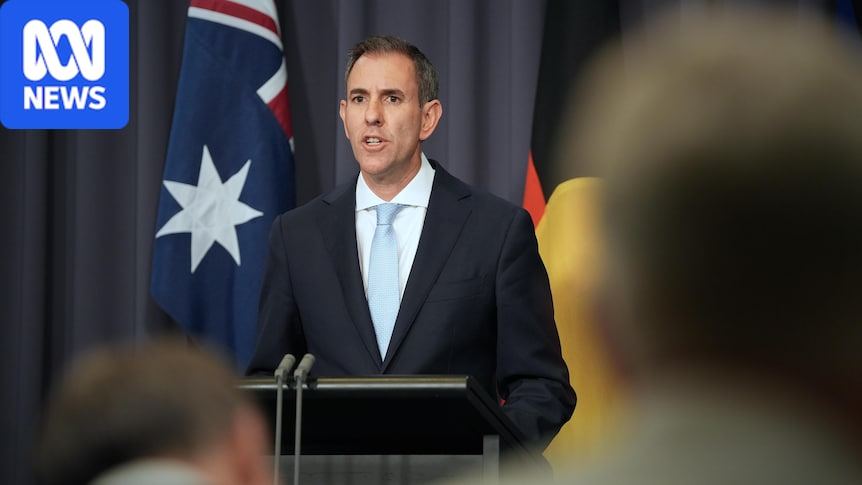
Australia's population will come close to 40 million people by 2066 as Australians live longer but have fewer children, according to new projections. Follow live.
The population will reach almost 40 million people by 2066 as Australians live longer but have fewer children, according to the latest intergenerational report.
But there is no appetite from either the government or the opposition to revisit a Howard-era "baby bonus" in a bid to encourage people to have more children.
I'll be back bright and early tomorrow for another day of politics blog fun. See you then!!!
Defence Minister Richard Marles held a quiet meeting and dinner with his French counterpart Catherine Vautrin at the Geelong Art Gallery last night.
There would have been plenty to discuss. France is a major military power, and it’s also got a very substantial security presence in the Pacific through its territories, including New Caledonia and French Polynesia.
The ministers discussed how the two countries could do more to cooperate on disaster responses, as well as tackling transnational crime in the region, as the Pacific continues to grapple with a surging illegal drug trade.
They also talked about how Australia and France could expand space cooperation and their joint support for Ukraine, as well as the ongoing crisis in the Middle East and the push by Paris for a multinational mission in the Strait of Hormuz.
There’s a bit of a curious echo here, the Geelong Art Gallery, where the two ministers dined, was also the venue used by Australia and the United Kingdom last year when they signed the Geelong Treaty, which is key to their joint effort to build nuclear powered submarines under AUKUS.
But perhaps the choice of venue shows that, five years on from Scott Morrison’s shock AUKUS announcement and his decision to ditch a massive contract to buy French made submarines, the two countries have now well and truly moved on from that particular dispute.
We've canvassed Australia's falling fertility rates a bit on the blog today. As Jim Chalmers says, it's one of the key conclusions of the intergenerational report.
But he's conscious about weighing in too much: "I do not and will not give free advice about these very personal decisions that [people] make about whether to start a family and when to start a family".
Chalmers says more people are having kids later and that means that families are smaller.
"If you look at the decline in the fertility rate, I think almost half of it is because of fewer families where there are three or more kids," he says.
Chalmers says it's up to the government to make it easier to make the choice to have children and points to things like childcare and extending paid parental leave.
The intergenerational report only justifies the government's housing tax changes in the last budget, Treasurer Jim Chalmers says.
"In all the 20 or so budgets that I've worked on or responded to in my time in politics, there hasn't been a budget that has been more serious about meeting our intergenerational obligations," he says.
"And I think the pointiest part of that, the defining part of that, is really the housing market, which has locked young people out for too long."
Chalmers says he hopes that "every page" of the IGR in "justifies, validates and I hope one day vindicate" the decision to scale back the capital gains tax and negative gearing.
So is there a percentage of coming generations Chalmers would like to see on the home ownership ladder? The treasurer doesn't want to put a figure on it.
It's a pretty quick "no" from Jim Chalmers when asked if there's any circumstance in which he'd consider raising the goods and services tax.
The intergenerational report predicted indirect taxes such as the fuel excise will decline over the next 40 years.
"That's not something that we've contemplated really at any point," Chalmers says.
Treasurer Jim Chalmers has outlined the budget will be "strained by still stronger" than was previously forecast.
He says spending is expected to increase by less and the budget bottom line has improved too. Gross debt will be lower too.
The treasurer flags the potential for future tax cuts down the line, through the Working Australians Tax Offset. The WATO was established in the budget and will, from next July, return $250 to people who earn a wage at tax time.
Chalmers says by the mid-2060s the aged pension is expected to cost $31b less due to the support of superannuation balances.
"We’ll spend less on pensions than any OECD economy by the 2060s even as retirement incomes go up not down," he says.
"While average spending on public pensions in those countries will rise to over 10 per cent of GDP, Ours will fall to just 1.8 per cent."
Younger Australians face a future of working longer and struggling more to buy a home, without the same early gains in income and wealth experienced by the generations before them.
That’s according to the latest Intergenerational Report released today by Treasurer Jim Chalmers .
It lays out how an ageing population and falling birth rate are expected to reshape Australia's economy over the next 40 years.
Fertility is expected to fall to just 1.34 children per woman by 2065. The number of Australians over 85 will triple by 2066.
An older growing population, weaker productivity growth and rising costs in areas like defence and health will put increasing pressure on government finances.
But Chalmers says Australia is better placed than many other countries to face the challenges ahead.
As we've been discussing all morning on the blog, Australia's population is changing in shape and size and it's different to previous forecasts.
More Australians are living longer and having fewer children, but this is the first IGR that deaths are projected to outnumber births by the 2060s.
That's part of the reason why Australia's population growth is expected to slow.
But with the number of people over 65 set to triple that will place further pressures on health and aged care services.
"This means one-third of new healthcare spending over the next 40 years will be because of ageing," Treasurer Jim Chalmers says.
So what's the biggest change from the last intergenerational report handed down three years ago?