The inverted clock of Ashok Soota: Why India’s serial IT builder gets bolder with age
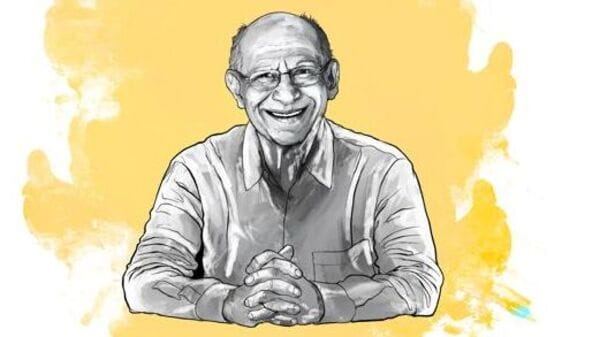
Most founders scale back as they grow older; Ashok Soota grew bolder. After building Wipro and taking both Mindtree and Happiest Minds public, the 83-year-old serial entrepreneur is funding an audacious new quest: decoding human ageing and the brain.
Around the turn of the millennium, as India’s tech boom was still finding its legs, Ashok Soota was already staring down what most would call the finish line.
He was 41 when he walked into Wipro in 1984, an era when the company was still better known for vegetable oils than enterprise code. He then spent the next decade and a half helping build the company’s backbone. At 56, an age when many contemporaries were eyeing retirement estates, he walked out to co-found Mindtree with a cadre of former colleagues. At 68, he started all over again with Happiest Minds Technologies . By 79, he was launching Happiest Health.
Had Soota bowed out at any of those exits, his legacy in corporate India would have been firmly carved in marble. Instead, he pulled off a career feat almost unheard of in the sector: the seasoned corporate manager who turned entrepreneur in life’s second half, built two separate IT services companies from zero, and steered both to public listings.
On 31 August, Soota, now 83, scaled down his investment in Happiest Minds to fund his interests in healthcare and medical research. Soota and Ashok Soota Medical Research agreed to sell a 22.1% stake in Happiest Minds to ITC Infotech for ₹ 1,329.7 crore, as part of a larger transaction that will eventually see Happiest Minds merge with the ITC company.
For any other tycoon, this sort of a liquidity event in their eighties is often the closing act, the quiet cashing-in before the curtain drops. With Soota, it feels more like a change of subject.
His capital is being funnelled into high-stakes frontiers: human longevity, clinical care, and the deep complexities of the human brain through ventures like Happiest Health and his non-profit research arm, SKAN (Scientific Knowledge for Ageing and Neurological Ailments). Soota has pledged ₹ 600 crore towards the SKAN Research Trust to fund medical research into neurological ailments and the biology of ageing.
Classical wisdom insists that age breeds caution, that the older we get, the tighter we clutch what we’ve built. Soota’s playbook quietly upends that law: as the runway shortens, the bets only seem to get bolder.
“The older Soota got, the more daring he became,” says Ramkumar Ramamoorthy, partner at technology advisory firm Catalincs and former chairman and managing director of Cognizant India. “For instance, his approach at Happiest Minds was far from conservative, leaning on inorganic growth with eight acquisitions.”
Soota did not speak to Mint for this story. Instead, this account traces his late-blooming entrepreneurial run through the people who shared his rooms, the daily disciplines that anchored his methods, and the institutional footprints he leaves in Indian business.
A lifelong admirer of Charlie Munger’s mental models and the institutional grace of JRD and Ratan Tata, Soota took a distinctly circuitous route into technology. Born in 1942, he read electrical engineering at IIT Roorkee before cutting his teeth in the industrial trenches of the Shriram Group.
By 1978, he had risen to chief executive of Shriram Refrigeration, a bleeding operation weighed down by years of accumulated losses. Soota turned it profitable. That baptism on the factory floor would soon prove indispensable in an unlikely corner of Bengaluru.
Today, Wipro is synonymous with software services. In the early 1980s, it wasn’t. Its information technology business was rooted in hardware, assembling computers and peripherals in an India where imports were constrained and local companies often had to design much of what they sold.
Soota entered as an outsider to computing, but his manufacturing pedigree matched Wipro’s immediate operational needs.
“Wipro built its own minicomputers and invested heavily in product development and research. Soota brought discipline to manufacturing and supply chains,” recalls Krishnakumar Natrajan (KK), co-founder and former chairman of Mindtree.
Under Soota’s stewardship, Wipro also stitched together global alliances, manufacturing printers for Epson and distributing high-performance workstations for Sun Microsystems.
Then came the internet, laying the groundwork for an offshore outsourcing wave. As hardware commoditised, Wipro began pivoting its weight toward enterprise software and global delivery. Soota steered that transition, transforming a hardware shop into a technology services powerhouse before walking away in 1999 at the age of 56.
By his departure, Wipro’s tech business was running at an annual clip of around $500 million, poised for the coming Y2K tailwind and cemented alongside TCS, Infosys, and Satyam as one of Indian IT’s defining quartet.
His next act, Mindtree, arrived just as enterprise demand was shifting from basic maintenance to sophisticated software architectures and outsourced R&D. Here, the company focused its ambitions on knowledge-intensive engineering.
Yet Mindtree was an unusual experiment: a company created by a large group of experienced executives rather than a single dominant founder. Soota, Subroto Bagchi, KK, and other senior professionals came together in a model of collective entrepreneurship that was then largely untested.
The early upside was undeniable: few startups anywhere launched with that concentration of operational muscle on Day One.
“Multiple accomplished founders meant multiple centres of expertise and influence. Scaling such a model could be complicated. And the founders could never realise the dream of creating a $1 billion company, which happened later,” observes an executive familiar with the company, who requested anonymity.
Still, Mindtree carved out a premier niche in India’s mid-tier IT landscape and rang the opening bell on Dalal Street in 2007. Soota stepped down in 2011, well before the firm finally breached the $1 billion revenue milestone.
Starting afresh with Happiest Minds, Soota placed his bet on another new curve, digital technologies built around what was then popularly called SMAC: social, mobile, analytics, and cloud.
“What HCL did in one company, moving from hardware, to services to R&D, Soota did in three companies, Wipro, Mindtree, and Happiest Minds,” says Ramamoorthy.
Soota’s late arrival at the founding table ultimately hardened into an uncommon competitive edge. Unlike young founders who learn management basics while building their companies, Soota arrived with decades of institutional experience already installed.
Som Mittal, former president of Nasscom, first crossed paths with Soota in 1988. At the time, Mittal was operating inside the auto-components sector when Soota moved to recruit him into Wipro.
The courtship, Mittal recalls, was disarmingly intimate. Soota spent considerable hours decoding the man behind the resume, even sitting down for dinner with Mittal’s family. Once onboard, Mittal was handed near-total operational latitude to shape a business unit with full profit-and-loss ownership. “He was a taskmaster in his own way,” Mittal says. “He was employee-friendly, but he would have very sharp questions.”
A smart answer rarely ended the discussion. Soota would ask the second question, and then the third. Managers quickly learnt that presentation skills were no substitute for preparation.
The same rigour showed up in performance reviews. Soota kept detailed notes, recording what an executive had done well, what needed improvement, and specific instances supporting his assessment. “He would really tell me what I did well, where I could improve. I learnt a lot,” Mittal recalls.
Soota was patient, benevolent and empathetic but high empathy had to coexist with uncompromising accountability. He didn’t hesitate from letting people go when they failed at the execution table.
At the Shriram Group, where he worked on the company’s turnaround, he let go a manager because he was reportedly dysfunctional. When Happiest Minds’ former CEO and managing director, Vikram Gulati, stepped down in 2014, speculation was rife regarding a rift. However, Soota clarified that it was a mutual separation. Ramakanth Desai, who served as the co-CEO of IT Services and later as its CEO, also “chose to resign voluntarily” to pursue other opportunities, in about a year from joining.
As Soota grew into his identity as a serial founder, visionary trend-spotting was not necessarily what set him apart, says KK.
“It was the rigour he brought into operations, setting up systems, processes and, more than anything else, measuring and reviewing them,” KK notes. “Tight execution has been his hallmark from the earliest days.”
As his reputation grew, it became the foundation of startup capital.
“Soota’s personal brand stands out. The ability to get institutional backing for Happiest Minds reflected confidence in his ability to deliver,” says Sangeeta Gupta, senior vice president and head of strategy at Nasscom.
Canaan Partners and Intel Capital were among the early investors backing Happiest Minds. Before going public, the company raised around $45 million .
Away from the boardroom, his daily life operated with the exact same clockwork regularity. An early riser, Soota’s mornings began with time spent with his dog, quiet hours tending to his garden, and clearing through his inbox before ever stepping into the office. Midday brought a ritual: a 20-minute post-lunch power nap, his mobile phone switched completely off.
Mittal recalls that even when Wipro chairman Azim Premji flew down to Bengaluru for business reviews, Soota would walk through the doors at his customary hour. It was never an act of casual defiance toward the promoter; it was a belief that a sustained operating rhythm mattered. Vacations, too, were structured. He trekked and took deliberate breaks rather than allowing work and leisure to blend indefinitely into each other.
Mindtree had swiftly become the poster child of India’s modern entrepreneurial wave, but behind the glowing press coverage and high-decibel marketing, institutional fissures were quietly deepening.
In early 2011, the industry was caught entirely off guard. Employees, market analysts, and even members of Mindtree’s own board awoke to a stunning email from Soota, then serving as executive chairman: as of 31 March 2011, his association with the company he had helped construct from scratch was officially over.