Photographing counterculture and community in the UK free party movement with Alan Lodge
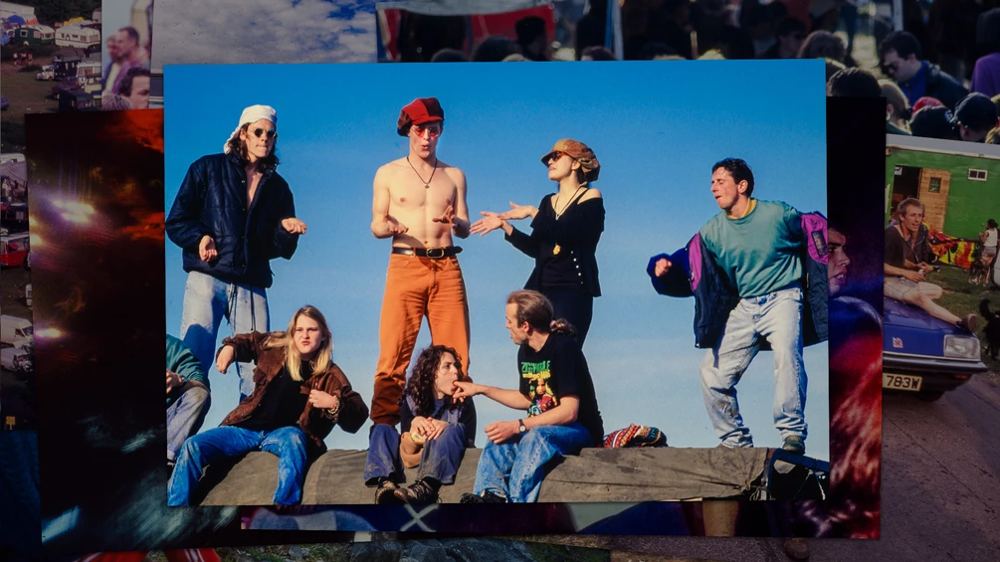
In his new exhibition, Common Grounds: Counterculture & Confrontation since 1976 , photographer Alan Lodge, AKA Tash, looks back on the decades he spent documenting free festivals, raves and anarchic parties across the UK. From early years spent in the New Age traveller community, to historic gatherings like Castlemorton in 1992, his photos are an essential archive of youth culture, offering an in-depth look into the resistance and resilience that have fuelled it along the way. Here, Lodge shares the stories behind 10 of his favourite rave shots from the series
On 29th August 1974, Alan Lodge was sitting on a log at the Windsor Free Festival , drinking a cup of tea and minding his own business when, suddenly, he was whacked over the head with a baton. Police had stormed the site and, over the next eight hours, arrested over 200 people and injured more than 30 as they violently cracked down on this countercultural gathering taking place in the "the Queen's back garden".
Lodge still has a dent in his head from that day, but it would be far from the only clash between police and partiers that he’d encounter throughout his life. That moment was just the beginning. He soon devoted himself to documenting these gatherings with his camera, capturing the music, energy, activism and anti-establishment ethos that fueled their communities as they grew, evolved, and slowly dissolved over the ensuing years.
The Luton-born photographer, also known as Tash, spent the rest of the ‘70s embedded in the UK’s free festival and New Age traveller communities, groups who sought to create an alternative, self-sustaining way of living on the road, outside of the order and rules of regular society. Thanks to his background working in ambulance services, he even helped set up welfare stations at gatherings alongside his camera work.
As tabloid hysteria and legal crackdowns accelerated under the Conservative government, Lodge’s photos inevitably took a more political tone; the anarchic idealism at the heart of the community became emblematic of the disenfranchisement of so many young people in Britain at that time. A turning point came in 1985 at the Battle of Beanfield , when 1,300 Wiltshire police officers brutally clashed with a convoy of New Age travellers on their way to the Stonehenge Free Festival , injuring dozens, including women and children. The moment was not just one of the largest mass arrests of civilians in British history, but a clear sign of where the escalating tensions between authorities and the free festival movement were going. Suddenly, the hippy utopian ideal that Lodge and so many others had built their life around over the past decade was unravelling.
“After the Battle of the Beanfield, the proud institution of the free festival and travellers’ movement ran into the sand,” he recalls. “It became a bit like a refugee column. Heroin and special brew took over and it was not the proud alternative that we were trying to build.”
By 1990, Lodge had had enough, and he moved to Nottingham to study photography, but it wouldn’t take long for him to be back on a similar beat. “What I didn't know at that point was that I'd moved straight into the DiY and Smokescreen nest,” he says, referring to the pioneering sound system crews who were key to the burgeoning free party movement at the time. “Suddenly I was confronted by this new wave of young folks doing it differently.”
Emboldened by a generation of people 20 years his junior who shared a similar ethos to his own, Lodge soon found himself back on the road, following familiar New Age traveller routes while documenting the new free party culture. From the historic week-long illegal party at Castlemorton in 1992 to raves up and down the country, Tash was always there, camera in hand to take it all in. “There was an optimism that I found in this new way of doing things,” he recalls. “It was a more positive vibe.”
Five decades since that fateful day in Windsor, Lodge has a new exhibition of his work taking place at the Bonington Gallery in Nottingham. Running from Friday 25th September to Saturday 12th December, Common Grounds: Counterculture & Confrontation since 1976 illuminates his life’s work at the intersection of music, politics and community, navigating themes of “collective identity, civil liberty, dissent, environmental responsibility, public space and state authority”. With over 100 images on display, you can get your tickets here.
Below, Lodge shares the stories behind 10 of his favourite shots from the ‘90s raves and free parties he attended. Dive in below.
“This is where people would have been on the May bank holiday for a regular free festival. What you see here is a regular free festival bus, but the people are behaving entirely differently [to how they previously would have] in front of it. You can sense a change is afoot via the fashion style and all the rest of it. You can see that they're not all traditional New Age travellers. There's a new mix of cultures forming in this picture.”
“This was shot in June, when we were continually trying to get to Stonehenge for the summer solstice. People would be trying to get near to establish sites and this was one of those. The owner of this vehicle just got carried away and painted that. He was a fellow that also hopped the fence from the traditional New Age traveller lifestyle to the current one, and so he's expressing that. It’s also complete with love cabbages painted on it, which were the trademark of the DiY Sound System lot.”
“There was a bit of horseshoe of different trucks and buses, all making a bit of an auditorium. I'm sitting on a bus on one side of the area, and I noticed everybody on the other side. There’s a real range of styles here. I saw this couple in the foreground, obviously into each other, and then suddenly he produces a dab. A number of people have said that this photograph encapsulates quite a lot of what they think of themselves from this era. There’s the moves, the style, the sex and drugs. I managed to get quite a lot in that snap that feels optimistic and resonant for the many involved in the scene.”
“I don't very often have names for my photographs but I just call this one ‘Sunglasses’. Apparently the two people in it are quite famous in the music industry now but I can’t recall who they are. There's a nice mix of hairstyles, fashion and poses. This one is an early morning shot, so that’s why you've got that full glamour lighting around the hair. I think this one, for me, just represents a certain amount of joy and multiculturalism.”
“People were on their way to the Avon free festival but the police moved the convoys into Worcestershire. People settled on Castlemorton Common and a critical mass was formed. Word spread and by the end of the following day there were 20,000 people. This is the main road that goes through the festival. I saw these two geezers, one with his E on his shirt, and the other one who looked a lot more like a more traditional New Age traveller. Then you have the cars on the road, so there's layers to the picture. But I saw these two coming, and I thought, well, that's a picture that typifies something about the style of these folks, doesn't it?”
“Castlemorton was extremely chaotic because people were so desperate [to get there and party].I mean, this was the biggest gathering since the Stonehenge festival, which was defeated, and it's obvious that people were pleased to be back and having it. And then also, this was going to be a lot of people's first experience of these events. So, here I am, just taking a shot mid-crowd that captures this.”
“People just set-up immediately where they stopped when they arrived on the Common. They were so grateful to get on a field. There was none of the urban planning that went into festivals like Stonehenge. I took this from the top of Morgan Hill looking over the site and it shows that it's completely higgledy-piggledy. You've got about eight sound systems set up, each of which has several million megawatts, so it's quite obvious that it creates a bit of a cacophony. One of my jollies was to wander around the site and create a distance between two sound systems and make my own mix.”
“This is Jack, one of the founders of DiY, and here's me trying to be all arty in nightclubs. When people are taking drugs and dancing, and there's much enjoyment, you want to try and get that in the picture. But if you use flash, you end up with people looking really contorted. But by making a time exposure, you get much more of an ambient feel and a wash of colours and movement. It’s a nice way to get attractive, energetic pictures that show much more of a sympathetic view of what's happening.”
“I think the reason I pushed the button at that particular moment is because I'd seen what was going on with the lighting in the background. I think it makes quite an attractive picture from the beams. I've opened the shutter three times and you get the progression of dance moves as a result. A photograph is a slice of time, but this is much more painterly.”
“Some of DiY come from traveller backgrounds, so living outside is one of their specialties. You have to remember that people ended up in the clubs largely for legal purposes. The motivation was still the fields, and the clubs are where we'd been pushed to. You want to find places that cause as little inconvenience to the public as possible, and you really don't want to professionally wind people up that you don't need to. So here we are in the Peak District, and, well, can you think of a better place that you’d want an event like this where noise doesn't carry? It’s perfect.”
Common Grounds: Counterculture & Confrontation since 1976 runs 25th September, 12th December 2026 at the Bonington Gallery in Nottingham. Get your tickets here.