Why Disaster Preparedness Is Everyone’s Job
Fires, floods, and hurricanes can feel paralyzing. But preparing for the worst can bring out our best. Alongside community partners, Amazon shows how. The post Why Disaster Preparedness Is Everyone’s Job appeared first on Outside Online .
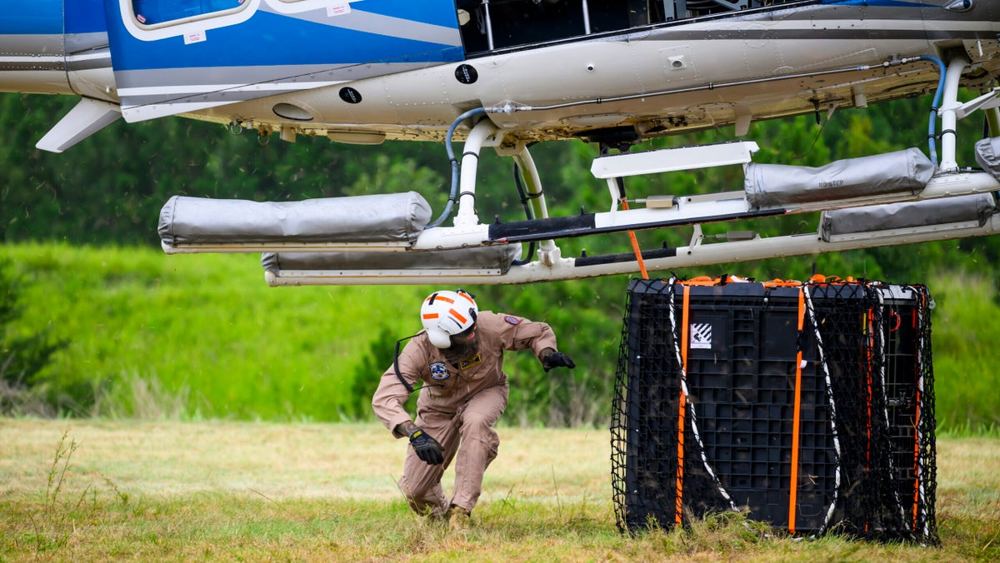
Amazon hosted local government agencies, nonprofits, and other organizations in Maryland for a collaborative training exercise. (Photo: Pete Kiehart)
Natural disasters have always existed, but as they get more frequent and intense, the way we respond matters more than ever. That’s why National Preparedness Month serves as an important reminder that the best response to any disaster starts with the best preparation.
Being prepared saves countless lives. Climate-related deaths have fallen more than 99 percent since 1920 thanks to advancements like early-warning systems, data shows. And every $1 invested in preparedness can save up to $15 after disasters occur, according to the United Nations. With the cost of global disasters expected to top $2.3 trillion every year, preparedness is clearly important to everyone’s future.
That’s why Amazon has spent the last decade using its global supply chains to shore up relief efforts here and abroad alongside trusted nonprofits like the American Red Cross, Save the Children, and World Central Kitchen. Amazon operates 12 relief hubs in seven countries and has donated and delivered more than 30 million relief items (shelter equipment, blankets, medical devices, and more) after more than 200 major disasters. Each hub is stocked with essential supplies long before the need arises, so that aid arrives within hours, not days, if a disaster strikes. To further help communities prepare, Amazon also has developed rapid response technology systems that a single person can use to restore power and connectivity for critical services, all in portable and reusable packages about the size of a suitcase.
“We’re repurposing the same infrastructure that ensures speed and reliability for customers worldwide to support communities, even before disasters strike,” says Jeffrey Schweitzer, Amazon’s disaster relief innovation lead. “The faster communities get what they need after a disaster, the shorter and easier their recovery becomes.”
This strategy of preparedness has faced harrowing real-world tests. After catastrophic twin earthquakes shook Venezuela this past June, Amazon delivered 698,000 emergency supplies (sleeping bags, tarps, generators, water filters, diapers, cleaning equipment, hygiene kits) to more than a dozen nonprofits supporting communities on the ground. During 2025’s California wildfires, 8,000 Amazon volunteers assembled hygiene kits and helped with cleanup efforts.
Now, Amazon is working closely to bridge technology gaps that have kept communities in the dark in the chaotic aftermath of earthquakes, hurricanes, wildfires, and other natural disasters. Amazon is making 2,000 of its rapid response technology systems available at no cost to nonprofits by 2027.
“Our rapid response technology systems are easy to move, even when roads are impassable,” Schweitzer says. “I’ve heard again and again that the first thing people want after a disaster is to be able to call a loved one and say ‘I’m OK,’ or simply brew a pot of hot coffee. This requires power and connectivity. Our portable systems are designed to bring vital services back to a community in minutes. They’re customized to what our nonprofit partners actually need. And after they’re used, nonprofits send them back to Amazon to get refurbished for the future.”
But these steps are only one part of preparedness. Also essential: local coordination and practice.
“The worst time to start with a plan is after something happens,” says Amazon’s Head of Disaster Relief Abe Diaz. “For Amazon, preparedness means prepositioning, it’s having everything from pallets of diapers to satellite communications ready to go, and even more so, it’s having the people trained and in place to support. While we can’t stop a disaster, we can prepare for it alongside community partners.”
For example, ahead of National Preparedness Month, this past August Amazon joined local government agencies and other organizations in Indian Head, Maryland. The goal was to host a collaborative training exercise, complete with mock rescue operations, to practice how to coordinate with each other in real time, and how to put the new rapid response technology systems to use.
Indian Head Mayor Brandon Paulin acknowledges that preparing for the worst might not always make a community’s annual to-do list. But he jumped at the opportunity to get ahead of hurricane season with the Amazon team. (Bonus: The training event also included stocking local food banks with more than 5,000 food kits.)
“When a natural disaster comes, there’s not a whole lot of preparedness, folks are stressed and worried about their own things,” Paulin says. “It’s important to have planning already in place to make sure we’re able to help people as quickly as possible. Knock on wood there’s never an event, but when there is we’ll be ready to support families in what is their dire time of need.”
Arya Anand, who serves as a technical program manager for Amazon’s disaster relief team, helps make sure all that Amazon does to prepare achieves maximum impact. She analyzes and optimizes the company’s processes across varying geographies to discover how they might be best applied to a given disaster scenario. She acknowledges that no amount of preparation can account for every foreseeable outcome, but it can give you the tools to weather the scary unknowns.
“Regardless of how much preparedness there is, there’s always going to be some level of ambiguity,” Anand says. “So how do you work with that ambiguity and turn that into a superpower? This hurricane training experience in Maryland collectively taught us the power of practice, and even more so, the power of multiple different organizations coming together, in advance, to achieve the same mission.”
Jesse Levin agrees. Levin serves as the executive director of the nonprofit networking organization, Defense Entrepreneurs Forum, and the founder of Tactivate, a hybrid response recovery organization that brings military, entrepreneurial, and expeditionary talent to solve problems in global disasters. He emphasizes that preparatory exercises like these are important, sure, but they can also be a “wild rodeo of incredible capability.” In other words, it’s not just smart to work on preparedness, it’s exciting.
“Community readiness is a team sport,” Levin says. “Too much of today’s preparedness culture focuses on individuals stockpiling supplies in their basements, an isolated, fear-driven approach. Anyone who has lived through a major disaster, and any professional responder, will tell you that community is the ultimate currency when the status quo breaks down. We must shift from being reactive and dependent to being proactive, ready, and collaborative, with everyone sharing responsibility for readiness and resilience.”
“Readiness is an adventure sport. It’s the same thing as going on an expedition.”
When disasters strike, Amazon uses the same strengths that get packages to doorsteps to bring critical aid where it’s needed, fast. Since 2017, Amazon has donated and delivered more than 30 million relief items to support communities impacted by 200-plus disasters worldwide. For more information, visit AboutAmazon.com .