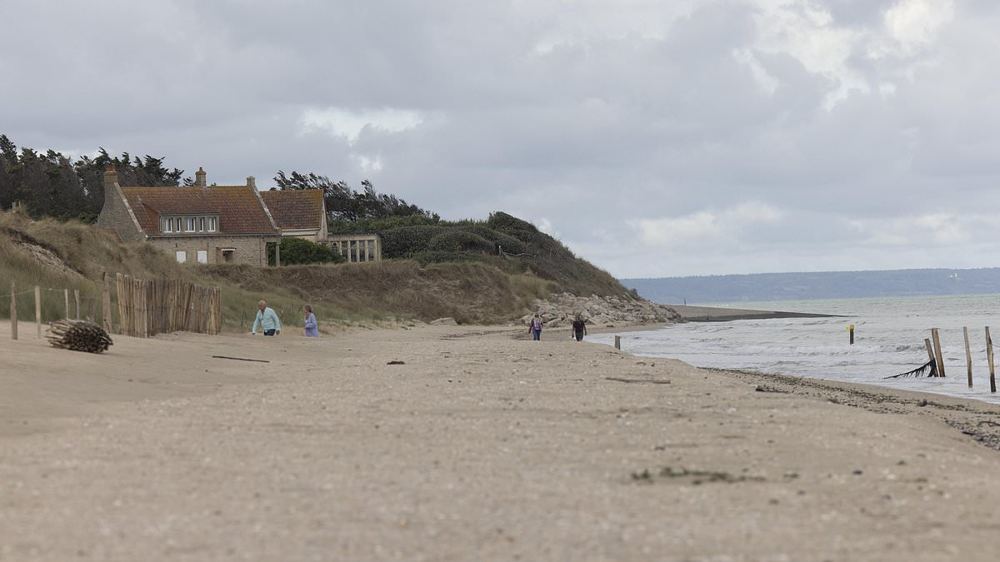
Île de Ré Is France’s Answer to Martha’s Vineyard: A Guide to the Island
The Atlantic Coast hideaway island where pink shutters are forbidden is often compared to Nantucket and Martha's Vineyard.
As soon as you cross the Pont de Île de Ré, the bridge to reach the island on France’s Atlantic coast that’s been likened to Martha’s Vineyard , something changes in the air. To get here you can take a three-hour train from Paris to La Rochelle, and thanks to a bridge built in 1988, a 20-minute car ride will get you the rest of the way, when suddenly there’s a shift.
The village of Rivedoux-Plage's red-capped Phare de Chauveau is one of three lighthouses on the island
“Island people are different,” my taxi driver said as we coasted over the bridge and into Rivedoux-Plage, the first of ten tiny villages dotting the island. Already, the light felt brighter, even on an overcast day. As we cruised along a narrow, two-lane road, pine forests giving way to golden wheat fields, towards the historic capital, Saint-Martin-de-Ré, I pressed. Did he mean the pace? Are people here more relaxed? Yes, as I’d soon discover, even at white tablecloth restaurants, like Le George’s, people wore faded Quicksilver t-shirts and Birkenstock mules. Beach cruisers and e-bikes are the preferred form of transportation.
The driver continued: There’s also a spirit of solidarity. A later visit to the Ernest Cognacq Museum, a capsule of local history, shared how the inhabitants of Île de Ré historically banded together to weather storms, to produce wine, and to harvest salt, economic activities that put them on the map. Locals care deeply about the environment, an ethos enshrined by laws prohibiting construction on 80% of the island. I can attest, pedaling between villages as the sky turned pink at dusk, all I heard was the whistle and squawk of birds. The island is home to at least 351 species of them.
The historic capital of Saint-Martin-de-Ré's white-washed homes are dotted with flowers
They also care about preserving the island’s laidback vibe. On the low houses, white-washed façades bursting with hydrangeas and hollyhocks and jasmine, local ordinances dictate that shutters must be blue or green or gray. Pink is prohibited. Despite the population exploding tenfold each summer, islanders aim to peacefully co-exist with tourists and birds alike.
Maxime Vaudin, owner of the beloved bistro Magnolia in Pigalle, has been summering in Île de Ré his whole life. He calls it a genuine haven of peace. “It’s the complete opposite of the glitz and bustle of the French Riviera. Life moves at a different pace here, and that’s precisely what keeps people coming back year after year.”
Today, you’ll find all of the Martha’s Vineyard charm, picturesque lighthouses, golden dunes, rolling fields, and thick forests. You can have your pick of restaurants, from classic oyster shacks to hip wine bars to tasting menu spots. You’ll also find stays for all tastes, from the refined Hotel Toiras to chic, family-friendly cabins at Le Phare. Here’s how to fit it all into one getaway, and the best things to do in Île de Ré.
On Île de Ré, biking is non-negotiable if you want to embrace the local spirit. Nearly 86 miles of cycling paths criss-cross the relatively flat island, which is just 19 miles from end to end. You’ll find bike rental shops in every town, often run by friendly, bilingual locals, like YooToo in Saint-Martin-de-Ré. (Word of advice: when the wind kicks up, traditional bikes move at a snail’s pace. Consider splurging on an e-bike for an extra 10 euros or so per day.)
Brush up on Île de Ré history at the Ernest Cognacq Museum . Things I learned: Due to its prime location on the Atlantic, the British once battled for control of the island. Had history caught a different tailwind, those crêpe shops might have been fish and chips joints. Also, from the 19th century to the 20th century, the island served as a holding area for convicts being sent from mainland France to overseas penal colonies, a sobering thread in the sunny island’s past.
The landscape is dotted with lighthouses, and climbing one feels like a rite of passage. On the northern tip of the island, Phare des Baleines is famed for its breathtaking views. Just 257 steps from the bottom to a grid-worthy snap at the top. Afterwards, you can stroll the Conche des Baleines , or Whale Bay Beach, bordered by the Lizay Forest, an islander favorite for its wild, untouched feel.
Gourmands have plenty to visit around the island, from harvesters of fleur de sel , to producers of wine and the local pineau spirit, to busy oyster farms. Ré Ostréa offers immersive experiences for oyster lovers, guided tours, from cultivation through each step of the process, exploring how the environment shapes the oysters’ diet and development, before finishing with a tasting paired with crisp local wine.
Each village has daily open-air markets in the warmer months. Check when they’re on and spend a few hours wandering the stalls, handwoven baskets, leather goods, artisanal salt, the season’s brightest produce, and plenty of locally made jewelery and tchotchkes. Antique shops are also scattered across the island. L’Heure Bleue Antiquités is worth a bike ride for its carefully curated selection of homeware, well-loved garments, and art from across the ages.
La Cabane du Feneau is an island dining favorite for fresh oysters, platters of shrimp, and house-made rilletes.
Vaudin says that the island’s food scene, once dominated by tourist traps, has slowly blossomed. “Gradually, the offer improved, with a stronger focus on local produce, particularly thanks to the remarkable growth of the oyster huts run by local oyster farmers, and restaurants offering concise menus where every dish is carefully crafted.”
In La Couarde-Sur-Mer, La Part des Anges is a bottle shop, wine bar, and restaurant that has become a destination for oenophiles on Île de Ré. Owner Arthur Houin, a trained caviste , works directly with winemakers to build a cellar focused on natural and low-intervention wines, earning a reputation for offering exceptional bottles at accessible prices (sold at retail price plus a 10 euro corkage fee for on-site sipping). In the kitchen, chef Benoît Aldebert is all about the local terroir , preparing seasonal ingredients from the island and surrounding waters in dishes like meagre (an Atlantic croaker) with stewed cherries, gnocchi with coastal herbs, and mussels escabeche with fennel cream. Says Vaudin, “It’s the kind of place where you instantly feel at home, and Arthur always has a few exceptional bottles to introduce you to.”
A few steps away, La Cabine de Bain , opened earlier this year, is a casual spot with smiling waiters and wines that pair perfectly with plates meant for sharing, like a half-dozen oysters from nearby producer, La Cabane Oceane, washed down with a bright Muscadet from Languedoc; fire-grilled hanger steak with chimichurri paired with a well-structured Southern Rhône blend.
In Le-Bois-Plage-en-Ré, O’Canailles is a great bar à manger for lunch, after perusing the nearby open-air market, or a casual dinner. While the wine list highlights bottles from Île de Ré and across France, the menu globetrots a bit, a bruschetta with stracciatella and garlicky mushrooms piled high with Italian coppa; panko-crusted shrimp with Thai chili sauce; or a comforting croque monsieur with a touch of truffle.
It would not be a trip to Île de Ré without fresh-shucked oysters. Several locals pointed me toward Les Huitres de Trousse-Chemise , a producer on the northern end of the island, where 19 euros will get you a gorgeous spread of oysters, shrimp, bulots (sea snails), and palourde (clams), adorned with nothing but lemon slices and housemade mayo. Surrounded by salt marshes, La Cabane du Feneau is another island favorite that draws a crowd for its fresh oysters, platters of shrimp, and housemade rillets, an ideal apéro option.
On the ground floor of Hotel de Toiras, with expansive windows overlooking the harbor, Le George’s has a relaxed air that belies the seriousness of its cuisine. Ronan Fillatre, a fresh-faced Brittany native, took over the kitchen in late 2024 and has quickly set the restaurant on a more ambitious path. A four-course tasting menu is a tour of some of the island’s finest products, oysters topped with crunchy buckwheat, just-caught pollack with foraged coastal herbs, fresh goat cheese drizzled with seaweed-infused honey, presented artfully but not overly fussy. The wine list includes selections from the owners’ estate, Domaine de Clarisse.
On the southern side of the island, in a 17th-century building overlooking the harbor in La Flotte, chef Arthur Da Costa Adao and sommelier Louis Grizeau bring their expertise and twenty-something energy to L’Écailler , crafting tasting menus and beverage pairings that make local products sing, mackerel, meagre, mussels, the famed homard bleu (blue lobster), and more, adorned simply but thoughtfully with seasonal produce. For now, it remains the only Michelin-starred restaurant on Île de Ré.
Another must-visit is La Martinière, an Île de Ré ice cream institution, which pays homage to local harvests with flavors like potato and oysters with seaweed praline (creamy, briny, and strange, but worth a taste), plus crowd pleasers like caramel with fleur de sel (sea salt).
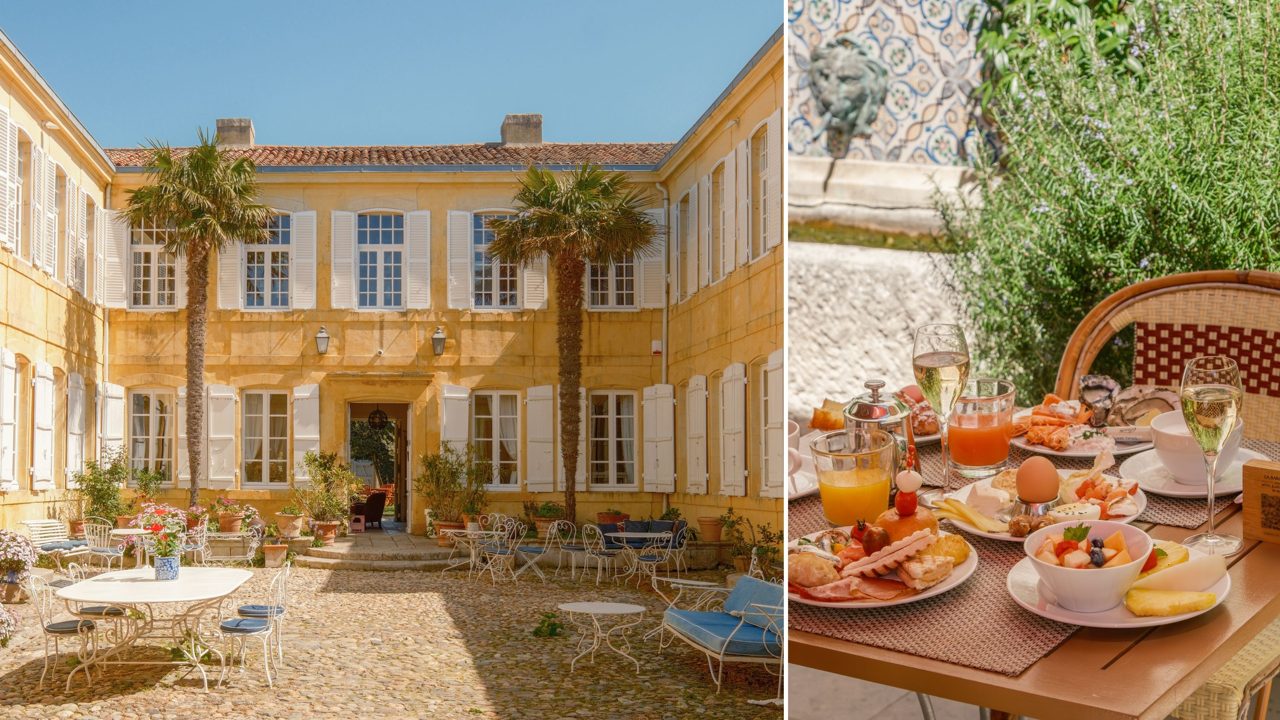
An 18th-century estate with 23 uniquely designed rooms and suites, Hotel La Baronnie calls itself a “village within a village” for its location in historic Saint-Martin-de-Ré.
Attesting to the island’s laid-back spirit, Île de Ré has a long tradition of camping. Sites can be found across the island, from family-friendly favorites such as Huttopia to more design-forward stays. At the glamping end of the spectrum is Le Phare , a boutique retreat in Les Portes-en-Ré, on the island’s wild northern tip. Nestled among dunes and salt marshes, its chic beach houses and cabins feature light-filled interiors, natural materials, and terraces that open onto wild landscapes. With the beach just steps away, heated pools, bike rentals, and nature-led experiences, it’s an ideal base for settling into the island’s relaxed rhythm.
By way of lodging, Hôtel de Toiras occupies prime real estate in Saint-Martin-de-Ré, perched on the small port that’s the heart of the island. While the exterior is simple and white-washed, the interior is like a lavish country estate, owing to the esteemed design eye of Pierre-Yves Rochon. Each room and suite, named after a different historical figure, features unique decor items. Mine, very “Marie Antoinette goes to the beach,” had canary-yellow and royal-blue Toile de Jouy wallpaper, and a crown-canopied bed draped in matching, richly textured fabric. The port views and the claw-foot tub added to the seaside aristocratic feel.
A short stroll away, slightly removed from the commotion of the port, is Villa Clarisse . It’s an intimate nine-room property with a clean and airy Haussmannian feel, white walls and high ceilings; fireplaces topped with Louis XV mirrors. Guests are encouraged to feel at home, with an honor-system apéro set-up for pouring champagne, mixing cocktails with local Citadelle gin, and snacking on sliced saucisson . The lush gardens, manicured but also a touch sauvage , have plenty of recliners, and a crystalline pool just begs for a quick dip. The wellness area has two spaces for signature Olivier Claire body and face treatments, and the studio offers yoga classes on Thursday mornings.
Also in Saint-Martin-de-Ré, Hotel La Baronnie calls itself a “village within a village.” It’s an 18th-century estate with 23 uniquely designed rooms and suites. Amenities include the Bar 1721 and the island’s only Cinq Mondes Spa, featuring a hydrotherapy pool, jacuzzi, sauna, and a curated menu of signature massages and treatments.
For a low-key, B&B-style stay, Le Secret has five bright guest rooms, understated with a mix of vintage decor, overlooking a lush garden with a sleek swimming pool, olive trees, Japanese maples, and figs. The owners are happy to arrange in-room wellness treatments and massages on request, and share their insider knowledge of Île de Ré.