Explore The 90s: Art and Fashion, Tate Britain’s New Exhibition
Discover The 90s: Art and Fashion at Tate Britain, bringing together art, fashion, photography and nightlife from 1990s London. The post Explore The 90s: Art and Fashion, Tate Britain’s New Exhibition appeared first on Fucking Young!.
London in the 1990s was a place where fashion, art, music and nightlife increasingly occupied the same cultural space. The 90s: Art and Fashion , now at Tate Britain , revisits that period through more than 200 photographs, paintings, sculptures and garments by almost 70 artists, photographers and designers. Across the exhibition, the decade emerges not as a neat cultural moment, but as a restless collision of images, identities, sounds and ideas. Curated with Edward Enninful OBE, whose experience of the period informs the exhibition, it runs from 8 October 2026 to 14 February 2027. It stands among the season’s most compelling exhibitions in London.
Photography is where the mythology begins to fracture. Corinne Day, Nigel Shafran and Juergen Teller rejected the polished fantasy of fashion imagery in favour of something closer, messier and more intimate. Roshini Kempadoo and Eileen Perrier challenged established ideas of beauty and representation, while Kate Moss appears in the now iconic image of her wearing a sheer Liza Bruce slip dress. Barbara Walker, Jenny Saville and Gillian Wearing turned towards real people and everyday experience, while Tracey Emin, Sam Taylor-Johnson and Sarah Lucas pushed sex, class, identity and the body into the centre of the frame. What emerges is not the perfect image of 90s cool, but a culture increasingly suspicious of perfection itself.
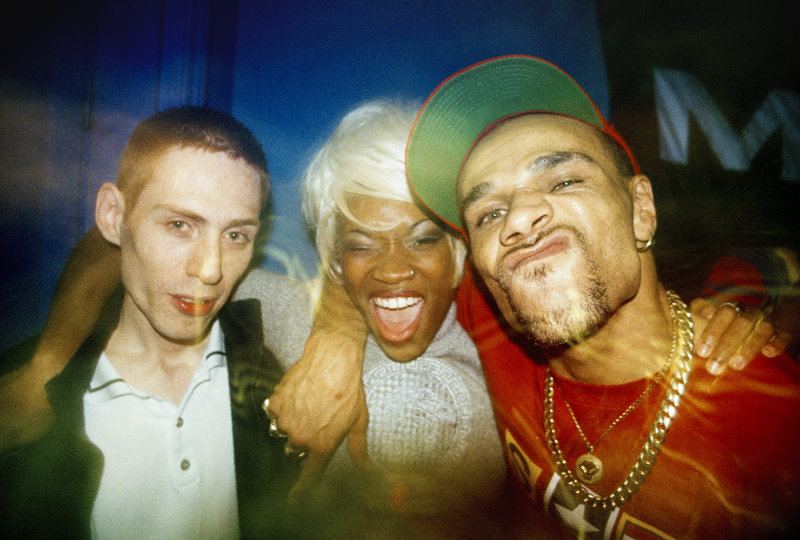
Nightlife provides another key to the decade. Mark Leckey’s Fiorucci Made Me Hardcore turns British dance culture into a hypnotic sequence of bodies, music and repetition. Dave Swindells, Peter J Walsh and Tony Davis document the rise of acid house, while Normski, Eddie Otchere and Ewen Spencer follow the worlds of hip hop, jungle and drum and bass. Poulomi Desai, Stuart Linden Rhodes and Jon Shard bring queer nightlife into view, while Seana Gavin and Vinca Peterson capture the restless energy of raves and free parties. Flyers, payphones and makeshift spaces point to a culture built through improvised networks rather than established institutions. These spaces were not simply where the decade unfolded. They were places where its new language was being invented.
Inside the gallery, the same appetite for disruption takes different forms. Helen Chadwick, Jake and Dinos Chapman and Cathy de Monchaux pushed the body towards the grotesque and macabre, while Cerith Wyn Evans, Rachel Whiteread and Gary Hume stripped form back to something quieter and more uncanny. Damien Hirst’s formaldehyde sculptures turned death into spectacle. Fashion was equally confrontational. Alexander McQueen made the runway theatrical, disturbing and deliberately uncomfortable, while Hussein Chalayan questioned what clothing could become through garments inspired by everyday objects. Nick Knight, David Sims and Craig McDean brought a similar severity to fashion photography. Wolfgang Tillmans’ Concorde Grid 1997 captures the contradiction of the period particularly well: technological optimism already shadowed by the anxiety of what might come next.
Then there is ‘Cool Britannia’, perhaps the decade’s most successful piece of cultural branding and one of its least complete stories. Steve McQueen’s Bear (1993), Chris Ofili’s Woman, No Cry (1998) and Keith Piper’s work around sport and national identity expose a Britain far more complicated than the one being sold abroad. Ozwald Boateng, Joe Casely-Hayford and Koto Bolofo reflect the growing influence of Black British creativity, while Jason Evans and Simon Foxton turn towards street style and the people who shaped it. British fashion was never simply being defined by the designers who received international attention. It was also being made in the street, in clubs and within communities that rarely fitted the official picture.
History returns in the final section, which feels appropriate for a decade so invested in reinvention. Yinka Shonibare and Maud Sulter revisit European art history and dandyism, while Vivienne Westwood and John Galliano borrow freely from different periods and traditions to construct their own versions of the past. Their anachronism points towards one of the exhibition’s most compelling ideas: that the 1990s were less a coherent cultural moment than a collision of references, identities and influences. The decade has since been reduced to a recognisable look, but The 90s: Art and Fashion makes a stronger case for something far less tidy. Its real legacy was not ‘Cool Britannia’, but the collapse of the walls between fashion, art, music and everyday life, a shift that still shapes the way culture is made now.