How a song about a crazy moonshine arrest turned into a multi-million-seller for Bonnie Raitt
A morning piano session, an Irish melody and a touch of Bruce Hornsby’s magic – the story of Bonnie Raitt's I Can't Make You Love Me
It began with a newspaper article. “I was reading the morning paper,” Nashville songwriter Mike Reid told me, “and there was a back-page story about an old country boy who’d gotten tanked up on moonshine. He went a little nuts, and took to shooting up his girlfriend’s car. He was taken in, and when he came before the judge, the judge said: ‘What have you learned from this experience?’ The guy said: ‘I learned, your honour, that you can’t make a woman love you if she don’t.’”
The same day, Reid was scheduled to co-write with his friend Allen Shamblin. When Shamblin arrived, Reid showed him the article. They kicked around the idea as an up-tempo bluegrass song. “We worked on it for a few weeks. It was something we imagined Ricky Skaggs might do,” Shamblin said.
But the pair got stuck. “We had those opening two lines of the chorus. But no matter what we did, we couldn’t get further than that.” Reid says. So they set it aside and moved on to other songs.
In the meantime, Reid had been listening to “a lot of Irish music”, and one day, after dropping off his kids at school, he went to the piano. “That was a good time for me to sit at the piano, because when the kids were very little there was something about having them in the car - my defenses were gone. And this melody just poured out that morning. A whole verse improvised into the tape recorder. It seemed to make sense with that title we’d been kicking around as a bluegrass song. I called Allen and said: ‘You better come over and check this out.’”
The pair realised that the slower tempo and gospelly chords matched the naked emotional hurt of the idea. Once they zeroed in on the characters in the song, the writing took only a few days.
“When we finished, it was a beautiful moment,” Reid says. “It was one of the few songs I’d ever been involved in where I thought: ‘There’s nothing to change.’”
Weeks passed, then months. Reid kept putting off making a demo, telling Shamblin that he had to be “emotionally up to it.” Shamblin told Stereogum : “I knew that it was the best song I had ever been a part of in my life. So I kept saying: ‘Mike, have you done a demo of it yet?’ Then one day he called and said: ‘Come over. I got it.’
Reid told me there were only two singers that came to mind who they could send the demo to: “Linda Ronstadt and Bonnie Raitt .”
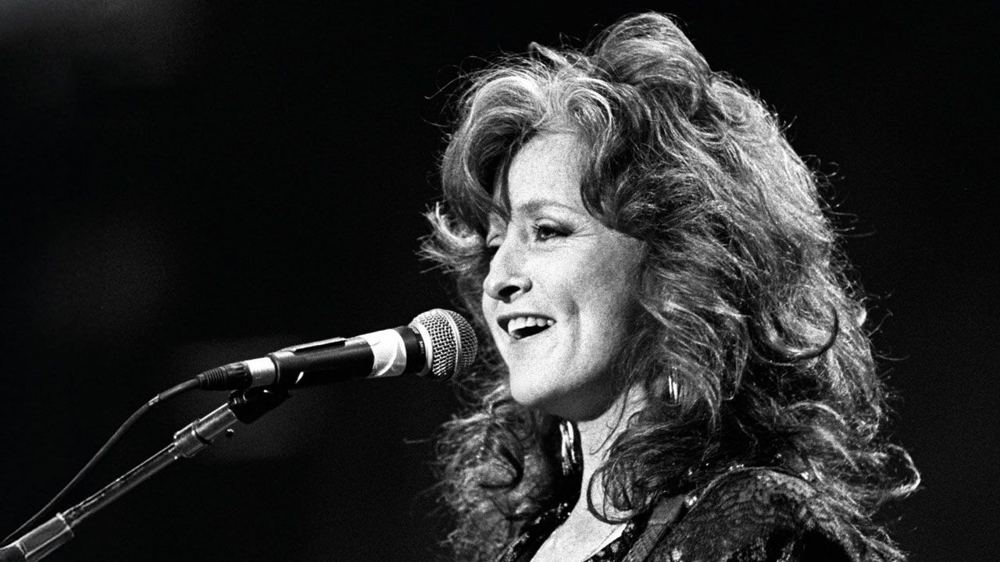
In 2022, Bonnie Raitt told me: “I was just astounded the first time I heard it, and I knew I had to record it. I’m a big fan of Mike’s voice, and the two of them together wrote probably one of the most exquisite songs I’ve ever heard.”
Raitt recorded it in a spare arrangement, led by Bruce Hornsby on piano. “I think he made all the difference,” Raitt later told Music Radar . “The reason that song is the heartbreaker it is is because of the way he interprets those chords. That’s not how the demo sounded. Even in the intro alone it already breaks your heart.”
But according to Reid, initially Raitt wanted it more like the demo. So much so that Hornsby almost bailed on the session, insisting they should get Reid to play instead of him.
“It’s essentially the part I wrote, but he made it like Bruce Hornsby,” Reid says. “That distinct style. It’s the difference between when you hear something that thrills you and when you hear something that just stops you in your tracks. Bonnie’s voice just stopped me. I remember thinking that she understood the song more clearly than Allen or I. As always the great gift of having a true artist record something you’ve written is that it reveals things in the song that you as the writer hadn’t noticed. I love her for that.”
“I’m still trying to process the impact it’s had on my life,” Shamblin said. “Bonnie surrenders and serves a song in a way that validates everyone who’s involved in her artistry. Almost weekly, Mike Reid or I meet someone who expresses how much her version of the song means to them. I was blown away when she recorded it, and I still haven’t recovered.”
“People do seem compelled to talk to me and Allen about this song, and tell us how it’s affected them,” Reid says. “I had the guy at the music store tell me recently: ‘That song was a gauge for me. It really helped me through a difficult time when I was going through a divorce.’ He said he knew he was finally able to get on with his life and be over this horrible time when he could listen to that song and not be shattered by it.”
It is remarkable how many songwriters mention this song as one of their favourites. Carole King described it as “torn from the depths of feeling, from the bottom of that horrible place where your love is unrequited”. Songwriter Lamont Dozier saw Mike Reid perform it live and said: “I thought Bonnie Raitt’s version was fantastic, but to hear the writer deliver his own composition, the tears started flowing.”
In the years after its release, the song grew in stature, with Prince, George Michael, Adele and others covering it.
“I don’t think either Allen or I ever stand back and say: ‘Gee, we wrote that,’ Reid says. “For anything that you write, the best thing that can happen is that people use it in their lives. They don’t view it as a piece of artifice, but as something that they integrate into their lives that means something. You empty out the bags of your own life into the work, you participate in it. At that point, that’s when the writer disappears and the dance is between the singer and the listener.”
Raitt told NPR: “ I Can’t Make You Love Me is no picnic. I love that song, so does the audience. So it’s almost a sacred moment when you share that, the depth of pain with your audience. Because they get really quiet and I have to summon some other place to honour that space.”
Bill DeMain is a correspondent for BBC Glasgow, a regular contributor to MOJO, Classic Rock and Mental Floss , and the author of six books, including the best-selling Sgt. Pepper At 50 . He is also an acclaimed musician and songwriter who's written for artists including Marshall Crenshaw, Teddy Thompson and Kim Richey. His songs have appeared in TV shows such as Private Practice and Sons of Anarchy . In 2013, he started Walkin' Nashville, a music history tour that's been the #1 rated activity on Trip Advisor. An avid bird-watcher, he also makes bird cards and prints.
Please logout and then login again, you will then be prompted to enter your display name.