With the cold breed: For soldiers of the 11th Airborne Division, ‘winter is always coming’
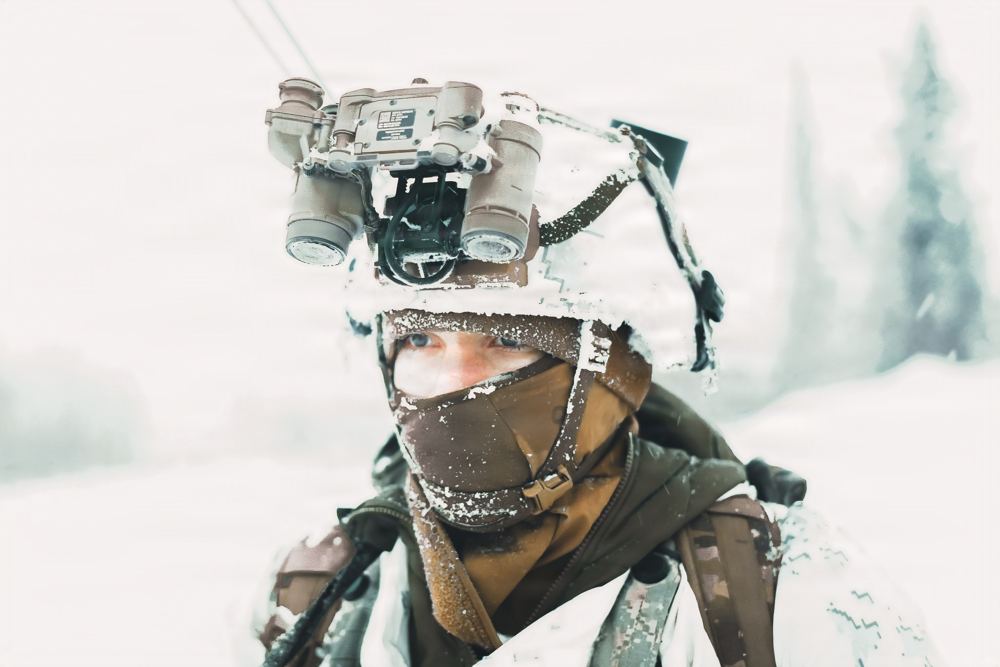
Survival in Alaska’s vast wilderness presents its own difficulties. Training soldiers to fight in these environs is an undertaking even more daunting.
Things break in the bitter cold of America’s northern reaches. Batteries die. Fuel and other vital fluids freeze. Vehicles become trapped in ice and snow. Appendages and limbs? If soldiers aren’t careful, such injuries can unravel any semblance of situational control.
Survival in Alaska’s vast wilderness, where any hint of complacency can indeed kill, presents a colossal difficulty. Training service members to fight in these environs is an undertaking even more daunting.
For the soldiers of the U.S. Army’s 11th Airborne Division, this task rests, ultimately, on the shoulders of Maj. Gen. John Cogbill and the capable leaders he advises.
And the commanding general of the Arctic Angels would not trade it for anything.
“We have a saying that everything breaks at 40 below,” Cogbill says when asked about these challenges.
From the outside, the soldiers of the 11th Airborne appear to be built differently. But Cogbill insists that’s not the case.
Perhaps it’s the frigid air, wilderness that stretches beyond the horizon or a sky that unleashes snow without end, but troops reporting to Alaska for the first time often do so with “trepidation in their eyes,” he says.
“But when I see them six months later, after they’ve been through their cold-weather indoctrination course and gone out to the field, they realize their team leader, their squad leader, their platoon sergeant, they’re being taken care of,” he says.
“We’re not going to give them something they can’t handle. Then they start to build that trust in their leaders and trust in themselves. That’s when they truly become Arctic-tough.”
Achieving that rare brand of toughness requires both sound leadership and reliable equipment, Cogbill says. Nestled in a region that places the 11th Airborne at a crucial convergence of three combatant commands, U.S. Pacific Command, U.S. Northern Command and U.S. European Command, a soldier’s ability to trust in both is the difference between success and failure.
Cogbill spoke to Military Times about what goes into earning that trust, and how a relentless pursuit of innovation is critical to keeping abreast of distant developments that would be reduced to ruin in the far North.
For the Arctic Angels, accounting for their surroundings is part of the fun.
“Winter is always coming in Alaska,” Cogbill says. “They embrace it.”
Cogbill: The Department of War has an Arctic strategy for a reason. We can range any of these locations and be within 90% of the industrial world within nine hours.
Billy Mitchell, the father of the modern-day Air Force, said whoever owns Alaska owns the world. It’s a power projection platform in any of those directions, west of the International Date Line to the Indo-Pacific or over the pole to Europe.
Therefore, we have to be able to fight in different environments. But we optimize for the Arctic, because we’re the only Arctic division.
We have to have certain vehicles that no other unit has, such as the Cold Weather All-Terrain Vehicle (CATV), the workhorse for moving soldiers and equipment over snow.
We have to be proficient in skis and snowshoes. We have to be able to jump out of airplanes with this gear. We have to be able to do air assault missions with this kit and then sustain ourselves, not just survive, but fight and thrive.
Drones are a hot topic right now, and it’s something that I’d say we’re catching up a little bit with the rest of the Army.
We’re not a Transformation-in-Contact division, which means we didn’t have an initial fielding of a large number of small- and medium-range drones. But continuous transformation is a mindset for the 11th Airborne Division, which means we’re learning and adapting quickly, and we’re also bootstrapping this effort by learning from other divisions in the Army and how they’ve utilized first-person-view drones, either for reconnaissance or for strike.
So, we are collaborating with these other divisions, like the 101st Airborne Division and the 25th Infantry Division, to get our own parts, stand up our own Arctic innovation labs and build similar systems.
The difference is, if we want to fly these drones in Alaska during our winter training exercise, the battery life will be about 1/20th of what it is in the Pacific. So, we’re trying to figure out ways to prolong battery life, to build drones that are more capable in high wind, high altitude and sub-freezing temperatures.
Something that works anywhere else in the world, we bring it up to Alaska, take it out to the field and put it through its paces.
If it doesn’t work, then we have innovation partners, academic partners at the University of Alaska, Fairbanks, for instance, who we go to and say, “Hey, this is an engineering problem. What can you do to help us?”
They’ve got one of the best small UAS engineering programs in the entire world, because they live and operate in this environment.
So, we share as much as we can, learn from our peers and work closely with the modernization enterprise to pioneer some of these efforts.
There are certain things that just work differently in the Arctic. Mobility is harder, going from point A to point B. Sustainment is harder when you’re talking about moving things off-road through waist-deep snow. Battery life is shortened, which means you have to resupply more often. Water can’t be delivered in bulk. Fuel has to be delivered in cubed ice.
Those are all the logistical challenges. For the individual soldier, it’s about just being able to maneuver.
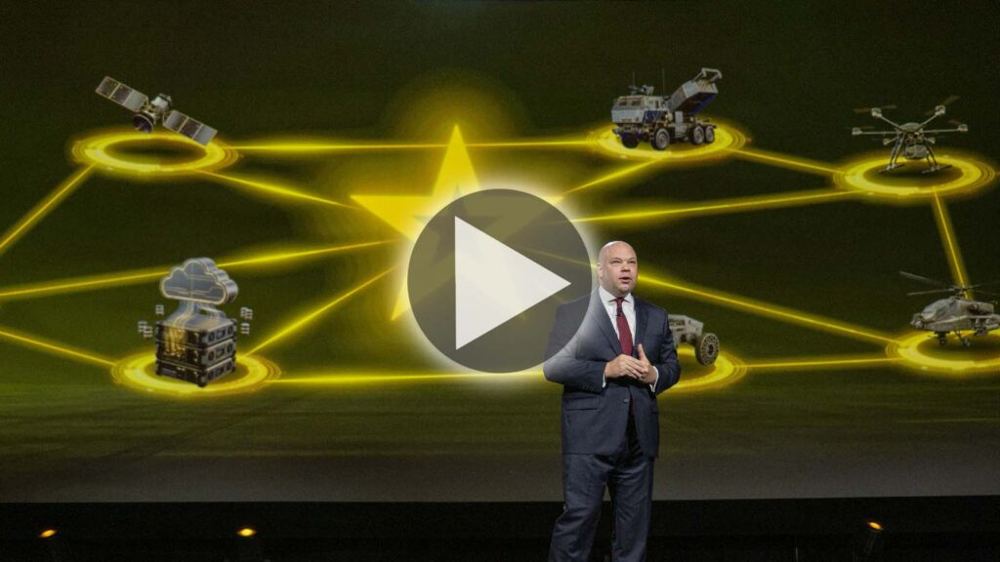
Common across all these operating environments are the need for decision dominance and for human-machine teaming.
So, we understand the importance of drones, which is why we’re catching up as fast as we can and working with the Army Materiel Command and SkyFoundry initiative to get as many of these drones as possible into the hands of our soldiers so they can operate in any environment.
For the decision dominance piece, it’s about being able to develop a common operating picture and a common intel picture at echelon.
Everywhere from the rifle squad up to the division and corps, all the way up to a combatant commander, where we can see the enemy, see ourselves and use all the sensors at our disposal to make decisions about how to strike most efficiently.
We’re using existing exercises and joint partners to pass targets through tactical data links to do machine-to-machine communication, gain and maintain custody of targets and increase our lethality as a division and warfighting headquarters.
It varies depending on the echelon of command. As the division commander, I’m responsible for every decision we make as a division, whether it’s in training or combat. If I make a decision to strike a target, I own that decision and the outcome.
A culture where commanders feel empowered also means a culture of accountability. Having commanders in the loop, although the machines and AI are evolving rapidly, the Army still expects us as commanders to use judgment and experience to make a call to strike or not strike.
You have to practice that. You have to get reps and sets, and do it through training as often as you can. So, we do exercises every 90 days to help us see the strengths and weaknesses of the algorithms, to code, to work with the engineers and our own operators.
We need to be able to program new strategies and develop agentic AI solutions for targeting that allow us to not only find optimal solutions for shortening kill chains, but also to be able to incorporate large language models in things like rules of engagement and lessons learned.
Anything that we’re doing in a training exercise can then be referenced using these large language models to make us better, to make my decisions faster, better, more informed and hopefully yield better outcomes.
With the proliferation of these machines, and not just at my level or the squad level, but throughout our formations, we have to train and rehearse this physically.
I mentioned digital targeting, but when you talk about the mechanics of lethal squads, platoons and company commanders who are trying to converge fire and maneuver, you have to put that into live-fire training.