The ULTIMATE emigration guide to escape Burnham's Britain: From Malta, Portugal and Greece to South Africa, Asia and Canada - here's EXACTLY what you'll get for your money
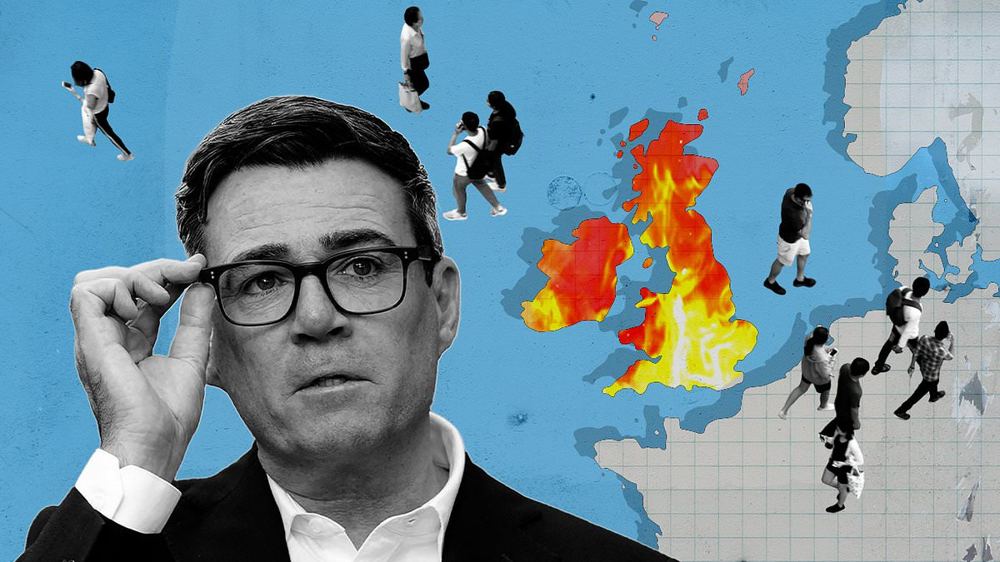
At the Labour party conference Andy Burnham announced a raft of policies so utterly ill-conceived that many must be contemplating escaping the country for good.
At the Labour party conference, Andy Burnham announced a raft of policies so utterly ill-conceived that many must be contemplating escaping the country for good.
The PM’s decision to axe the pensions triple lock will affect thousands of retirees, while soaring energy bills, rising inflation and a tanking economy add to the gloom.
And that’s before we get to Chancellor John Healey’s first Budget on October 28.
But don’t despair, there are plenty of places where life is considerably rosier, once you’ve negotiated the red tape that will let you stay for longer than a tourist visa would (which in the EU limits visitors to 90 days in any 180-day period), as millions of Britons have already discovered.
Here, we present the ultimate emigration guide, so you can escape Burnham’s Britain.
The village of Paleokastritsa, nestled on the north-west coast of Corfu. A detached, two-bedroom house on this island could be bought for around £251,000
Living on a tranquil Greek island has long held an appeal among Britons, who are attracted by the cuisine, culture and low cost of living. Prospective British residents can apply for a variety of visas, including the financially independent person (FIP) visa and the digital nomad visa. Higher net-worth individuals may also qualify for Greece’s Golden Visa scheme, which offers residency in return for investment.
Housing: A detached, two-bedroom house in Corfu, setting for TV’s The Durrells, could be bought for around £251,000. Compare that to the average house price in the UK, which is £298,468.
Weather: More than 300 days of sunshine each year. The average temperature dips to 10C (50F) in January and rises to 29C (84F) in the summer.
Taxes: An annual flat tax fee of €100,000 for all global, i.e non-Greece sourced, income (for up to 15 years). There is also a deal for UK pensioners, who can stay for up to 15 years and just pay a flat tax rate of 7 per cent on all income.
Income tax rates range between 9 per cent and 39 per cent on salaries between £8,578 and £51,227, rising to 44 per cent on salaries above this. There’s a 50 per cent discount for the self-employed.
Capital gains tax is 15 per cent and share dividends tax is 5 per cent. In the UK, basic rate taxpayers pay 18 per cent capital gains, while for higher rate tax payers it’s 24 per cent.
Social care: You must be a resident to receive free state social care.
Cost of living: 22.3 per cent lower than the UK. A three-course meal for two is £42.71.
Education: State schools (taught in Greek) are free for foreigners. English speaking international secondary schools start from around £10,672 a year.
Immigration: Greece’s population stands at 9.8 million including around 17,000 British expats and 1.2 million immigrants in total.
Crime: Low to moderate. Rated 53rd in the 2026 Global Peace Index (GPI), which measures criteria including crime rates, political instability and terrorist activity.
Who’s in charge? Prime minister Kyriakos Mitsotakis of the centre-right New Democracy party.
A two-bedroom townhouse in Carvoeiro in the Algarve, pictured, could be bought for £351,638
More than 47,700 UK citizens live in Portugal, with the southern Algarve region the most popular. Golden visas are possible for those who invest more than £427,000, though this does not include property investment. Portugal’s D7 visa, also known as the ‘passive income visa’ is available for non-EU nationals who can support themselves through regular income sources, such as pensions, rental income and investments. This is equivalent to roughly £9,403 per year.
Housing: The average house price is £1,876 per sqm, in South East England it’s £4,300, with a two-bedroom townhouse in Carvoeiro in the Algarve seen on the market for £351,638.
Weather: More than 300 days of sunshine each year. The average temperature dips to 12C (54F) in January and rises to 24C (75F) in the summer.
Taxes: Range between 15.7 per cent and 44.6 per cent on salaries between £7,122 and £73,967, in the UK tax starts at 20 per cent on income over £12,570, and 48 per cent on salaries over this amount. Investment income (interest, dividends, rental income, capital gains) is taxed at a flat rate of 28 per cent.
Healthcare: State healthcare provides children under 18 and people over 65 with free care, while others may be asked to pay small fees.
Social care: Care homes charge a sliding monthly fee based on your income.
Cost of living: 29.4 per cent lower than the UK. A three-course meal for two is £38.44.
Education: State schools (taught in Portuguese) are free for citizens and foreigners. English speaking international schools start from around £5,120 a year.
Immigration: Portugal’s population stands at 10.4 million and its number of foreign retirees has more than doubled in the past decade.
Crime: Very low. Rated seventh in the 2026 GPI. The UK is currently 39.
Who’s in charge? Prime Minister Luis Montenegro of the centre-right Social Democratic Party.
More than 370,000 Britons live permanently in Spain, the most in any European country, lured by sunshine, cheaper prices and clean beaches, such as the Tossa de Mar beach on the Costa Brava, pictured
More than 370,000 Britons live permanently in Spain, the most in any European country, lured by sunshine, clean beaches, cheaper prices and a tapas lifestyle. The ‘Non-Lucrative’ visa available here is popular with retirees, and those living off other sources of income. A digital nomad visa is also available, requiring an income of roughly £2,450 a month.
Housing: Considerably lower than the UK average house price of £298,468, a three-bedroom, semi-detached villa in Andalucia is currently on sale for £525,579. Mortgage rates are currently between 2.5 per cent for residents and 3.2 per cent for non-residents. In the UK, currently a fixed deal will be at least 5.5 per cent.
Weather: 22-24C on average between June and September with 31C (88F) average highs in July and August, and lows of 12-13C from December to February.
Taxes: Income tax starts at 19 per cent up to £10,623, rising to 47 per cent on incomes over approximately £256,000; capital gains tax ranges from 19-30 per cent. In the UK, the highest rate of income, 45 per cent, kicks in when salaries hit £125,141.
Healthcare: Free for residents contributing to social security.
Social care: Residents of care homes typically contribute 75 per cent of their pension.
Cost of living: 25.6 per cent lower than in the UK. Utilities are approximately 52.8 per cent lower than UK. Beer is £2.56 for 500ml. For a pint, which is just over 500ml, in the UK you will pay £4.82 to £5.50. A three-course evening meal for two without wine here averages around £42.71. In London that figure jumps to £98.30, albeit including house wine.
Education: Free state education, with free pre-school for ages 3-6, and childcare costs of around £280 a month for 0-3 years. Private annual tuition fees are from £8,676.
Immigration: There are ten million immigrants out of a population of 49.8 million.