Roll up, roll up! Exhibitions celebrate the splendour of the circus and the artists it inspired
Shows at Paris’s Musée de Montmartre and the Hepworth Wakefield celebrate the big top's enduring influence on artists
This autumn, two exhibitions on either side of the English Channel, The Circus: a Factory of Modern Art at Musée de Montmartre in Paris and Marc Chagall: The Circus at the Hepworth Wakefield, will celebrate the dazzling world of the circus as a subject for some of the most significant artists of the 19th and 20th centuries.
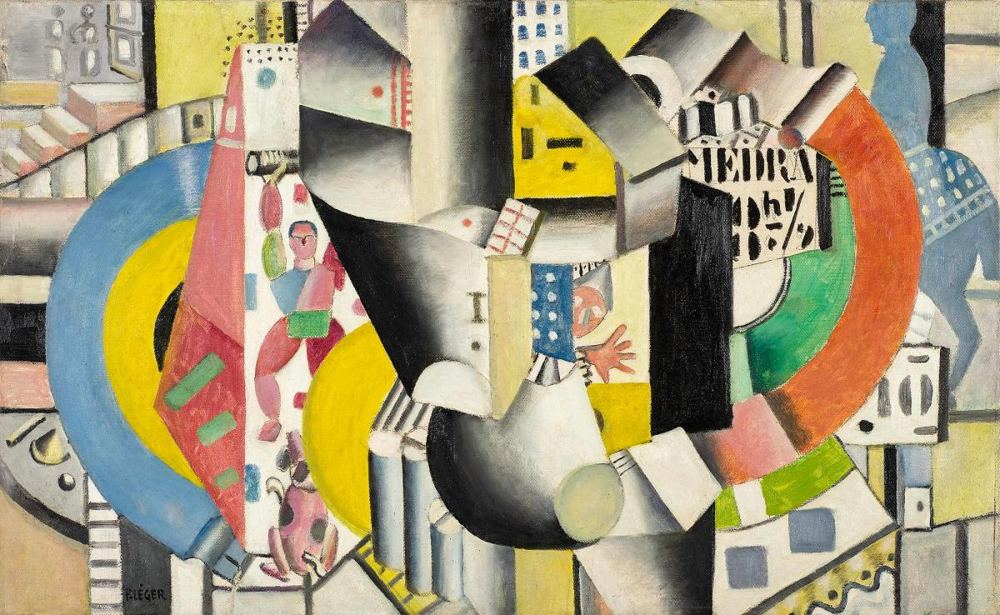
The Paris exhibition will argue that the tented enclosure with its circular-vertical structure, its dramatic lighting on shimmering costumes, its cantering horses and absurd clowns encouraged a new visual language from the avant-garde. “Go to the circus,” urged Fernand Léger in his book of lithographs titled Cirque (1950), “leave your rectangles, your geometric windows behind for a world of moving circles!” A highlight of the exhibition will be a rare loan from the Centre Pompidou of Léger’s Le Cirque Medrano (1918).
The Circus Medrano (formerly Circus Fernando) was located in Montmartre and gained the sobriquet of the “Painters’ Circus” because many of the artists who went there had studios in the neighbourhood. Léger, Henri de Toulouse-Lautrec, Pierre-Auguste Renoir, Edgar Degas, Georges Rouault, Georges Seurat, Pierre Bonnard, Pablo Picasso and Marc Chagall translated the daring somersaults of the circus ring into vibrant shapes and colours.
The artists exaggerated the slapstick scenarios they saw and matched the flexibility and skill of the trapezist with the precision of their pastels and paintbrushes. They fraternised with celebrity performers such as the Fratellini Brothers, Gerónimo Medrano and Cha-U-Kao; trapeze artists like Miss La La; and acrobats like the Wartenberg sisters. Among the props on display will be trumpets, musical saws and original clown costumes.
A painter and printmaker who remained enchanted by the circus all his life was Chagall, who features in the Paris show but also has his own exhibition at the Hepworth Wakefield next month. For Chagall, the circus was inextricably linked to his childhood in Vitebsk, Russia, where he remembered the comings and goings of performers at village fairs.
Between 1926 and 1927 Chagall painted at the Cirque d’Hiver in Paris. The art dealer Ambroise Vollard offered him his box, and the gouaches the artist made there became the starting point for a series of lithographs that are at the heart of the Hepworth Wakefield exhibition, accompanied by an important essay by Chagall, translated into English for the first time.
“In periods of transition, the circus offered Chagall a subject through which to process instability and change,” says the curator Eleanor Clayton. “[Circus] resurfaced at key moments of his personal and artistic renewal, from the Russian Revolution to the artist’s return to Paris, and again in the 1950s, following his exile during the Second World War.” But Chagall’s circus prints also remind us of our own enduring need for high-stakes excitement and, above all, fun.
- The Circus: a Factory of Modern Art , Museé de Montmartre, Paris, 16 October-14 February 2027
- Marc Chagall: The Circus, the Hepworth Wakefield , 21 November-25 April 2027