House museum of Spanish ‘master of light’ Joaquín Sorolla reopens in Madrid
The Sorolla Museum launches building's new extension while the original historic building undergoes restoration
The Sorolla Museum in Madrid will reopen on 15 October, two years after closing its doors for an ambitious expansion and restoration project. The museum is located in the historic home and atelier of the Spanish artist Joaquín Sorolla y Bastida (1863-1923), known for his glistening scenes of sunlit Mediterranean beaches.
While Sorolla’s residence will remain closed for restoration, the first phase of the €14m project is now complete, with a 1,698 sq. m extension including new exhibition spaces, an auditorium and storage facilities. The inaugural exhibition, entitled Behind the Artist’s House: The Architecture of the Sorolla Museum, 1905-2026 , will trace the history of the building, from its construction to the present day.
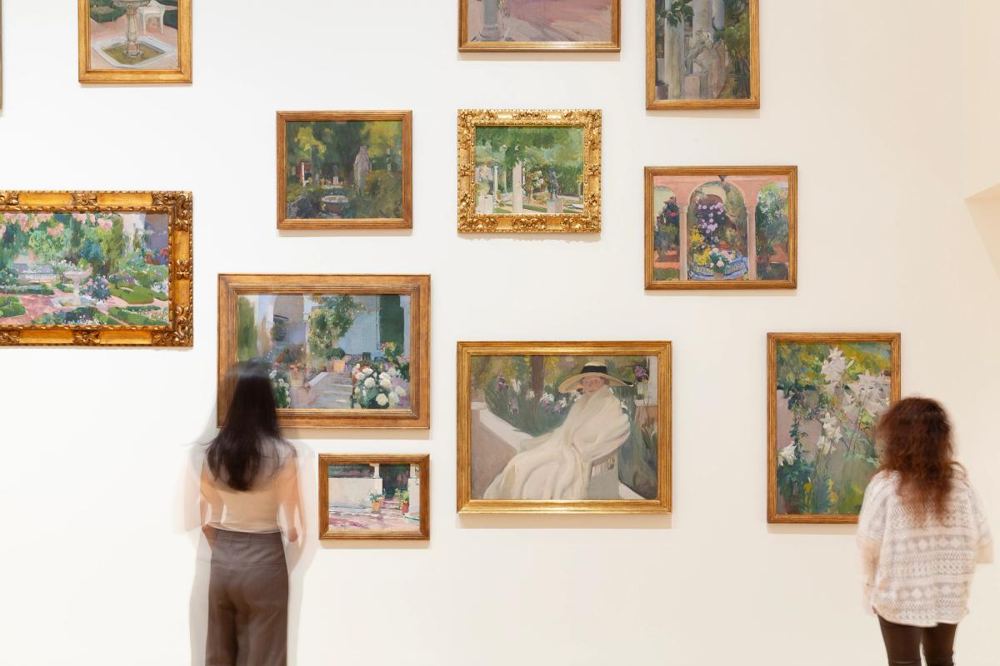
Sorolla personally oversaw the construction of his stately atelier-home between 1909-11. It houses the world’s largest collection of his works, including 1,394 paintings and around 5,000 drawings. Since it opened to the public as a museum in 1932, its layout, conceived for a family of four and its staff, has presented increasingly complex functional challenges.
In 2009, the Ministry of Culture acquired two adjacent properties that connect to the rear of the building with the objective of adding to the museum’s existing 1,432 sq. m of usable floor space. In an effort to minimise the museum’s closure, the overhaul was split into two phases: first the expansion, designed by the architecture firm Nieto Sobejano, followed by the restoration of the historic building. Work began in January 2022, and the museum finally closed in October 2024.
In the meantime, its entire collection had to be relocated to the new building. “This presented a challenge unlike any the museum has ever faced before,” Valera explains. However, the most critical moment was closing the museum’s doors: “You lose the relationship with the visitors, which is something that can really hurt us.”
For Valera, the physical expansion of the museum represents a broadening of its vision. “After the remodelling, the Sorolla Museum will have a new, expansive personality,” he says, pointing out the new auditorium. “We didn’t have a space like this before, and it will allow us to expand our cultural programming for every type of visitor.”
Improving accessibility was a major focus of the project. While the museum offered wheelchairs, its entrance and upper floors were not wheelchair accessible, a problem visitors and associations had raised for years. The new building, which is connected to the historical residence and the gardens, will now offer step-free access throughout.
Conservation was another concern. Previously, the entire collection, over 7,000 objects and just as many photographs, was stored within the house itself. Aside from the lack of space, there was a need for appropriate climate-control systems, an increasingly urgent issue as Madrid faces hotter and longer summers. “Our restorer used to carry out her work in very makeshift conditions and with very limited facilities,” explains Valera. Now, the new building includes both storage rooms and a restoration atelier.
The reopening is a partial one, visitors will have to wait to visit Sorolla’s historical residence, as works to restore and refurbish the building will continue for an estimated two years. “It’s very delicate work,” Valera says. “We’ll renew and install new lighting, air-conditioning and security systems, as well as restore the heritage features of the house, both inside and outside.”
Sorolla’s house retains its original decor, a mix of Rococo, Classical and Empire styles, featuring the artist’s own paintings, as well as his collections of ceramics and statues. Much like in his work, light is the protagonist of the building (Sorolla is often described as a ‘master of light’), with high beamed ceilings and large windows. Restoration efforts will focus on the floors, the tiled skirting boards, the historical woodwork, the roof, the façade and the gardens, also designed by Sorolla, who took inspiration from Andalusian patios, the Alcázar of Seville, and Granada’s lush Generalife. “It’s a beautiful challenge,” Valera concluded.