‘I know I can do anything’: new archive of AS Byatt’s papers looks inside the writer’s extraordinary mind
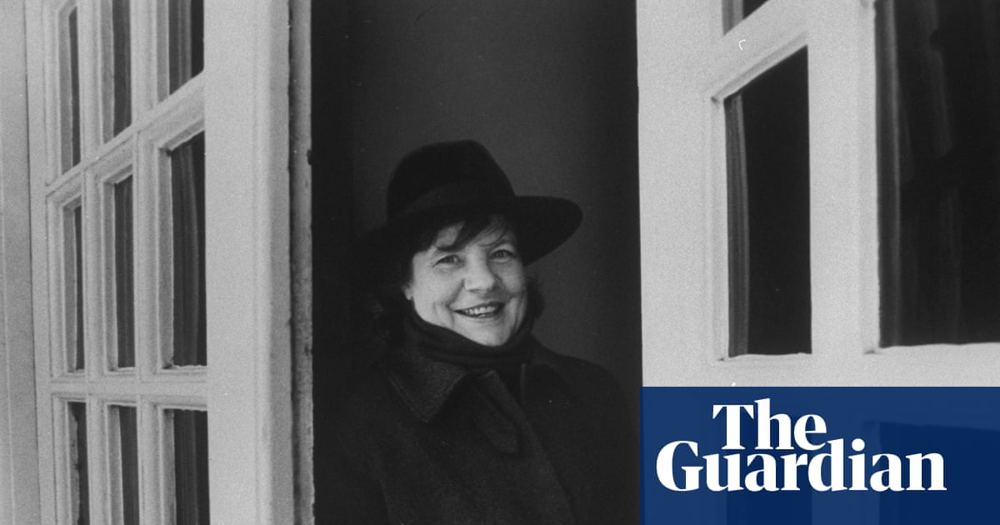
The Booker-wining author of Possession was known for her voracious research. Now, 68 boxes of her notebooks, letters and diaries acquired by the British Library reveal how she assembled the raw material of her fiction At 20, Antonia Susan Byatt was not yet sure she could write. “Do I take myself seriously as a writer?” she asked herself in her diary in September 1956. “No, I think not.” The young Byatt – who would go on to become one of Britain’s most celebrated writers, best known for her 1990 novel Possession: A Romance – was troubled by the possibility that her mind might not be equal to he
The Booker-wining author of Possession was known for her voracious research. Now, 68 boxes of her notebooks, letters and diaries acquired by the British Library reveal how she assembled the raw material of her fiction
At 20, Antonia Susan Byatt was not yet sure she could write. “Do I take myself seriously as a writer?” she asked herself in her diary in September 1956. “No, I think not.”
The young Byatt, who would go on to become one of Britain’s most celebrated writers, best known for her 1990 novel Possession: A Romance, was troubled by the possibility that her mind might not be equal to her ambitions. Yet her determination was already evident. On her 20th birthday, she wrote: “Today, I know I can do anything. But not yet.”
These intimate reflections can be found among the material in a major new archive of Byatt’s work, acquired by the British Library. It offers an insight into the development of the Booker prize-winning writer, who died aged 87 in 2023, and whose intricate, intellectually ambitious fiction earned her international acclaim.
The collection comprises 68 boxes of working notebooks, manuscripts, correspondence, personal diaries and documents from Byatt’s early life. It includes handwritten drafts of Possession, which won the 1990 Booker prize, and material relating to her 1978 novel The Virgin in the Garden and The Children’s Book, which was shortlisted for the Booker prize in 2009. According to the British Library’s curators, it is one of the most significant contemporary literary acquisitions the library has made in recent years.
“It’s the other side of the tapestry,” says Jenny Uglow, Byatt’s editor, who worked closely with her on Possession. “In her books, you have these extremely elaborate plots, very complicated characters with their extraordinary names. And then when you actually look behind it, there are hundreds, thousands of little threads.”
Born in Sheffield in 1936, Byatt studied English at Cambridge before continuing her education at Bryn Mawr College, Philadelphia, and at Oxford. She spent more than two decades teaching in universities and art schools, before leaving academia in 1983 to write full-time. She was known for her voracious research and her ability to weave apparently disparate fields of knowledge into her fiction. The archive allows researchers to follow Byatt as she assembles the raw material of her fiction, tests ideas and repeatedly questions whether they will work.
The documents “reveal the way her mind works”, Uglow says. “She thought extremely fast and she had one of those racing minds, almost like a three o’clock in the morning mind, everything whirling around. She’ll say things like: ‘This is fascinating, but it doesn’t fit. I can’t go on, this is not working out.’
“She got very cross if she was interrupted, or had to travel or wasn’t feeling well,” Uglow adds. “I think what the archive does is allow you to follow an extremely distinctive writer in the way that they create their work.”
The handwritten drafts of Possession are particularly illuminating. The novel, which interweaves the story of two contemporary academics investigating the lives of fictional Victorian poets, is a feat of elaborate plotting. The hundreds of pages of notebooks drafting the book show Byatt diligently working through questions of chronology and the relationships between the characters before the narrative took its final shape.
“Once she had decided on a book, it would take two, three or four years [to write it],” Uglow says. “She worked everything out scene by scene before she wrote the scene itself. She would really think it through, so when you get to the manuscript there aren’t many corrections.”
Byatt continued to write by hand well into the 2000s and 2010s. “It’s rather like craft work,” Uglow says. “There’s a connection between the brain, the imagination and the hand.”
The diaries show that Byatt’s intellectual confidence coexisted with flecks of self-doubt. At a young age, she described herself as an “intellectually slow developer” and wondered whether she had a “second rate mind”.
In another entry, she wondered whether her abstract way of thinking would prevent her from creating convincing characters, “characters with blood in them”.
The collection also contains correspondence with other writers, including the novelist Iris Murdoch, with whom Byatt had a friendly relationship, and letters documenting her exchanges with younger writers.
“If she saw a promising young writer, she was excited,” Uglow says. “She took great pleasure in seeing their books come out, and was loyal to them.”
The papers also capture Byatt’s wry observations of the people she encountered. During her time in the United States as a young woman, she offered a tart assessment of the women around her. “American women, curiously, stuntedly efficient & childlike,” she wrote. “Most of these are 26, 27, one would imagine them less. Friendly though, and not unintelligent.”
The library estimates that cataloguing the 68 boxes will take up to two years. Once complete, the archive will sit alongside its holdings of the literary papers of writers including Angela Carter, Beryl Bainbridge, Hanif Kureishi and Graham Swift.
“The British Library is thrilled to have acquired the archive of AS Byatt ,” says Helen Melody, the library’s lead curator of contemporary literary and creative archives. “Byatt sits at the heart of the British literary establishment and her prominence within postwar British literature cannot be overstated. This collection will be a hugely significant resource for researchers seeking to learn more about her life and work.”
Uglow thinks Byatt would have welcomed the acquisition. “I think she would be very happy to see her work taken seriously,” she said. “And she would have enjoyed the fact that people wanted to see it and that it was being looked after so carefully.”