The Penelopiad review, move over, Odysseus! Margaret Atwood lets Penelope’s maids run riot
York Theatre Royal Atwood’s adaptation of her own novella is revived with Amelia Bullmore as a wry Penelope but it’s the eight-strong chorus who pull the story’s threads After a summer of Odysseus hogging the spotlight thanks to Christopher Nolan’s blockbuster take on Homer, it’s time for the women to have their say. The Penelopiad is, as its title declares, the story of Odysseus’s famously faithful wife. But in Margaret Atwood’s play, adapted for the stage from her own novella, it is also Penelope’s brutally slain maids whose perspective is reclaimed. If Penelope’s voice has been sidelined, t
York Theatre Royal Atwood’s adaptation of her own novella is revived with Amelia Bullmore as a wry Penelope but it’s the eight-strong chorus who pull the story’s threads
A fter a summer of Odysseus hogging the spotlight thanks to Christopher Nolan’s blockbuster take on Homer, it’s time for the women to have their say. The Penelopiad is, as its title declares, the story of Odysseus’s famously faithful wife. But in Margaret Atwood’s play, adapted for the stage from her own novella, it is also Penelope’s brutally slain maids whose perspective is reclaimed. If Penelope’s voice has been sidelined, theirs have been silenced altogether.
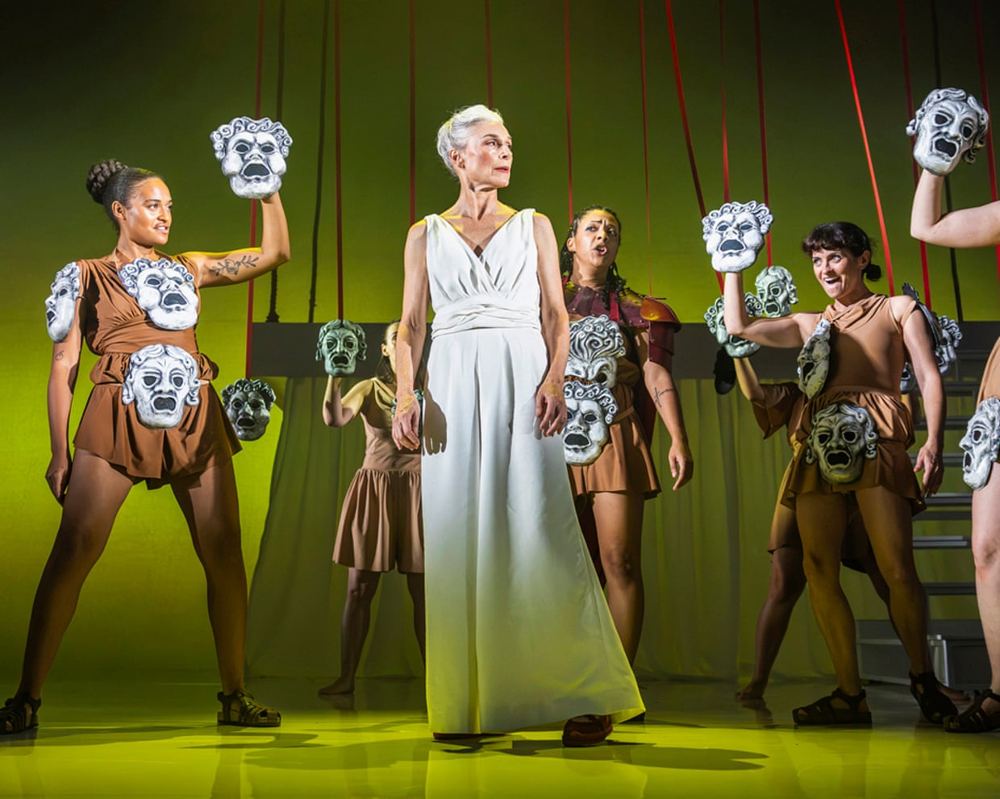
The backdrop for this revisionist storytelling is hades. In Sara Perks’s minimal design, it’s a sterile, featureless place, deliberately drained of the passion and mess of life. Thick, blood-red ropes suggest the strands, literal and narrative, woven by Penelope and the cords used to hang the maids. These wronged figures form a chorus, acting out episodes from Penelope’s life as well as interrupting with their own bitter take on events. We hear of Penelope and Odysseus’s marriage, his departure to Troy, and the long, long years that followed.
The success of any production rests on the central role of Penelope, who carries so much of the narrative, and on the treatment of the multi-roling maids. In director Juliet Forster’s version, Amelia Bullmore captures Penelope’s wry reserve and her trepidation when married off to Odysseus, but at times there’s a stiffness and lack of texture to her performance. Given Bullmore’s comic gifts as a performer, it’s surprising that much of the grim humour in Atwood’s lines feels underpowered.
The maids, on the other hand, offer a raucous contrast to Penelope’s restraint. The energetic eight-strong chorus sing, dance and skip their way through the story, pulling on different outfits like kids playing dress-up, only to puncture the silliness with reminders of their deadly fate. At its best there’s a hint here of the sort of theatrical mischievousness of Kneehigh and Wise Children, though with not quite the same dazzle or bite. Welcome as this feminist retelling is, it has the potential for a greater punch than it ultimately delivers.