EU ministers seek balance between workplace rights and competitiveness in 21st century jobs act
The Quality Jobs Act covers common standards for being able to ‘go home’ and disconnect from remote work, and limits AI's role in recruitment or scrutiny of workers’ performance.
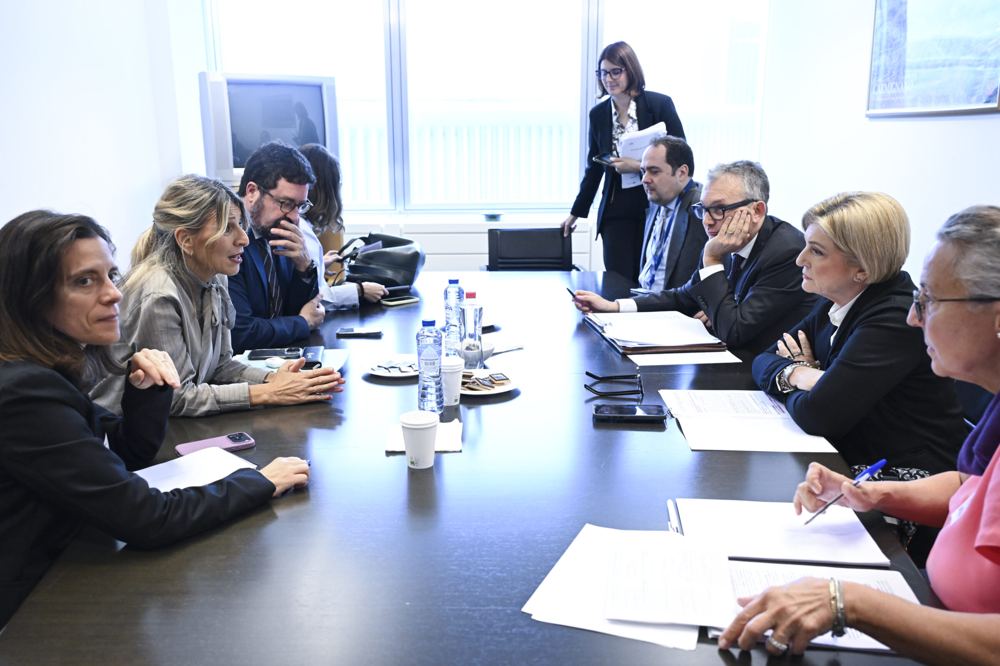
EU ministers have discussed how to make labour standards compatible with modern technological conditions and workplace culture, such as telework and AI-led staff oversight, without losing competitiveness.
The law in question, called the Quality Jobs Act, covers a wide range of work protection measures, such as common standards for being able to ‘go home’ and disconnect from remote work, and limits to AI role in recruitment or its scrutiny of workers’ performance.
Technological innovation should “benefit both workers and businesses,” said Portuguese labour minister Maria do Rosário Palma Ramalho, addressing the ministers’ council on Monday (19 October) in Luxembourg.
Human oversight is essential, especially where AI systems decide on recruitment or workers’ assessment, she said.
Next to innovation, labour rules needed to ensure “fair and transparent practices, respect for human workers’ rights … and effective social dialog,” said Roxana Mînzatu, the EU commissioner for employment.
“This revolutionary technology has to be regulated” so that it “delivers for all,” Isabelle Schömann, the European Trade Union Confederation (ETUC) deputy general secretary had also said during a conference organised by the centre-left S&D group in the European Parliament on 14 October, commenting on the need for the Quality Jobs Act to curb AI.
The draft Quality Jobs Act that the European Commission plans to present in December aims to update the long out of date 1989 and 1990 health and safety workplace rules.
It would also protect subcontractors and create standards for working in heatwaves, becoming more frequent with climate change.
EU legislators need to ensure minimum standards so that “neither jobs nor businesses are jeopardised” with extreme weather, Yolanda Díaz Pérez, the Spanish labour minister, said ahead of Monday's debate.
Zuzanna Stawiska is a junior reporter covering European affairs. She also writes stories for the European Correspondent.