I’ve Lived In The Alps For Six Seasons. These Are The European Resorts Actually Worth Your Time, and Money.
A local with six seasons of experience breaks down which European ski resorts are worth the trip and the money, and which you should skip. The post I’ve Lived In The Alps For Six Seasons. These Are The European Resorts Actually Worth Your Time—and Money. appeared first on Outside Online .
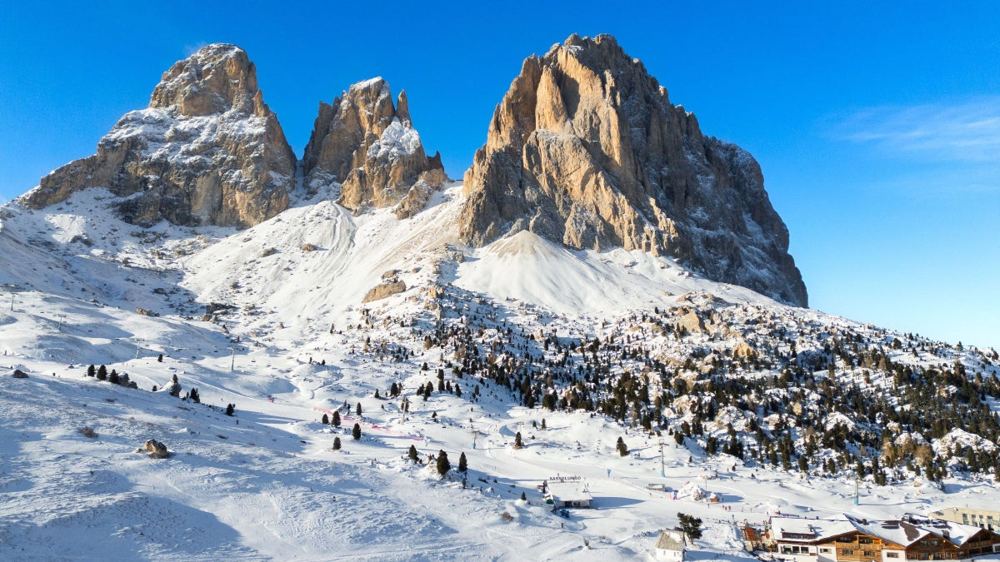
A drone view of Sella Pass in the Dolomites, Italy. (Photo: Getty)
More Americans are traveling to the Alps than ever before. At the same time, the conditions surrounding travel plans are changing rapidly. Snow coverage is dwindling, the dollar is losing value, and more U.S. based megapasses are Americans are using their megapasses overseas.
Having spent several winters (and summers) in the Alps, I’m in a good place to consider everything the prospective American tourist needs to know when planning a trip.
With a super El Niño forecasted for the coming season , snow coverage at Alps resorts is likely to be more relevant this year than ever before. Like the Western U.S., seasonal models are forecasting a warm and wet winter for the continent. I’ll take that over a warm and dry winter, but it’s not ideal.
Once upon a time, slopes above 1,650 feet were plastered in snow on a regular basis, especially on the northern side of the Alps. Unfortunately, those days are over. That means some lower destinations are far less attractive than they used to be, especially for Americans who usually have to lock in flights and accommodation months in advance.
Take Portes du Soleil. With 360 miles of pistes and essentially unlimited off-piste straddling both France and Switzerland, the ski area is one of the world’s largest ski domains. Despite the size, the resort peaks at just 7,200 feet. With base elevations of around 3,300 feet, many storms now bring rain to the lower slopes instead of snow. These days, it’s not uncommon to have rain above 6,500 feet anywhere in the French Alps.
Austria is somewhat more continental and protected when warm air surges from the south and west. However, many of its most famous ski resorts sit at relatively low altitudes, and skiing has taken a hit in recent years. Kitzbühel , a big name in ski racing and one of the most famous Austrian resorts for Americans, is ideal in many ways. It embodies European skiing, with a beautiful base village, endless terrain, great après-ski, and a formidable ski history. It’s also on the Ikon Pass. But the resort tops out at just 6,600 feet, with a base elevation of 2,625 feet. Saalbach Skicircus is another legendary Austrian resort, with 168 miles of piste and some of the country’s best off-piste skiing. Epic Pass holders get 5 days here. Nevertheless, with similar elevations to Kitzbühel, the good days, especially off-piste, are more limited than ever.
If the weather lines up with a nordstau (European equivalent to Northwest flow bringing in heavy snow) and low snow coverage in Austria, and travel plans are flexible, Americans will love these resorts. But I wouldn’t gamble on booking an overseas trip too far in advance.
This is the year to focus on resorts that top out above 10,000 feet in France, Italy, and Switzerland, and above 8,200 feet in Austria.
Nearly every American I meet in the Alps has one of two destinations on their itinerary: Chamonix or Zermatt. These towns are burned into the American mountain consciousness, and they’re both on the Ikon Pass, though Chamonix comes with some fine print. But are they worth it?
Chamonix is the birthplace of mountaineering. To some extent, it’s also the birthplace of the winter sports industry. The first Winter Olympics were held there in 1924. Chamonix is credited with heralding a new age for dying mountain towns, with a “white gold” rush of winter sports infrastructure throughout the Alps and beyond.
There’s clearly history here, but I don’t think that Chamonix is the ideal destination for most Americans looking to head to the Alps for a skiing-focused trip. For starters, the Ikon Pass only includes the Chamonix “Le Pass,” not the Mont-Blanc Unlimited . That’s some annoying fine print that means you can’t ski at the Aiguille du Midi (so no famous Vallée Blanche), Courmayeur (Skyway Monte Bianco), or the top station of the Grands Montets (burned down in 2018 but returning in 2027-’28). Those are the three best things to do when you go to Chamonix. The Unlimited pass is around $80 USD, but like most resorts, prices fluctuate.
Instead, “Le Pass” comes with standard access to the five resorts of the Chamonix Valley, which are decent, but not outstanding within the context of the Alps. With Le Pass, the highest access is only 9,186 feet off the Bouchard gondola at the Grands Montets. Getting around between the resorts is punishing during high season. To do the Vallée Blanche or Skyway, you’ll have to splurge an additional 90 Euros ($103 at press time) for a Mont Blanc Unlimited.
Meanwhile, Zermatt has long been a stronghold of U.S. tourists. Americans originally discovered Switzerland during vacations after WWII. Today, Zermatt is still full of Americans. For one, it’s on the Ikon Pass. It’s also expensive, but American skiers know how to handle high prices better than most.
For some people, waking up with views of the Matterhorn is a bucket list experience. Zermatt is a world-class ski resort with broad, snowsure pistes, fast lifts, and insane views. For the money, however, you can get a less iconic but more quintessential experience in plenty of other places. Though the biggest issue for Zermatt is cost, it feels at least twice as expensive as France, other aspects fall short as well. The food is mediocre compared to France and Italy. The skiing is exposed, cold, and limited on stormy days. Despite being snowsure due to its altitude, Zermatt is not the snowiest place in the Alps. Off-piste is more easily accessible at other resorts.
Each Alpine country offers its own blend of culture, pricing, efficiency, access, and more. You’ll have to weigh which factors will make the best vacation for you.
France and Italy offer the best food and prices, but you’ll find that things don’t always run as efficiently. Lifts and restaurants may be randomly closed ( fermature exceptionelle! ), and service isn’t always up to the standard you’d expect in America.
In comparison, Switzerland and Austria operate much more efficiently and, generally speaking, receive more snow than France and Italy. Historically, the northern Alps receive the most snow, with resorts like Engelberg and St. Anton tallying the highest numbers. However, signs suggest this climate regime may be changing, and recent years have seen more storms coming from the south. Switzerland and Austria also have the best lifts, most of the existing and planned 3S cable cars in the Alps are here. (The only 3S cable car in North America is Whistler’s Peak2Peak.)
In France, and maybe in the world, Tignes/Val d’Isère is the best ski resort for the most people. The skiing offers something for everyone, from toddlers learning to ski to extreme freeriders. The Grand Motte chair accesses glacier terrain at 11,339 feet, the fifth-highest cable car in the Alps. Val d’Isère is a traditional village (culture!), not just a purpose-built ski resort, and the new development is limited to Tignes. Moreover, the base of 5,906 feet is one of the highest for a big resort in the Alps.
With about three million American skiers on the Epic and Ikon passes, the only downside is that Tignes/Val d’Isère isn’t included on either, or perhaps that’s a plus, if you’re looking to avoid other Americans. It’s expensive by French standards, but far cheaper than anything you’ll find in Switzerland. Day tickets hover around $80 for adults.
Meanwhile, Americans have shifted toward Trois Vallées in recent years. Trois Vallées is one of the best resorts on the Epic Pass, it’s one of the world’s largest, with endless pistes and backcountry terrain alike. Paradiski , consisting of Les Arcs and La Plagne, is another large resort between Trois Vallées and Val d’Isère. Overshadowed by its more famous neighbors, it’s still a fantastic, massive domain with slightly more competitive prices ($66-$85 for adults per day).
Most Americans never make it farther south than the Savoie. But that’s precisely where the French Alps begin, at least in a cultural sense. Alpe d’Huez and Les 2 Alpes follow in the tradition of French megaresorts, with mediocre piste offerings but excellent off-piste. However, Serre Chevalier , near the town of Briançon, is the largest and best French resort that most Americans have never heard of. Despite its size, parts of Serre Chevalier still have a village vibe, like Monetier-les-Bains. This hamlet is home to incredible off-piste (the Montagnole) as well as fantastic pistes. The on- and off-mountain dining is also exceptional. Single-day lift tickets are around $78 for adults.
Further east, on the border with Italy, is Montgenèvre ($58-$66 for an adult lift ticket). This little gem is located on a pass in the middle of the Alps, and receives snow from both the east and west. It’s also connected with the Via Lattea (see below).
Going south, you’ve escaped the land of garish megaresorts and entered into parts unknown, at least for Americans. Abriès and Saint-Véran (both offer lift tickets starting around $48) are two surprisingly high (8,202 feet and 9,186 feet, respectively) resorts in the Queyras, a little-known pocket of the Alps that retains its charm. Hotel La Lobio, not far from Saint-Véran, epitomizes French country lodging and cuisine, run by a single, passionate family. A few valleys further south, Risoul, Vars, Crevoux, and Les Orres are all worthy destinations if the Alps are seeing storms from the southwest.
If you’re on the hunt for the best culture, ancient villages and incredible food, and prices in the Alps, Italy should be on your list. The Epic and Ikon passes cover many of the country’s best options. The addition of Aosta Valley to the Ikon Pass means many Americans can now visit magnificent resorts like Monte Rosa , Cervinia , La Thuile , and Courmayeur .
Monte Rosa (starting around $80 for a day) is a personal favorite with unlimited off-piste and ski touring from the resort. Consider lodging at some of the smaller base villages, like Alagna (best access) or Gressoney, in the upper Lys Valley. Gressoney-St.-Jean and Gressoney-La-Trinité are home to one of Italy’s few remaining Walser German, speaking populations.
Cervino is an alternative to Zermatt. It’s the Italian side of Matterhorn Ski Paradise, which means you can also ski Zermatt. Currently, the crossing is a bit of a bottleneck, with limited-capacity trams serving the Plateau Rosa from the Italian side. However, the 3S cable car, called Cervino The One, is currently under construction and expected to finish by 2030, and will actually make the Klein Matterhorn faster to reach from Cervino than from Zermatt. When you combine that with much better food and prices on the Italian side, Cervino has a lot going for it.
South of Aosta, you’ll find the Via Lattea ($80), a collection of several interconnected resorts, the most famous being Sestrière. It’s one of the world’s most vast ski areas, on par with Portes du Soleil and Trois Vallées. It’s not on the megapasses, and I doubt you’ll run into another American.
Unfortunately, like Portes du Soleil, altitude is somewhat lacking, though Sestrière reaches 9,186 feet, and these mountains benefit from both easterly and westerly winds. The region’s standout feature is its world-class tree skiing, among the best in the Alps, if conditions allow.
The dining is out of this world, even on the mountain. La Marmotta, located on the upper slopes of the Sauze d’Oulx sector, is the best food I’ve ever had on the slopes (38 Euros for a three-course meal and wine, and that’s expensive for Italy). And I’ve eaten at a lot of restaurants in the Alps. Try staying at Agriturismo Barba Gust for the most authentic Alpine ski experience you can get.
The Dolomites have had the spotlight over the past year thanks to the Cortina Olympics. The Dolomiti Superski ($98), on Ikon, is still a great option for Americans, perhaps the best option in the country. These resorts don’t get the most snow, but the natural scenery of the Dolomites sets them apart from other resorts in the Alps. Because this is a collection of relatively small ski resorts, you’ll find many authentic villages rather than manufactured ski bases.
Cortina is the most famous (and luxurious), but Val Gardena, Kronplatz, and Alta Badia are better for pure skiing. Like many resorts in Italy, the on-mountain dining is unreal, Baita Ciadinat, on the upper slopes of Val Gardena, is a must.
Austria is a country whose national identity revolves around skiing. In fact, no country in the world has better slopes and access.
The Austrian Alps are full of large, efficient ski resorts that combine high annual snowfall and medium prices, maybe just a bit more expensive than France but much less than Switzerland (and the U.S.). Austria is well-represented on the Epic and Ikon passes. While the days of unlimited fresh tracks are long gone at any resort, Austrian ski culture still tends a bit more toward the pistes. Therefore, you can often find that fresh tracks last longer here, especially on snowy days, Austrians don’t seem to like storm skiing.
Austria is also holding down the après fort at a time when interest in après seems to be diminishing in the rest of the Alps. If you like loud, commercial dance music and general debauchery after a day of skiing, you’re going to want to focus your vacation search on Austria.
The Epic Pass offers more in Austria than the Ikon Pass. However, Epic Pass holders receive five consecutive days at Skicircus Saalbach , Sölden , Zillertal , and Silveretta Montafon , all world-class resorts. So you could do nearly a month in Austria with the Epic, with access to close to 1,000 kms (620 miles) of pistes, several glaciers, and endless off-piste and ski touring.
In my opinion, Ski Arlberg (St. Anton) is still the gold standard of Austrian skiing . It’s on the edge of the Alps’ most consistent snowbelt and has extensive off-piste terrain. The place is enormous, whether you want to ski on- or off-piste. Unfortunately for Americans, the Epic Pass has some fine print (you only get three consecutive days, and you have to stay at one of a few participating hotels to redeem them).
The Ikon Pass is a bit less fruitful. Ischgl ($80-$95) is a fantastic all-around resort, if a bit devoid of character. It’s also connected to Samnaun in Switzerland. Kitzbühel ($80-$93) is Austria’s signature resort, though as I mentioned earlier, its appeal as an international destination is getting hampered by its lack of altitude (same with Saalbach).
I always recommend Americans check out Innsbruck. It’s a real city, offering the same benefits as the great capitals of Europe, like palaces and universities. Over 100,000 locals live here, not just an endless stream of tourists. The local resort of Nordkette is nothing to write home about, but you can easily access a dozen or so resorts on the Innsbruck Pass ($185 for a two-day pass), from low elevation all the way up to the Stubai Glacier.
The city also has excellent shuttle and rail transport so that you can get anywhere in an hour. St. Anton? An hour west by train. Kitzbühel and Saalbach? An hour east by train.