New York’s Socrates Sculpture Park rebuilds for resilience and expands
The popular art space on the Astoria waterfront is adding a one-acre area that will feature three large-scale works by founding artist Mark di Suvero
When Superstorm Sandy hit New York City in 2012, Socrates Sculpture Park , located on the Queens riverfront, disappeared underwater. With a four-foot rise in sea level, water streamed from the park into the surrounding area, which was at that time comprised mostly of factories and the neighbouring Noguchi Museum .
Fourteen years later, the New York City Department of Parks & Recreation broke ground last month on the park’s seawall reconstruction. This work, which has been unfolding at riverfront parks across the city with funds from the Federal Emergency Management Agency, necessitates that much of Socrates’s five-acre campus remain closed until its completion next spring.
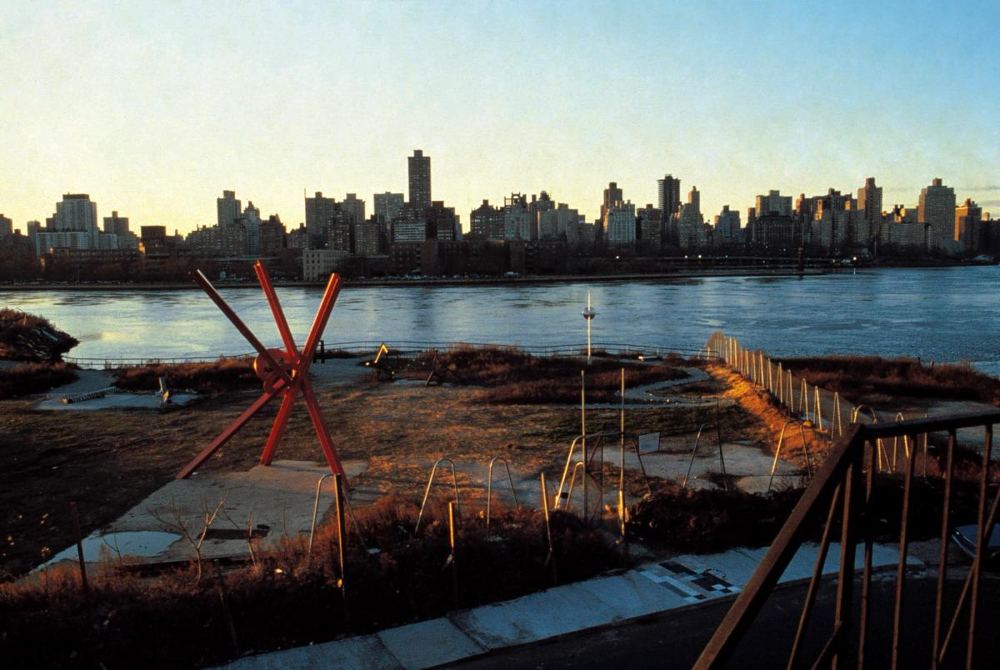
A former landfill and illegal dumping ground turned green space that supports artists in the production and presentation of public art, Socrates’s founding is described by executive director Shaun Leonardo as “a radical act of land transformation”. In this same spirit, Socrates will unveil on 31 October, during its annual Halloween Harvest Festival, the transformation of a largely abandoned storage area on the park’s southern edge into a revitalised landscape featuring a long-term installation of three monumental sculptures by the park’s founding artist Mark di Suvero .
Called The Point, this one-acre expansion, Leonardo says, is an opportunity to “connect Socrates’s future to its founding story” on the occasion of its 40th anniversary. Though this parcel has historically been a maintenance and storage location to support the creation and installation of work by Socrates artists, including Di Suvero who built many of his towering sculptures at the park in the 1980s and 90s, it has steadily grown dormant. Now, at age 93, he primarily lives on the West Coast, but the three soon-to-be-unveiled sculptures have lived on-site since their creation (1995 for the earliest, 2017 for the most recent). While they are comprised of steel I-beams, like much of his work, these sculptures are dynamic and meant to be engaged with: two include a swing; one of those also features a spinning titanium element.
Di Suvero’s “work feels like drawing in space and, through that lens, you really start to see how much he thought about it interacting in its environment”, Leonardo says.
Established in 1986 by a coalition of artists and community members, Socrates grew out of Di Suvero’s nearby studio located in a defunct brick warehouse. Having brought in a team to help install his works, he also shared his space with other sculptors and gave them access to his tools. Together, they looked at the neighbouring landfill and “saw an opportunity again to extend the work they were doing in the studio into a space to develop works in public view, and in deep connection with the neighbourhood,” Leonardo says.
With the establishment of a workforce development programme, whereby residents of the nearby Astoria Houses public housing complex were hired to both clear the land and help artists fabricate their projects, Socrates revitalised the landscape while creating, as Leonardo puts it, an “economic engine of an opportunity for individuals to build up a skill set not only in horticulture, but in fabrication, maintenance, community engagement and public event production, knowing that they could leave from Socrates to full employment elsewhere”. Though the programme had fallen dormant since the Covid-19 pandemic, Leonardo relaunched it this year with a pilot edition supported by the Ford Foundation and Urban Upbound.
The factories that formerly populated the neighbourhood have in recent years been replaced by residential high-rises that are just as vulnerable to the next storm as the park is, if not more so. “What’s unique about erosion of a landfill, as opposed to a natural landscape,” Leonardo says, is that “not only has the rock shoreline disappeared, but the coast is caving in as well because of what is being eroded from underneath.”
“In order for the community to thrive,” Leonardo says, “the art has to serve an additional purpose of giving to that community and being in reciprocal relationship with the land.”