Microsoft made $10bn from OpenAI last quarter, 11% of its revenue
Microsoft recorded $10bn of revenue from its business with OpenAI in the three months to September, about 11% of its total revenue. Microsoft disclosed the amount in its quarterly filing on Wednesday, the day it reported its results. It is the first time Microsoft has given a quarterly figure for the arrangement, Todd Bishop reported […] This story continues at The Next Web
Microsoft recorded $10bn of revenue from its business with OpenAI in the three months to September, about 11% of its total revenue. Microsoft disclosed the amount in its quarterly filing on Wednesday, the day it reported its results .
It is the first time Microsoft has given a quarterly figure for the arrangement, Todd Bishop reported for GeekWire . Rebecca Bellan also reported the figure for TechCrunch .
“For the three months ended September 30, 2026, we recorded revenue from commercial arrangements with OpenAI, inclusive of revenue-sharing payments, of $10.0 billion,” the filing says.
The filing does not split that between revenue sharing and OpenAI’s spending on Azure, Microsoft’s cloud.
OpenAI owed Microsoft $7.2bn at the end of September, the filing shows, up from $6.0bn in June. Microsoft owns about 24% of OpenAI, and has paid $12.0bn of the $13.0bn it committed to invest.
That stake was about 25% in June and about 27% after OpenAI’s restructuring in October 2025, TechCrunch reported. Microsoft did not say what caused the dilution. Microsoft must disclose the business because OpenAI counts as a related party under accounting rules, GeekWire reported.
The two companies have loosened their partnership, both outlets reported. In October 2025, Microsoft gave up its right of first refusal to supply OpenAI’s computing capacity. OpenAI committed to buy another $250bn of Azure services. An April 2026 agreement gave OpenAI broader freedom to use other cloud providers, and OpenAI recently brought its models to rival Google Cloud .
OpenAI will keep sharing revenue with Microsoft through 2030, subject to a cap, TechCrunch reported. It noted earlier reports that OpenAI shares 20% of its revenue, a figure neither company has confirmed.
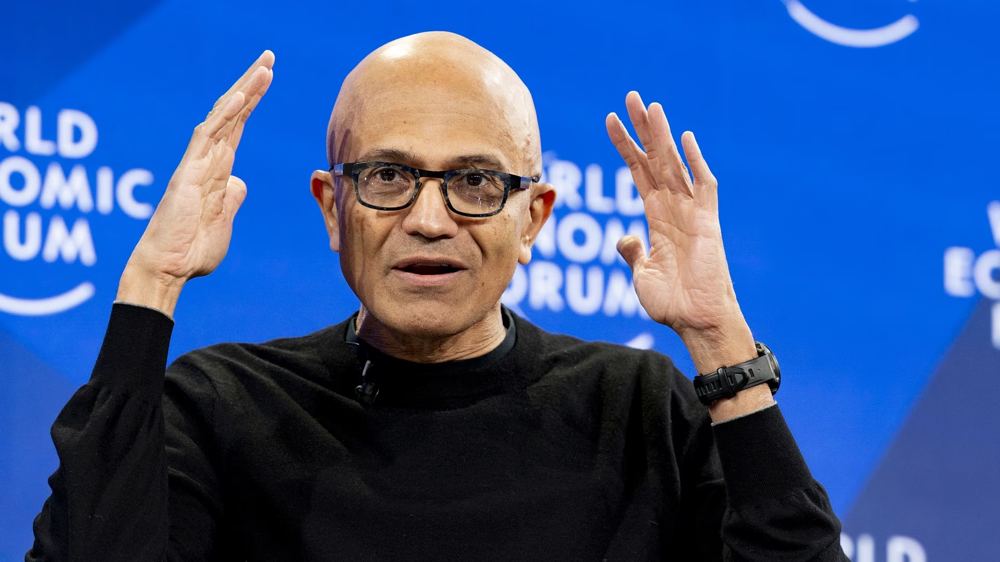
On the earnings call, Bernstein analyst Mark Moerdler asked where Azure’s AI growth was coming from. Chief executive Satya Nadella did not mention OpenAI, GeekWire reported. He said he did not want Azure’s AI business to depend on a few big customers.
Relying on “four customers who buy a lot of capacity from you” for a few quarters of growth is “not a business as far as I’m concerned”, Nadella said, according to GeekWire.
In a post on X after the call, Nadella wrote that Azure’s growth was broad-based across large and small businesses.
4/ When it comes to infrastructure, we have a fungible fleet that allows us to dynamically allocate capacity to the highest value opportunities across compute, data, Foundry, and Copilot.
We are bringing capacity online faster, and getting more from the infrastructure we already have.
Azure growth was broad-based across enterprise and SMB, spanning both core cloud services and AI infra.
I have never been more confident in the opportunity ahead of us.
Microsoft also widened a warning in the filing about its reliance on outside AI model makers, GeekWire reported. It says Microsoft has “limited visibility into or control over” how those models are designed, trained, secured and tested. Some of those partners are also significant Azure customers, it adds.
Chief financial officer Amy Hood cut Microsoft’s 2026 capital spending forecast to $170bn, from $175bn, Ashley Stewart reported for Business Insider . Hood said some “GPU-as-a-Service contracts” with outside capacity providers had slipped to the second half of the fiscal year.
Capital spending, including finance leases, was $45.2bn in the quarter, Jordan Novet reported for CNBC . That was below Microsoft’s own $50bn projection, according to Reuters . The cash part, spending on property and equipment, was $39.4bn, the filing shows.
Hood said spending would top $50bn in the current quarter, Brody Ford and Matt Day reported for Bloomberg . Investor relations chief Jonathan Neilson put the shortfall down to delays rather than any change in spending plans, Reuters reported.
Its headcount fell 2% in the quarter, according to Business Insider, which cited company slides. This week Microsoft offered buyouts to 60,000 employees .