Celebrated photographer Pipo Nguyen-duy and his wife murdered by his son, according to police
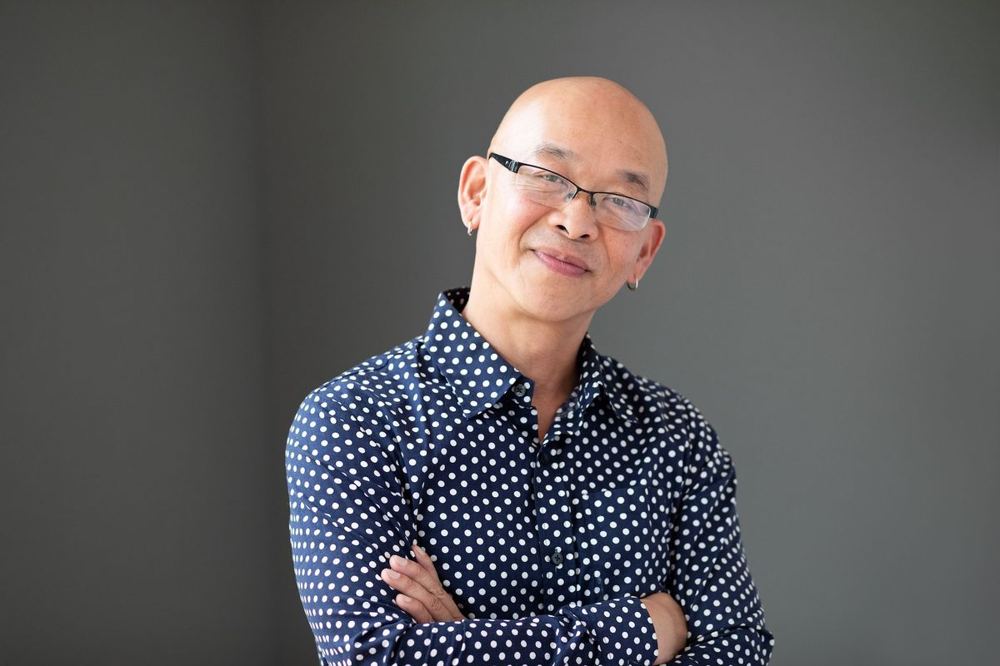
Nguyen-duy was a beloved teacher at Oberlin College in Ohio; his son has been arrested and charged with six counts of murder
Pipo Nguyen-duy , a celebrated photographer and a monumental figure on a small campus in rural Ohio, has died, aged 64. Authorities found Nguyen-duy and his wife Tran Thi Phong dead from gunshot wounds in their home in Oberlin, Ohio, on 28 October. One of Nguyen-duy’s two sons, Daniel Jones (also known as Asia Nguyen-duy), was taken into custody that same day and has been charged with six counts of murder, four counts of felonious assault and one count of tampering with evidence.
Nguyen-duy arrived in the US at the age of 13 as a refugee from Vietnam, where he once competed in national table tennis championships. He briefly lived in India as a Buddhist monk before graduating from Carleton College in Minnesota with a degree in economics. He then worked in New York nightlife for several years before earning Master of Arts and Master of Fine Arts degrees from the University of New Mexico in Albuquerque.
In 1998 he moved to Ohio and became a professor of studio art and photography at Oberlin College. At the time of his death he had been serving a two-year tenure as the chair of the college’s art department, having postponed his retirement on more than one occasion due to his commitment to his students.
Nguyen-duy was skilled at historic practices, including tintypes and large-format photography, which was how I began studying under him as an undergraduate visual art student, alongside classmates and artists including Gregory Wikstrom , Erika Råberg , Lex Voight and Sam Draisin. Draisin once volunteered to drive Nguyen-duy’s Guggenheim Fellowship application from Oberlin to New York in 2010 to hand-deliver it to the committee after he had missed the mailing deadline. He received a Guggenheim Fellowship in 2011, becoming one of the few Vietnamese artists to do so.
In addition to the Guggenheim Fellowship, Nguyen-duy was a recipient of the the Lila Wallace-Reader’s Digest Artists at Giverny Fellowship, which allowed him to live and work in Claude Monet’s garden in Giverny, France, where he created the AnOther Expedition series of cyanotype photographs, one of his most widely exhibited bodies of work. He was also the recipient of a National Endowment for the Arts grant, an En Foco Grant, a professional development grant from the College Arts Association, a national graduate fellowship from the American Photography Institute, a fellowship from the Oregon Arts Commission, a B. Wade and Jane B. White Fellowship in the Humanities at Oberlin College and three individual artist fellowships from the Ohio Arts Council.
Nguyen-duy would insist on teaching all dimensions of photography, from the dark room to obscure historic processes to building frames in the woodshop, training his students to be self-reliant and capable of telling their stories unimpeded by technical limitations or logistics. In order to work in the photography studio as a lab monitor, a hallowed position, he would put students through a very simple test to determine their capacity to colour-calibrate the monitors, a test many of us considered a rite of passage.
“Pipo was beloved. During his years at Oberlin, he touched all of us through his passion for photography, and I know that many of you are familiar with Pipo and his artistry,” Carmen Twillie Ambar, the president of Oberlin College, wrote in a letter to students, faculty, staff and alumni on 29 October. She invited recipients to participate in a digital forum of remembrance , which has since gathered dozens of tributes.
“Pipo to me is more than a professor. He is a dear friend, a mentor, a role model I look up to dearly,” wrote Loan Lu, who graduated from Oberlin in 2015. “He has a contagious energy that brightens every room he walks into, light up every person he speaks to. He is wise, humble, full of love for life, he is all I want to be when I grow older. We had promised each other to hang out in Vietnam when he retires, and I have been looking forward to that day so much.”
Another student only identified as Seth, a graduate from 2004, praised his former professor: “Pipo is on a very short list of educators who have most profoundly impacted my life. I struggled with traditional academia and longed for something to do with my hands. I longed to learn techniques, new and archaic. Pipo was a breath of fresh air. His experimental photography course was foundational to the path my life has taken. He taught me to make magic out of light and a few chemicals. He taught me how to see beauty and wonder in the most rundown and weary settings.”
Nguyen-duy is represented by the ClampArt gallery in New York.