EU waters down carbon pricing and 2035 engine ban as heatwave hits
European environment ministers pushed to weaken the bloc’s carbon pricing and combustion-engine bans despite a deadly heatwave, raising costs and risks for industries trying to decarbonise.
EU environment ministers gathered in Luxembourg on Thursday to prepare for November's UN climate summit in Antalya. Instead of strengthening defences against a record-breaking heatwave that has killed dozens across western Europe, the agenda focused on dismantling key climate policies. Proposals include replacing the 2035 combustion-engine phase-out with weaker CO2 standards and diluting the bloc's carbon pricing system.
Eleven governments, coordinated by Poland’s Krzysztof Bolesta, are pushing the European Commission to expand free pollution allowances and delay a 2028 extension of carbon pricing to buildings and road transport. This ignores the system's track record, as emissions covered by the ETS have fallen by 50 percent since 2005, dropping 24 percent in 2023 and a further 11 percent in 2024. "If we do not cater for what people need and the costs coming from ETS, we would lose support for wider climate policies," Bolesta argued.
Backtracking carries clear economic risks for the continent. Sweden’s climate minister, Romina Pourmokhtari, warned that weakening the ETS makes it "more risky and expensive for European industries" to transition. Twelve advisory councils recently echoed this, noting that dismantling the system jeopardises future wellbeing. The chemical lobby Cefic has heavily campaigned for these rollbacks, prioritising short-term relief over the structural investments needed to end reliance on imported fossil fuels.
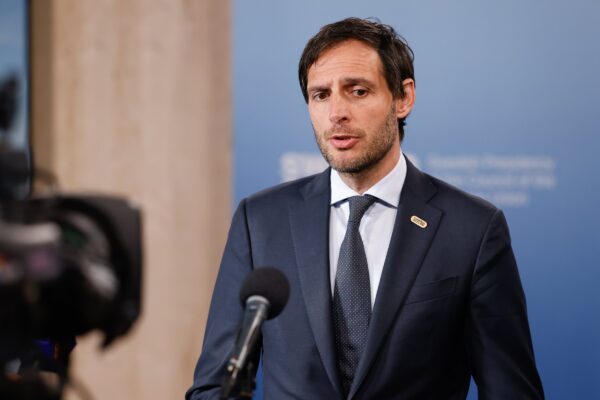
The shift away from the 2035 engine ban also creates regulatory uncertainty for automakers just as battery electric vehicle registrations jump almost 40 percent. Hoekstra called the sales data "truly very impressive" but admitted it could be a temporary spike linked to the Iran crisis. Pourmokhtari warned that slowing down electrification increases Europe's vulnerability to oil price spikes, vowing to pressure colleagues to rethink their opposition to the phase-out.
Rather than defending hard targets, Hoekstra signalled a softer diplomatic stance for November's UN summit, arguing electrification is politically easier than a fossil fuel phase-out. "Let’s focus on electrification. That works for the climate, it works for competitiveness, and in reality it’s the same as transitioning away from fossil fuels, but it’s less controversial so I think it also works politically." He justified potential ETS revisions as necessary "to keep the family together," despite previously calling it "the smartest policy tool we have in the EU, full stop."
Europe’s overall electrification has risen just five percent since 1990, lagging far behind China’s jump from six percent to almost 30 percent. Weakening the policies designed to drive electrification in transport and industrial heat will only widen that gap. As temperatures outside the Luxembourg meeting pushed past 40C, Bolesta noted that even the relatively new building was already hot. "This is something we should not ignore anymore," he said.