Bourke filmmaker takes over reigns of Indigenous film festival in Paris
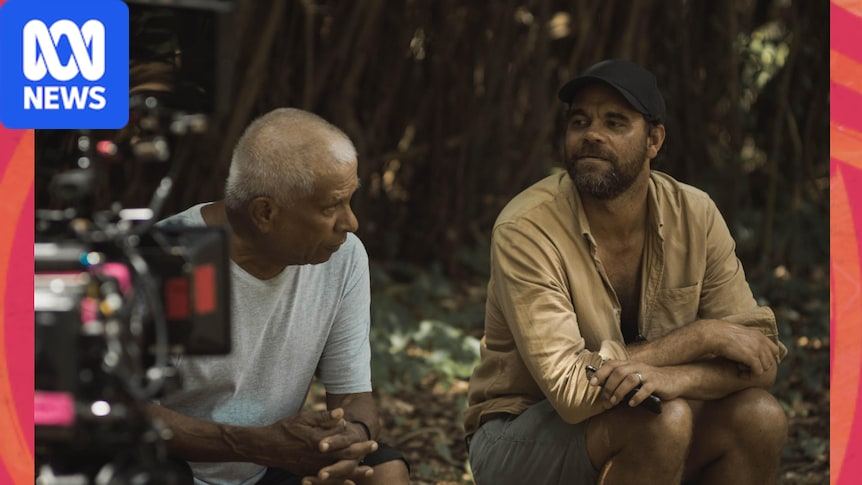
A filmmaker and investigative journalist from far-west NSW is taking modern subversive Australian Aboriginal stories to Paris.
Filmmaker and former journalist Allan Clarke will take on the role of artistic director of Europe's only Australian First Nations film festival.
The Festival du Cinéma Aborigène Australien is a celebration of First Nations film on an international stage.
The festival will run from December 4-6 at the Cinémas l’Arlequin et Reflet Médicis in Paris.
Growing up in far-west NSW, Allan Clarke struggled to identify with "overwhelmingly negative" depictions of Indigenous people in the media.
"I remember from a very young age in Bourke looking around and going, 'I can't reconcile those kinds of tropes and stereotypes and negativity with my actual loving community,'" he said.
Now living a world away in Paris, the Muruwari and Gomeroi filmmaker, writer and investigative journalist wants to challenge and subvert those tropes as the artistic director of Europe's only Australian First Nations film festival.
"The conversations I've been having since living in France are providing context to people and saying that a lot of those stories aren't authentically us," he said.
The 11 th annual Festival du Cinéma Aborigène Australien will take place in Paris this December, with this year's theme Kinetic, Tradition in Motion: Cinema in Revolt.
Festival founder Greta Morton-Elangué said the festival specifically identifies First Nations cinema and takes it to a global audience.
"There literally was no existing platform in France or Europe," Ms Morton-Elangué said.
Mr Clarke has directed documentaries The Dark Emu Story and The Bowraville Murders.
This year's program will feature films by acclaimed First Nations filmmakers Warwick Thornton, Wayne Blair and Danielle MacLean.
"Coming in sort of fresh, I really wanted to highlight our filmmakers who are really challenging the status quo and who are consistently subverting and bending genres to tell our stories," he said.
Mr Clarke said the festival can expand the European perception of First Nations Australians.
"There is a view that we are not modern and that we're not making a huge contribution to the international cultural landscape," he said.
"Largely what they have seen, whether that's in film or TV about us, has been made by non-Indigenous people."
Head of First Nations content at Screen Australia, Gillian Moody-Ardler, said international audiences were eager to connect with First Nations cinema.
"It's really important for us to be sharing our stories to a broader audience than just domestically," she said.
"A lot of people haven't travelled to these desert regions that some of our stories come from,
"They haven't experienced the stories that we have from our coastal territories as well."
Mr Clarke said that in recent times, he has seen a shift with First Nations cinema turning to genres such as romantic comedy and horror.
"We are taking these very well-established genres and subverting them," he said.
"He's done some really amazing films that have highlighted some terrible parts of history and he's done it in a very empathetic way but also not shied away from the hardness of those projects," she said.
This is the first year that Ms Morton-Elangué will not be in charge of programming Parisian film festival.
Ms Morton-Elangué said she bonded with Mr Clarke over their shared love of First Nations cinema and had regularly invited him to join the festival's speak events, including with Tiwi screen celebrity Crystal Love Johnson.
"We were able to have this really animated discussion about naughty Tiwi Sistergirl humour," she said.
Mr Clarke was simply grateful for the opportunity to show an international audience the breadth of Indigenous cinema.