I Retraced Jennifer Nelson’s Final Steps to an Abandoned Colorado Mine
When Jennifer Nelson drowned in an unmarked Colorado mine shaft, it took hours for rescuers to find her. Officials believe tens of thousands of hidden pits are scattered across the American West. The post I Retraced Jennifer Nelson’s Final Steps to an Abandoned Colorado Mine appeared first on Outside Online .
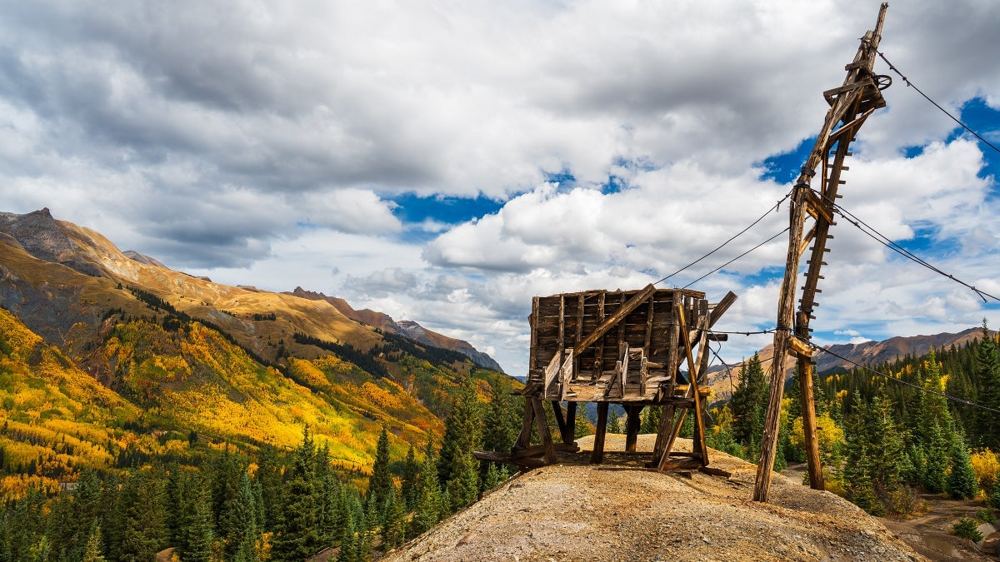
An abandoned mining feature on Red Mountain Pass near Ouray, Colorado (Photo: Roger Lord Photography)
I hold onto a lodgepole and creep over the weathered fence, just far enough to see the mine’s exposed flat rock walls disappear into the ground, enough to see that if anyone were to fall in, they wouldn’t be able to climb out. The canopy of trees drowns out all light, but down the slope, the sun bathes grey rock on the trail.
It is easy to understand why Jennifer loved this area, why she had come here on October 20, 2025, the last day of her life. I had made the short drive from her home in Ridgway, Colorado, and up the Million Dollar Highway over Red Mountain Pass , weaving my way through the San Juans until I reached a narrow dirt lip on an old mining road. I parked next to a grizzled hiker who looked exhausted. “Howdy,” he had said, pulling off his boots on the bumper of a 4Runner. I waved and slipped around a green gate that keeps vehicles off the trail.
My boots crunched the gravel, and there was no other sound, except for the distant hum of an electrical substation nearby. The trail was framed with views of the Red Mountains, and as I glanced over my shoulder back at the highway, I saw the rooftops of the historic Idarado Houses, built more than 100 years before for miners and their families in the abandoned ghost town of Eureka, Colorado.
The trail, too, was littered with rusted relics from mining camps : a half-buried oil can with chipped teal paint, an oxidized metal tool tray and, tucked away in a meadow, a buck-and-pole corral, once used to shepherd mules and horses that hauled silver and copper down the mountain. I had been told the mine was hidden in the trees, only a quarter-mile up, and I realized I had walked right past it. I carefully backtracked, looking for any sign, and when I finally spotted the top of the black fence in the timber up above the trail, my heart jumped into my throat. I thought of Jennifer.
At 54, she had already collected a lifetime of adventures in the backcountry, and when she arrived here for another hike on a Monday afternoon in October, she found a reprieve from life as the owner of a pet-sitting business and member of Ridgway’s planning commission. She needed these walks, both for peace of mind and for her ailing back, which always felt better after she finished a trek in the woods.
The mountain had spotty cell service, and she could walk uninterrupted while her dogs trotted alongside her. Earlier that day, over lunch, she had told her husband, Jeff Rivera, that she was headed up to the trail. She’d take Mia, their border collie mix, and another dog she was looking after for a friend.
“Be careful,” he told her, but he otherwise wasn’t worried: she knew the trail like the back of her hand, and Jeff thought it was just another day in the life Jennifer had dreamed of living when she moved from Denver to the San Juans a decade earlier. He went back to work that afternoon, but by the time he returned home again that evening, Jeff thought she would already be home, too. He texted Jennifer: “What do you want for dinner?”
There was no answer, and by 5:30 P.M., he grew worried. It was starting to get dark. Jeff hopped into his Ford F-150 and sped up the Million Dollar Highway, hoping to see Jennifer pass him on her way down, but when he arrived at the trailhead, he found her Toyota Tundra empty.
He squeezed past the green gate and ran up the mountain. The temperature had dropped, and he could see his breath as he screamed her name. Jeff had seen a lot as a volunteer firefighter in Ridgway, but nothing could prepare him for this. Without a cell signal, he ran back down the trail to call 911, to tell the police that his wife was missing.
Grant Kleeves was at home eating dinner when his pager went off. He had been a member of the Ouray Mountain Rescue team for a decade, serving now as a lieutenant, and his evenings were often interrupted with calls to search for missing people in the backcountry. This message was no different: a woman had failed to return from a hike on Red Mountain Pass, so Kleeves met his team at the clubhouse to grab equipment before making the trek up the mountain.
The unit arrived with three trucks and an all-terrain vehicle in tow, cracking open the green gate to prowl the trail. A search team on foot canvassed hundreds of yards on the flanks of the trail, hoping to catch a glimpse of Jennifer through the beams of their flashlights. The trail snakes up the mountain for more than two miles, and there were obvious places to check, including a small pond and larger mines that often served as tourist attractions for hikers. None of those places turned up a clue. A drone was launched into the dark sky, and Kleeves hoped its thermal-detection capabilities could turn up a lead. But the temperatures had dropped to about 30 degrees that night, and the batteries were dying quickly.
Jeff raced back down the mountain to Ridgway in his Ford, and when he arrived back at his house, he grabbed a winter coat and some gloves before heading back up to the trail. He parked next to Jennifer’s truck and decided he wanted to let the rescue team do their jobs. It was dark and quiet, and he stared up at the trees, waiting, hoping Jennifer and the dogs might all of a sudden appear behind the people up on the mountain looking for them.
After nearly four hours of searching, Kleeves and his teammates backtracked toward the vehicles at the front of the trail to make a new plan, to launch a second tier of the search. It was in the wee hours of the morning now, and they’d need to get more people involved, Kleeves thought, to cast a wider net across the area. A 4Runner drove ahead of Kleeves, beaming light into the treeline. About a quarter-mile from the trailhead, Kleeves’s headlamp caught a glint of something near a berm. He craned his neck and shone light back toward the reflection and saw the green glow of a dog’s eyes. Kleeves believed the dog had popped its head up to look at the commotion of the rescue down on the trail. Kleeves whistled and caught the eyes of a second dog.
Kleeves and his team walked up the slope toward the animals. The team’s headlamps caught the dark shadow of a gash in the ground, and as they stepped closer, they recognized it as an unmarked mine shaft. Near the opening, a backpack and hat rested on the ground, and a lone trekking pole leaned against a fallen tree. The dogs stared silently at the volunteers as they stood at the edge of the mine. Kleeves shone his light into the hole, and about ten feet down from the surface, he could see a body floating in water, face down.
Below, toward the trailhead, Jeff was within earshot of radio chatter, so Kleeves didn’t want to be careless when his team radioed that they needed assistance on the hill. Even though this appeared to be a terrible accident, his team wanted to treat it like a crime scene and not touch anything. Soon more police and paramedic vehicles hauled up the highway. Jeff knew something terrible had happened, and eventually the county coroner walked over to his truck window. “They found her in a mine shaft, and she drowned,” he remembered the coroner telling him, but Jeff was in such disbelief that he thought maybe he didn’t hear the words right, that maybe it wasn’t actually Jennifer in that shaft.
Soon reality set in, and Jeff’s fire chief drove up to the trailhead to pull him away from the scene. Jeff gathered the dogs into the truck, and he could tell they were still shaken. He held Mia, the only witness to Jennifer’s final moments, and as the sun came up, he sat in his living room with the fire chief. Jeff began to talk to Jennifer.
“What the hell were you doing there?” he kept asking, and as the days passed, he replayed all of the scenarios in his head. Jennifer’s backpack was left to the side of the mine, but he didn’t know why she would have taken it off. Investigators noted that the dogs were not wet when they were found several hours later. Jeff wondered: did one of the animals fall in, prompting Jennifer to jump in after it? He knew a moose had been spotted in the area. Did it spook her when she was sitting at the edge and cause her to fall in?
Other details that didn’t add up rattled in his brain: the dog leashes were nowhere to be found at the scene. And he believes Jennifer had her phone in her hand after she had fallen into the water. Investigators found the phone on the west edge of the shaft; the ground around the phone had been obviously disturbed, as if Jennifer had desperately clung to the earth before falling in. There was also a two-foot branch, broken on both sides, found in the water alongside her body; up above, a log hanging over the edge of the mine had a middle section missing. It appeared to match the wood that was in the water. A Ouray County Sheriff’s Deputy who investigated the scene, Brady Suppeland, explained what he believed happened in his report on the incident:
“My initial instinct of what likely occurred was Jennifer likely had followed the dogs off trail up to that location for an unknown reason, and had fallen into the water unable to pull herself out,” Suppeland wrote. “It is possible the section of tree in the water broke while Jennifer was standing or holding onto it causing her to fall in, or it broke as she tried to use it to climb out. It appeared she had extensively tried climbing out where her phone was located as the dirt had been pulled from the hillside into the hole. There was some exposed tree roots in this area that would have given her something to grip to get her out of the water and onto the edge of the shaft, but not enough to pull herself all the way out. It appeared as she was attempting to manipulate her phone while hanging on the edge of the opening.”
Jennifer had tried texting Jeff during her last moments, but the messages didn’t go through.
“Hel,” she wrote at 5:36 P.M. A little more than an hour later, she tried sending her final plea.
They had just celebrated their six-year wedding anniversary. Jeff was a widower when they started dating; his first wife of 30 years, Dawn, had passed away from cancer in 2016, and in the years after, Jennifer had helped him begin to heal. Everyone seemed to gravitate toward her: she was warm and kind, with an inviting smile and a quiet, steady laugh. Jeff shared her love for the Denver Broncos, classic rock, and animals, and they both felt lucky to live on the edge of the San Juans, at nearly 7,000 feet, in Ridgway. They looked out their window every morning and marveled at 14,150-foot Mount Sneffels, and they went to work each day to make their small town better. Jeff worked for the city and the fire department, while Jennifer sat on the planning commission.
Nearly every weekend, Jennifer would nudge Jeff to take her to the mountains, always reminding him that, after being born and raised in Denver, she had moved to Ridgway to be closer to nature and there was no time to waste. They were always camping or hunting or looking for antler sheds, and sometimes they would disappear for days at a time. Just a few years earlier, a family member had reported them missing after they didn’t return from a camping trip for a couple days. They eventually emerged from the woods to find locals had been worried and looking for them; they laughed about it later, because they were simply enjoying themselves in the forest without cell service.
Now Jennifer wasn’t coming back. Officials told Jeff he could identify her body at the rescue team’s barn later that morning, but he couldn’t bring himself to do it. First, the team had to pull Jennifer out of the mine. The shaft’s walls were flat stone and wet. There was a tree overhanging the pit, so the team rigged up two rope systems: one for Kleeves to lower himself into the hole to get a rope around Jennifer, and one to act as a crane to lift her out.
Kleeves considered himself a serious climber. He climbed four or five days a week and had been doing it for 20 years. But he doubted even he could negotiate his way out of the shaft had he fallen in. “It was sobering, because usually I figure I can climb out of just about anything,” he says. “And dropping down into there was one of those where I was like, ‘That is…absolutely terrifying.’”
He had a hard enough time keeping his footing when his team lowered him into the hole. He swayed back and forth, his feet slipping off the shaft’s slick walls. He finally anchored himself to the slick surface. He wrapped a rope around Jennifer and tied it, and his team above, with a body bag waiting, lifted her into the air.
The shock of Jennifer’s death coursed its way across the state, to the Denver offices of Colorado’s Division of Reclamation, Mining, and Safety, where a core tenet was to protect the public from the dangers of abandoned mines. The director of the active and inactive mines reclamation program, Jeff Graves, had grown up drawn to the outdoors and to the history of mines, and for nearly two decades, he felt lucky to be able to marry his interests working for the state. But this was the worst part of the job, when someone was seriously injured or killed in a mine.
The state kept no official list of casualties, but the memories haunted him, including eight years before, when a 15-year-old had skipped class with some friends and rappelled into an abandoned clay mine in Jefferson County. The rope snapped, and the boy fell 60 feet to the bottom of the hole. He was trapped, with a broken leg. Rescue crews worked for three hours to pull him out while a news helicopter hovered overhead, and Graves watched it unfold on his television.
“In any instance when we’re not able to get out there before something like this happens, it’s difficult,” he says, and what made Jennifer’s death even more difficult was that there were thousands more of the kind of unmarked shafts that she had died in. Before Jennifer’s death, the state was unaware of the mine that she had plunged into; it had not been logged in the program’s inventory or targeted for closure, simply because nobody from the office knew it existed.
When Colorado launched the abandoned mine program in 1980, it estimated there were 23,000 mining sites that posed a physical hazard and needed to be addressed. Graves estimates that, across Colorado, between 40,000 and 50,000 sites still require some type of remediation for safety. “We don’t know where all of those are,” Graves tells me. “We have an idea, at least where in general sites are, based on where historic mining took place in Colorado, but specific locations of every single mine in Colorado? We certainly don’t have that information, and it would be difficult, if not impossible, to collect that data. It’d be a monumental task to do that. So we just kind of chip away at that process in areas where we know there’s been historic mining.”
One of those areas is in the western part of Boulder County, where Graves invites me in August to tour an abandoned mine site. He steers his blue Ford Ranger onto an old gravel road. A teal Yeti bike is clipped to the back of the rig, and a softball-sized purple fluorite rock rolls along the floor of the cab. He parks near a mountainside once rollicking with mining camps.
Graves wears a few days of scruff, with a blue-collared shirt tucked into grey canvas pants. His logging boots crunch on pine needles as he hikes up the mountainside. His colleague, Rachael Nickless, an environmental specialist with the program, is among those who have joined us, and as we approach the mine, Graves ducks under a branch and imagines how prospectors might’ve picked this area, likely sticking dynamite in the ground to see what flew up.
“Think about what took place here,” he marvels, and soon we see the remnants of a towering ore bin structure, its timbered-planked walls still standing on rough-cut posts lodged into the slope. Derelict cables dangle from the top. A massive steel wheel-drum, once the cog to move thousands of pounds of minerals, sits idle. A fence has been erected around the structure, but through the boards, I can still see inside. There’s an opening that drops more than 100 feet into the ground. Around the corner, I notice a bright orange sign attached to the fence, with three skulls and a warning:
In the 46 years that the abandoned mine program has existed in Colorado, about 14,000 mines have been remediated. Graves has more than a dozen project managers spread out across the state, developing relationships with agents from the Bureau of Land Management and U.S. Forest Service and private landowners themselves; often, the team relies on a hodgepodge of information, using geological surveys, remote sensing tools, and old-fashioned tips from the public to find and assess abandoned sites.
A mine can be remediated in a variety of ways and can be as simple as backfilling a shaft with soil and rock that is near the surface of the opening. Polyurethane foam is often used to seal open holes; officials also use steel grating as fencing over horizontal and vertical mines, which keeps humans out but gives access to wildlife for habitat.
Erosion and vegetation can obscure openings from being discovered, but even sites that have been worked on can require maintenance years later. The mine Graves shows me was once pumped full of polyurethane that didn’t hold, and the week before, he and Nickless had traveled to the site and weighed the options to refill it or fence it off. He points up the mountain: in 2013, a 1,000-year rain event swept through the area, causing erosion at other sites that had been addressed. “These sites are always changing,” he says. “Fires, floods, they’re dynamic sites that evolve.”
The only thing he knew that wouldn’t change would be people’s curiosity, or sometimes, blindness, to these places, and not just in Colorado. The problem was felt in every corner of the country. “As many as half a million abandoned mines are believed to exist, and the location of many more is still unknown,” the Bureau of Land Management concedes on its website . “Usually, sites have no signage at all to warn people about their presence or their dangers.”
Jennifer’s death rattled officials with abandoned mine programs in states across the country, where tens of thousands of mines remain potential death traps for adventurers in the backcountry. Fatalities are rare, but serious accidents in recent years have provided a stark reminder of the sheer volume of unmarked mines and the hazards they can pose. In Pennsylvania in 2024 , a 64-year-old grandmother died after falling 30 feet into a sinkhole connected to an abandoned coal mine. In California in 2023 , three hikers had to be rescued after falling into a shaft; in 2019 in Arizona , a runner was injured and stranded after falling into a mine; in Utah , a self-described “adept rock-climber” had to be rescued in 2020 after rappelling into a shaft, and in 2024, a 62-year-old man planned to do the same, outfitting himself with a helmet, harness, and rope, but the edge of the mine gave way as he tried to climb in. He fell 50 feet into the mine and suffered traumatic brain injuries.
“We’ve closed about 7,000 mines, and there’s probably 10,000 remaining,” says Steve Fluke, who runs Utah’s abandoned mine program. Utah officials find between 200 and 300 mines per year, Fluke says, and while they’ve launched a campaign in schools to teach kids about the dangers of mines, there’s only so much they can do to protect the public from the hazards of these relics.