Companies love a ‘rockstar’ CEO. Until they depend on one
Jensen Huang’s exit tests Nvidia’s succession planning and governance, and offers lessons for companies that elevate their CEOs to rockstar status.
When Jensen Huang quit, it struck me how quickly the conversation shifted from his departure to whether Nvidia could manage without him.
It wasn't about whether the company had the technology, customers or talent to keep growing, but whether anyone else could do what Huang had been doing for the business. That made me wonder: did investors believe in Nvidia, or just Huang?
The company is hardly short of capable people. Interim CEO and Chief Financial Officer Colette Kress has been with Nvidia since 2013. Nvidia has experienced engineers, established customer relationships and a leading position in the artificial intelligence chip market.
But, listening to guests on CNBC this week, I noticed how much of their concern was about the influence Huang had built outside Nvidia.
On Friday, just a day after Huang quit, Dylan Patel of SemiAnalysis told CNBC's "Squawk Box Asia" how Huang would persuade executives at smaller companies that make critical components to commit capacity to Nvidia. This helped it secure "the majority of supply chain capacity," he said.
Without Huang, competitors could try to persuade those suppliers to allocate more capacity to them, Patel argued. And so the big question is, how much of Nvidia's advantage comes from its technology and how much comes from the relationships Huang built?
There are obvious benefits to elevating CEOs to be rockstars . They can attract investors, open doors and give a company a new identity. A charismatic leader attracts attention, reassures investors and makes a company's strategy easier to sell.
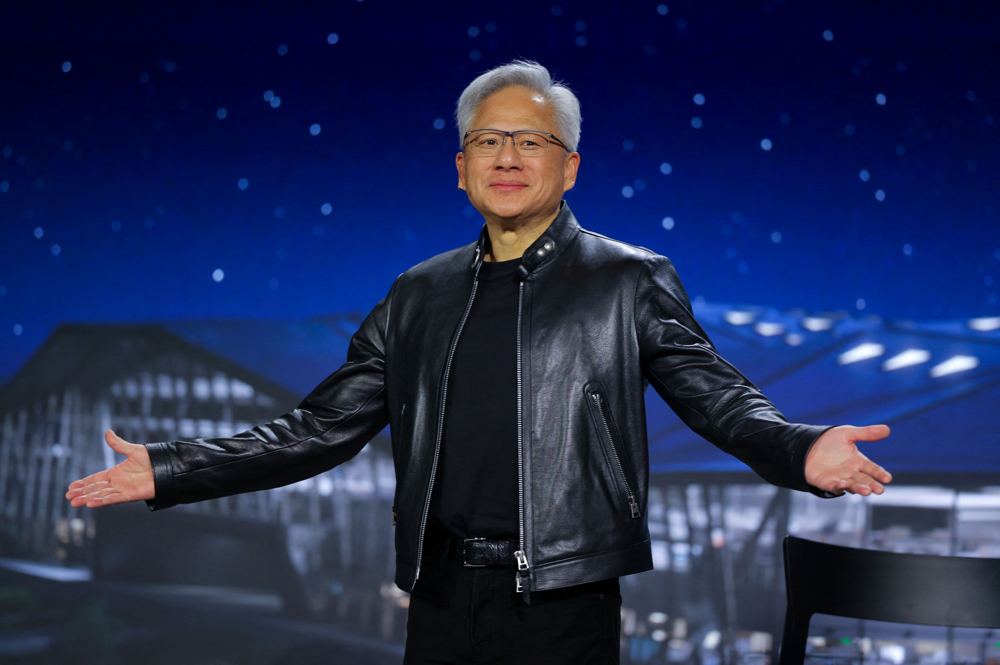
Huang was particularly good at this. He helped shape the conversation about where AI was heading and made Nvidia central to it. Donning his trademark leather jacket, Huang took to stages around the world , courting world leaders to lay out his vision and explain why Nvidia would be at its center.
Before Huang resigned, Eric Ross told "Squawk Box Asia" that Huang "is the company."
That may sound like an endorsement, but it also helps explain why his departure has raised so many questions.
Bernstein's Stacy Rasgon made an interesting distinction on the same program, also before Huang's departure. Nvidia had capable executives who could keep the business running, he said. What was harder to replace was Huang's vision.
But for a company whose valuation reflects not just what it sells but expectations of what AI could become, replacing that vision may prove harder than replacing the CEO.
Duncan Clark pointed to another part of Huang's job. He had become a bridge between Silicon Valley, Asia and Washington, and one of the most prominent voices for the wider AI industry.
"I don't think you can replace him with one individual," Clark said on "Access Middle East" on Friday. Replacing him with multiple people is "going to take time, and it won't be the same," he added.
That distinction may be important. Nvidia's board has begun a search for a permanent CEO and said it will consider both internal and external candidates. But whoever takes the job may not personally assume every role Huang had come to play around the company. Some of his responsibilities and relationships could end up being spread across Nvidia's broader leadership team.
For now, the board is emphasizing continuity. New chair Harvey Jones said Kress is backed by an experienced leadership team and that Nvidia expected its operations, customer commitments and product roadmap to continue without interruption. Kress, meanwhile, pointed to Nvidia's people and leadership team as strengths as the company moves forward.
Other boards will be watching, particularly those that have allowed their CEOs to become the face of everything their companies do.
When a charismatic leader is the only person outsiders hear from, it becomes harder to convince them that anyone else can take over. There is also the question of accountability.
Clark described Nvidia's situation as a governance failure. And my colleague, "Squawk Box Europe" anchor Steve Sedgwick , raised a similar point on Friday about how corporate America has approached ESG.
Much of the political debate has focused on its environmental component, Steve said. President Donald Trump has repeatedly attacked environmental and climate policies using phrases such as "green scam." But Steve questioned whether the governance element has been overlooked, particularly at some of America's biggest technology companies.
"When you have a 'Rockstar' CEO you need way more governance, NOT less," he said, citing his recent conversations with CEOs and senior executives.
His point was that powerful leaders can come to believe the normal rules don't apply to them. Without strong governance to challenge them and prepare for their departure, the consequences for a company can be far greater.
Linda Ford, chief executive of The Chartered Governance Institute in the U.K., said Nvidia showed what could happen "when a company's leadership is built around one person." She noted that Nvidia had never previously had a board chair, adding: "A high-profile leader can be an asset, but the board needs to work hard to protect its independence and provide the scrutiny shareholders are entitled to expect."
And that gets to the bigger issue. How easily can a board challenge a CEO who has delivered extraordinary success, particularly when investors have come to see that person as indispensable?
Companies spend years putting leaders in front of investors and customers and making them central to the business. But how much effort goes into making sure the company can function without them?
Nvidia now has to show that the business Huang built can stand on its own. Other boards might want to ask themselves whether they could say the same.