Della Robbia relief at the Frick Collection gets a crucial upgrade
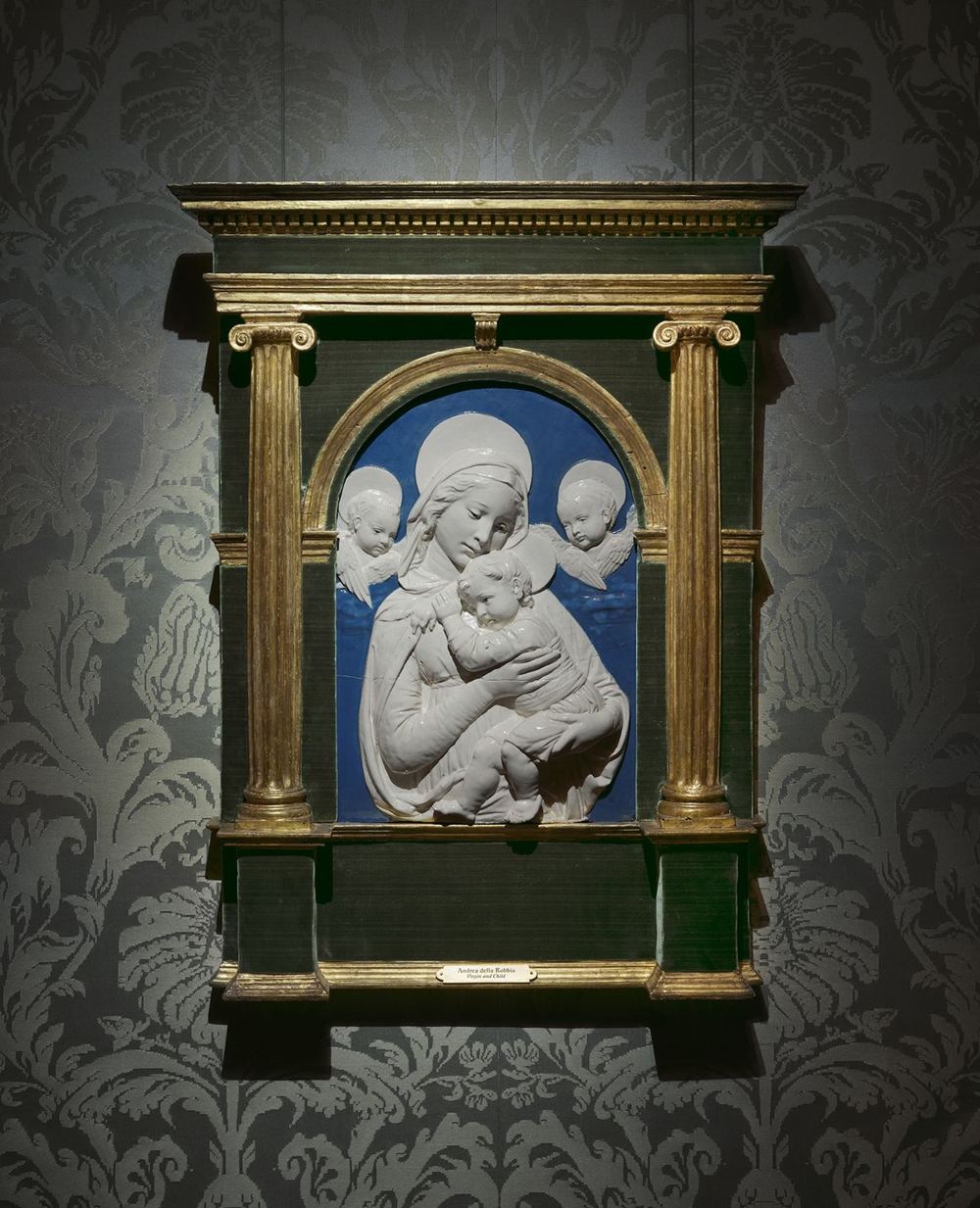
Long attributed to a Della Robbia workshop, the “Virgin and Child” relief has been upgraded to a 15th-century work linked to Andrea della Robbia based on recent analysis
For a good part of the 15th and 16th centuries, Florentine sculptors named Della Robbia were making glazed terracotta works of great renown. But not all Della Robbias were created equal. Scholars and collectors have long given strong preference to Luca della Robbia (1399/1400-1482), the founder of the dynasty, and his nephew Andrea della Robbia (1435-1525). Similar works by later Della Robbias and those produced by the workshop can come in a very distant third. For decades, New York’s Frick Collection believed it owned a relief by the family workshop, dated no earlier than the 16th century. But now, after technical analysis and consultation with experts in the field, the museum has updated its Virgin and Child to a 15th-century original, likely from the 1470s or 80s.
“We’re suggesting it’s by Andrea,” says Greta Llanes Serrano, a conservation fellow at the Frick who worked on the recent treatment that helped pinpoint the new attribution.
The framed relief depicts a veiled Madonna holding a Christ child, attended by cherubs. Fashioned out of buff-coloured earthenware, it has the Della Robbia clan’s distinctive white and blue glazes, with, in this case, traces of gilding. The work was first acquired by Helen Clay Frick, Henry’s daughter, in 1922 and spent most of the last century stashed outside the main reading room of the Frick Art Research Library.
Llanes Serrano says the road to the new attribution was filled with twists and turns, and an outright gap or two.
The early American luminary in Della Robbia studies was the Princeton University art historian Allan Marquand (1853-1924). Llanes Serrano says that in a 1906 publication Marquand identified the work, then in the possession of a private German collector, as being by either Luca or “very early Andrea”. Then, in 1914, he decided “that it had to be Andrea”. After it landed in the Frick family collection and found its way to the library entrance, it went from being a Della Robbia, generally, she says, to a work by Andrea, a decision, she notes, recorded by a librarian, though who actually made the decision is not known. Later, it was outright demoted to “school of Della Robbia” and has had that lower-rung status since at least 2008.
Julia Day , who was appointed last year as the Frick’s new chief conservator, thought it was time to take a new look at the work after attending a Della Robbia conference in spring 2025. “I just thought that we have this piece, and nobody’s really spent time looking at it,” Day says.
Llanes Serrano, who analysed the relief over the last year in the Frick’s new conservation studio, says XRF analysisallowed her to move back the dating and place it closer to Andrea himself. “I took multiple readings on different spots on the back and front,” she says, of the non-invasive technique.
The process revealed the elements present in the glaze, and then she compared her results with other analyses of autograph Della Robbia works. This helped her to place it in the new 1470s-80s time frame, when the older Luca was giving way to the younger Andrea. Meanwhile, another clue was plainly visible: “The Christ Child is clothed,” she says. In later versions of the motif made by the sculptors and their workshop, she adds, it was more common to show him unclothed.
A few weeks ago, the museum moved the work away from the library, where it was out of view from the general public, and installed it in a damask-lined spot in the mansion’s first-floor Octagon Room, fresh from its makeover during the Frick’s recent renovation .
Day says this kind of conservation-guided upgrade is a rarity at the Frick, happening perhaps once a decade. The Virgin and Child is the only Della Robbia piece in the museum's collection, she adds.