From car parts to drones: German suppliers pivot to defence as auto crisis deepens
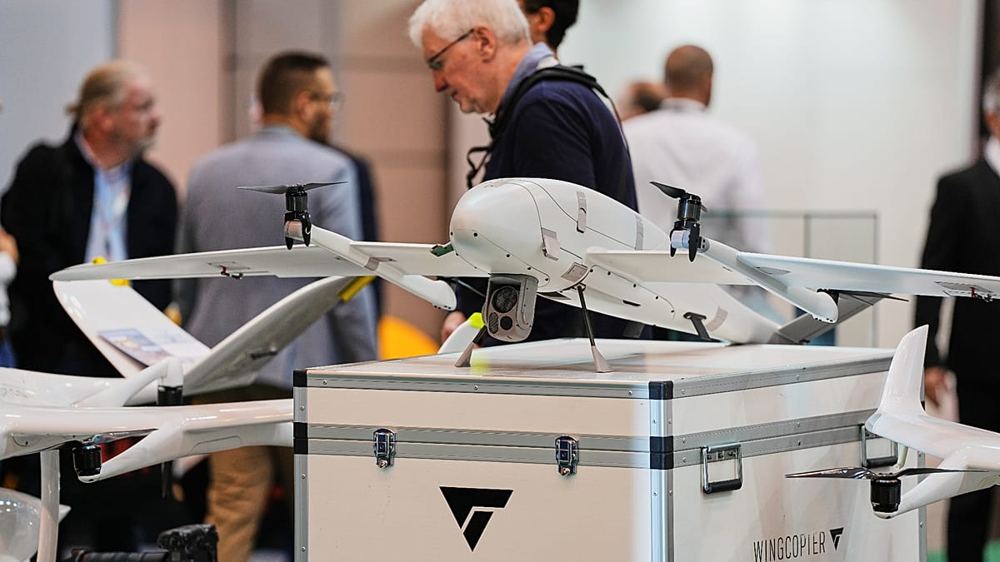
German car parts makers are moving into drones, defence and space as the country's auto industry crisis deepens, with one Bavarian family firm now able to turn out 1,000 surveillance drones every month as it tries to depend less on carmakers.
Germany's struggling car parts suppliers are branching out into drones, defence and space as the crisis gripping the country's auto industry deepens, with family firm Jopp now having the capacity to make 1,000 surveillance drones every month in a bid to rely less on carmakers.
Jopp, based in Bavaria, one of the heartlands of German carmaking and a growing hub for defence start-ups, came up with the idea as its Porsche contract for gear systems was drawing to a close.
It now builds the drones for Highcat, a young German defence company that sells them on to customers including the military, police and firefighters.
The drone contract fits Jopp's plan to cut the share of its sales that comes from the car industry from 85% today to 60% by 2035.
Germany's once-dominant car industry has been plunged into crisis by intense competition from China and elsewhere, steep US tariffs and sluggish sales in Europe.
The sector has shed more than 140,000 jobs in Germany since 2019, or one in six, according to advisory firm EY.
That has pushed almost 80% of German car suppliers to seek growth in other industries, a survey by consultancy Roland Berger found last year, with defence, space and medical technology the most popular targets.
Moving into drones means the company can at least hold its headcount steady, Martin Buechs, Jopp's managing director, told AFP.
"At some point I hope we'll be able to expand again, but for now it's about keeping the jobs we have," he said.
Its workforce has shrunk to 1,400 from around 2,000 six years ago, and two factories have closed.
"We have been very successful in the past with winning new automotive business," Buechs explained. However, many projects are now pushed back by as much as two years, he added, while customers are ordering far smaller volumes.
Schaeffler, a far bigger German maker of car and industrial components that is set to cut over 8,000 jobs, has also struck partnerships to move into new markets.
In May, Schaeffler announced it would produce spacecraft parts with US satellite data company Spire Global, adding that the pair could one day build satellites together in large numbers.
In June, it unveiled plans to manufacture Damocles attack drones designed by French firm Delair, along with Delair's Aspik Interceptor, which is built to counter hostile drones.
Europe's car sector faces "a continuous downturn", Schaeffler CEO Klaus Rosenfeld warned this month, adding "I don't think this is something that will go away tomorrow".
Yet diversifying alone will not be enough to save most suppliers, according to Roland Berger car industry expert Felix Mogge.
The markets they are targeting are already fiercely contested, he pointed out, and defence orders come in smaller and less predictable volumes than those from carmakers.
"Finding new product segments can be an interesting addition to a supplier's portfolio, even a small one," Mogge told AFP, adding that "it won't solve the structural problems on the automotive side".
Back at Jopp, Buechs acknowledged that the way defence deals are structured made it hard to know exactly how many posts the drone contract would protect.
Defence firms tend to sign framework contracts, committing to a set quantity with the possibility of ordering more later.
"The defence sector makes orders in small batches," Buechs noted.
Car production, by contrast, runs for years in volumes that are "usually very easy to calculate", he added.
Even so, Jopp had little option but to look beyond cars, he argued, as margins in the car industry are "difficult and indeed rather bad".
"It's already got really difficult for the industry and it looks like that will carry on," he concluded.