EIB's record €3bn Airbus loan signals EU defence shift
The European Investment Bank has granted its largest-ever commercial loan to Airbus, a record €3 billion package that signals a decisive institutional pivot towards funding European strategic autonomy and defence.
The European Investment Bank (EIB) has agreed to a record-breaking €3 billion loan for Airbus, with an initial €1 billion tranche signed in Brussels on Monday. It is the largest commercial loan ever issued by the Luxembourg-based lender.
The capital will fund commercial aerospace and defence investments at the company's sites in France, Germany, and Spain through to 2030. The financing is explicitly designed to bolster the continent's industrial base against intensifying competition from the United States and China.
A new mandate for EU capital
For investors and markets, the deal represents a clear articulation of Europe's evolving industrial policy. Rather than relying solely on private capital markets, EU institutions are now directly deploying massive, taxpayer-backed liquidity to underwrite strategic champions. This blurs the traditional line between commercial lending and state-backed industrial subsidy.
This Airbus deal is the most prominent example yet of the EIB's historic policy shift to include defence infrastructure in its remit. The bank is now on track to reach a record €4.5 billion in security and defence financing by 2026, a figure that would have been unthinkable just a few years ago.
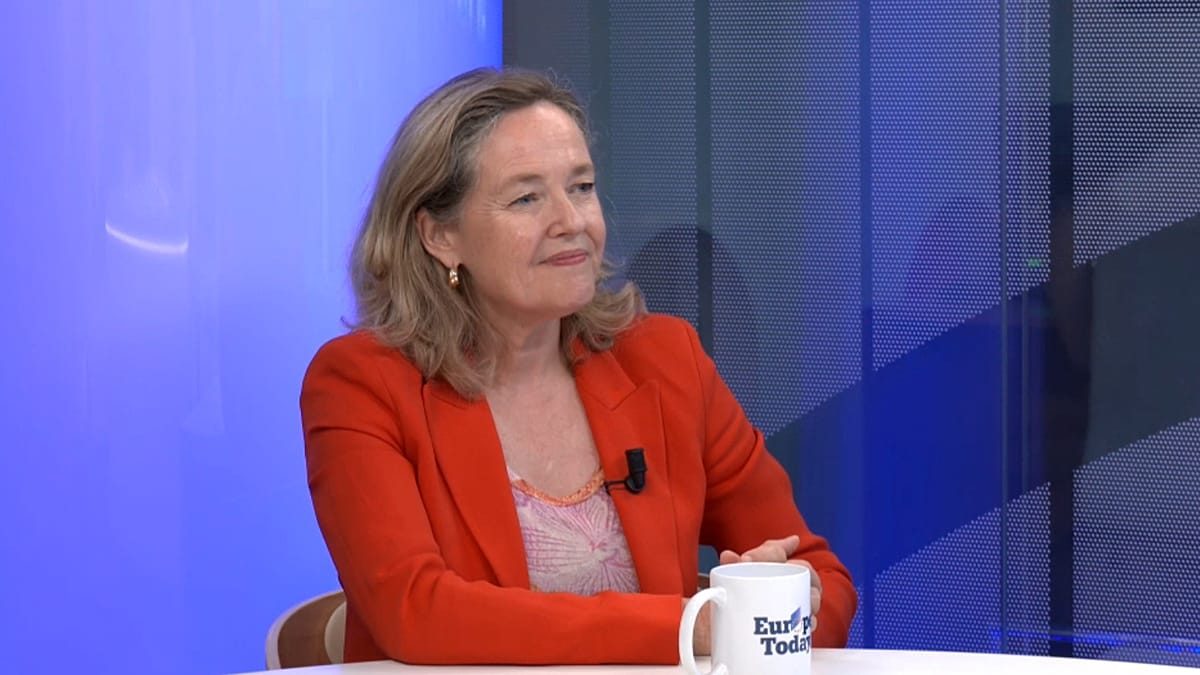
EIB President Nadia Calviño framed the loan as a necessary adaptation to a "new geopolitical context" where Europe is being "attacked on all sides." She defended the bank's flexibility, arguing that backing a profitable, global leader in aerospace and security proves the bloc is "moving in the right direction." "Airbus is the great success story of Europe," she said.
Balancing guns and green tech
The loan raises questions about whether the EIB's traditional focus on climate and development will be crowded out by defence spending. Calviño moved to dismiss these concerns, vowing to maintain the bank's focus on technology and climate investment.
She emphasized the institution's intention to "consolidate" its role as "the climate bank," going so far as to claim the EIB is the "world's climate bank" due to diverging narratives in other jurisdictions. However, she noted that the private sector is increasingly driving the green transition independently, investing in clean energy "because it's not only the right thing to do, but also the smart thing to do."
The EIB's pivot ultimately reflects a broader consensus among European leaders. "I always say we are unstoppable when we join forces," Calviño said, pointing to a "strong determination" to confront geopolitical and economic threats as a unified bloc.