[Interview] Ukraine’s former defence chief predicts new EU security alliance, gives behind-the-scenes look at Russia diplomacy
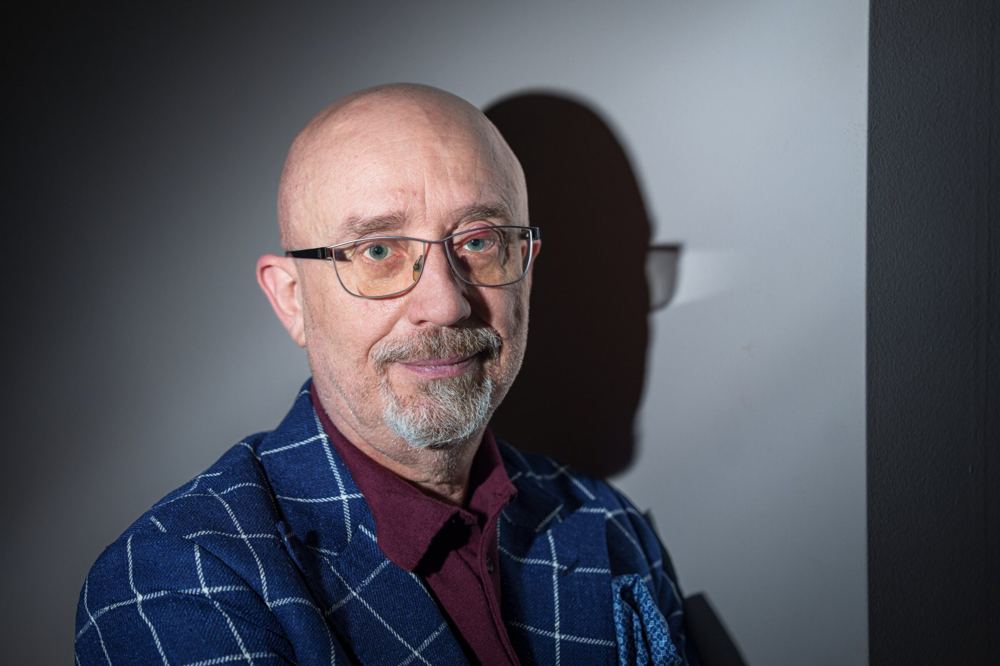
What happens behind the scenes at peace talks with Russia and in negotiations with allies? Oleksii Reznikov, Ukrainian defence minister at the start of Russia's full-scale invasion in February 2022, spoke candidly about his time leading his country's defence efforts. Now lecturing university students about negotiating tactics, he says Europe might soon see a new security alliance.
A new European security alliance consisting of Scandinavian and Baltic countries as well as Poland, Turkey, Romania, and Bulgaria could soon be created, said former Ukrainian defence minister Oleksii Reznikov in an interview. He shared behind-the-scenes insights from negotiations with Moscow near the start of Russia’s full-scale invasion and how he negotiated more military support from Europe.
Some say Ukraine might hand over Donbas to Russia in exchange for Nato membership. Ukrainian president Volodymyr Zelensky said the day before yesterday that Americans had proposed this to him. But is this realistic?
This is a move which, based on negotiation theory, I would describe as the Harvard negotiation approach. Incidentally, one of US president Donald Trump’s envoys Steve Witkoff studied at Harvard.
At its seminars, students learn the term ‘poisoned pill’. It means that during complex negotiations, one side throws it, and when the other side picks it up, discussion about it begins. In reality, however, it is already poisoned.
All of a sudden, we start thinking about two things: whether Russia’s demand that Finland leave Nato is actually justified. And whether Ukraine is prepared to concede territory. This so-called concession, coming from the Russian side, conceals a provocation.
Ukrainians would say: “But we must join, because our constitution enshrines a strategic course towards full Nato membership.”
Zelensky would reply: “We are prepared to give up territory.”
Russia is changing lanes, which is dangerous. These are the Kremlin’s usual negotiation tactics: first, take a hardline position, then retreat.
I would not put it that way. But I would recall the events of February 2025, when, a month after Trump’s inauguration, Zelensky visited the White House.
I watched that scandalous meeting closely for the entire 50 minutes, because I teach negotiation at university.
Trump said during the meeting that he is not one of the parties; he is a mediator who wants to settle this conflict. And I do not think his position has changed.
Earlier talks when Americans negotiated separately with the Russians and the Ukrainians is called a “caucus”, when the parties to a conflict sit in separate rooms.
Yes. It may appear that the Americans are more on Russia’s side, because they seem to give greater consideration to its arguments. But that is their strategy.
They think it is easier to persuade us Ukrainians, that we are in a weaker position.
But for the US side, the mere signing of a peace agreement would be a victory.
Europe will presumably be involved in negotiations. It may be that an EU delegation is present rather than one individual, as was discussed at the EU summit in Dublin. Does that pose a problem?
Europe must be represented at the negotiating table, because its security interests are at stake.
And now the question: we are all used to saying Europe, Europe. But what actually is it?
Some understand it as the EU, with 27 member states. And the United Kingdom? And Norway? There are other countries that belong to Europe, such as Switzerland. They also have interests.
If we say it is, for example, the EU plus two, we can assume that one of the commissioners will be at the talks. The EU has an official foreign minister, Kaja Kallas.
It also has a defence commissioner Andrius Kubilius. And there is EU commission president Ursula von der Leyen.
All of them have an official mandate to represent the EU's interests.
The negotiators chosen will more than likely be diplomats who know the Russian mentality well.
Why not? She is from a Baltic country, people who know how to speak with Russians. Ultimately, there will not be 10 people at the table, but two.
In December 2019, I was a member of president Zelensky’s delegation. The only meeting with Putin took place at the Élysée Palace then, with French president Emmanuel Macron acting as mediator.
Such high-level meetings take place when almost everything is already prepared, when trusted people have worked everything out and approved the proposals. Only when everything is ready do top leaders meet and bless the document, like a priest in a church.
A European negotiator is now being sought, and you previously said the appointee should know the Russian mentality. But is it also important that the negotiator is accepted by the Russians?
Putin takes notice of only two people in the world: his friend [Chinese president] Xi Jinping in Beijing and Trump.
The three of them think they can divide up the world, so they do not care at all who sits at the negotiating table as the [European] negotiator. Not at all.
Then comes another tier, the other heads of state with whom he negotiates.
But Putin does not sit at the negotiating table. [Kremlin aide] Vladimir Medinsky, [sovereign wealth fund CEO] Kirill Dmitriev, or someone else he has designated, who behave entirely professionally and properly.
Do Russia-Ukraine negotiations unfold as people expect them to ?
The reality is different to what you see on TV. For example, in February 2022, four days after the full-scale invasion, talks were held in Belarus. The first meeting with the Russian delegation!
We met on the Pripyat River, at the hunting residence of Belarusian president Alexander Lukashenko.
The Russian delegation was led by Medinsky [now head of the Russian negotiating delegation and adviser to Putin]. The talks were followed by another round of talks in Belarus, with a fourth round in Istanbul.
The Russian delegation behaved entirely in accordance with diplomatic ethics and protocol. And there was no rudeness.
They treated us with absolute respect. And not only that: they addressed me by my first name and as Oleksii Yuriyovych.
Yet for some reason unknown to me, they addressed the head of our delegation [Davyd Heorhiyovych Arakhamia, chairman of the parliamentary group of the president’s Servant of the People party] as “Davyd”. Yet, they used my full name.
How do you expect things to go at new negotiations which will include Europeans?
I am convinced that the same happens when Russians meet our Ukrainian representatives. Russian negotiator Dmitriev is a businessman and certainly no thug.